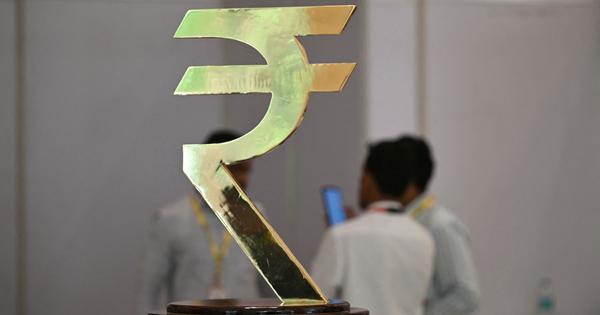
The Indian rupee on Monday fell to an all-time low of 89.7 against the United States dollar.
The plunge came amid sluggish trade activity and portfolio flows, coupled with uncertainty about a trade deal between Washington and New Delhi, Reuters reported.
As of 3.20 pm, the rupee had recovered to 89.5.
The positive Gross Domestic Product number released on Friday offered little respite to the rupee. The Indian economy grew by 8.2% year-on-year in the July-September quarter, up from 7.8% in the previous quarter, showed data released by the National Statistics Office.
The economy had recorded 5.6% growth in the same period last year.
However, the rupee remains under pressure from the lack of progress on a US-India trade deal, importer hedging activity and a balance of payments position that has turned less supportive, Reuters quoted bankers as saying.
Bilateral relations between New Delhi and Washington deteriorated in August after US President Donald Trump doubled the tariffs on Indian goods to 50% for purchasing Russian oil amid the war in Ukraine. Trump has repeatedly alleged that India’s imports were fuelling Russia’s war on Ukraine.
On November 10, Trump said that Washington would bring down the tariffs imposed on India “at some point” and claimed that New Delhi had substantially reduced its purchase of Russian oil.
Trump also said that his country was getting close to a “fair deal” with India.
However, the delay in the announcement of the trade deal and the resulting uncertainty about the future of exports were creating a stir across the market, The Financial Express reported.
The tariffs have dented trade and portfolio flows into equities, leaving the Indian rupee reliant on interventions by the central bank for support, Reuters reported.
Additionally, foreign investors have pulled out more than $16 billion from the Indian equity market this year, according to the news agency. The merchandise trade deficit, or when imports of goods exceed exports, also hit an all-time high in October.
The rupee’s rough patch has further brought down its 40-currency real effective exchange rate to undervaluation territory, Reuters reported. In October, this rate stood at 97.4, the news agency quoted data from the central bank as saying.
The real effective exchange rate, which is seen as a measure of competitiveness, is the weighted average of a country’s currency in relation to an index or basket of other major currencies. A level below 100 indicates that a currency is undervalued relative to those of its trading partners.