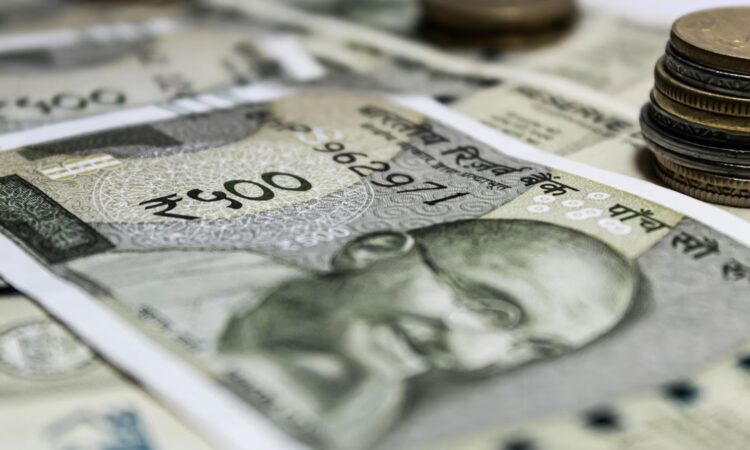
The Indian rupee continued its free-fall, breaching the 90-mark for the first time on Wednesday against the dollar, weighed down by uncertainty around the US-India trade deal, persistent equity selling by foreign portfolio investors (FPIs) and weak supply of the US currency.
The rupee hit the record low of 90.16 against the dollar, after opening at 89.96 against the previous close of 89.97. It was trading at 90.12 against the greenback at 10:46 am.

In the current year, the Indian currency has fallen by around 4.4 per cent.
“Lingering uncertainty over the Indo-US trade deal is keeping sentiments fragile. FPI outflow from equities and early signs of Japanese yen carry trade unwinding are putting pressure on the rupee,” Anindya Banerjee, Head Commodity and Currency, Kotak Securities.
The domestic equity market has been witnessing selling from overseas investors for the major part of 2025. So far in this calendar year, FPIs have sold Rs 1.48 lakh crore of shares. In the first two days of December, they have offloaded Rs 4,335 crore of equities, putting pressure on the currency.
Forex market participants that the Reserve Bank of India (RBI) was active in the market to moderate the fall in the rupee, though its intervention seems limited.
“The RBI has consistently stated that its focus is on managing rupee volatility. It is intervening in the market today but not defending any specific exchange rate level,” said an analyst.
Impact of rupee’s slide
Story continues below this ad
The rupee’s slide beyond the 90 mark has increased hedging costs, with forward premiums jumping as both corporates and leveraged traders rushed to secure protection against further weakness. The one-year USD/INR forward premium rose another 7 basis points (bps) on Tuesday — over 12 bps in just three sessions — while the 1-month tenor spiked to a seven-month high near 19.5 paise.
“The move reflects a mix of genuine hedging demand and expanding speculative positions, underpinned by the growing perception that the RBI may allow a deeper adjustment after the currency broke below the previously defended 88.80 level,” said Dipti Chitale CEO Mecklai Financial Services Pvt Ltd.
The depreciation has also widened the India–US 10-year yield spread to nearly 250 bps, the largest in almost a year. Investors are demanding a higher cushion for currency risk as foreign appetite softens amid tariff uncertainty and a heavy domestic bond-supply calendar, she said.
According to Bank of Baroda’s Chief Economist Madan Sabnavis, depreciating rupee will help exporters at the margin but is not good for importers or inflation.
Rupee to remain under pressure
Story continues below this ad
The domestic currency is likely to remain weak in the near term. However, any progress on the US–India trade agreement could trigger sharp directional moves.
With the RBI policy announcement on Friday (December 5), markets expect clarity on whether the central bank will step in to stabilize the currency, said Jateen Trivedi, VP Research Analyst – Commodity and Currency, LKP Securities.
“The market is talking of 91, though we think post policy there should be a correction back to 88-89 levels. But it is guesswork all the way – as it has been ever since we crossed the Rs 88 mark,” said Bank of Baroda’s Sabnavis.