
Stay informed with free updates
Simply sign up to the Pharmaceuticals sector myFT Digest — delivered directly to your inbox.
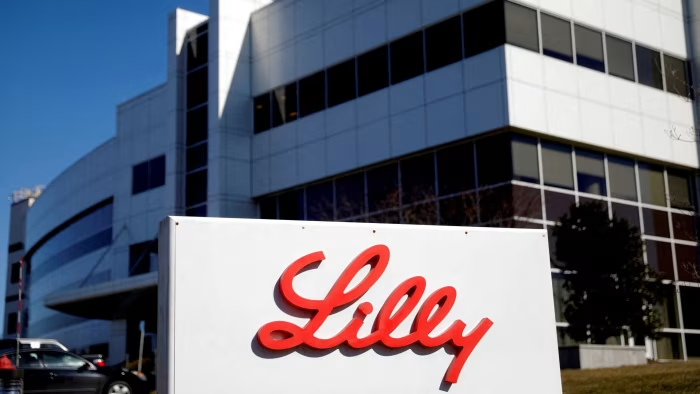
American drugmaker Eli Lilly has said it will not restart paused investment in the UK until it sees changes to the types of drugs that are approved in Britain, despite a deal between the UK and US on drug pricing.
Lilly’s chief executive David Ricks told the Financial Times the company was “optimistically watching and waiting” to see how Britain’s pledge to spend more on drugs and loosen medicine approvals worked in practice.
“I would say the trajectory before was definitely downward and now there’s optimism that it’s going upward and that’s an important thing for your country,” Ricks said.
However, he added that there was “no change today in our business environment, therefore we’ve not made a change in those decisions we’ve paused . . . Hopefully we can observe change quickly, both in drug approval and in rollout.”
On Monday, the US and UK agreed that London would increase NHS spending on medicines and make it easier for costly drugs to gain approval in return for a carve-out from import tariffs threatened by US President Donald Trump.
The deal came after several large pharmaceutical companies paused or scrapped investment in the UK, partly in protest at a clawback tax that limits how much money they can make selling into Britain’s state-run health service.

Lilly in September said it would pause its plans to invest in a laboratory site in central London, while Merck, known as MSD in Europe, announced in the same month it would move its research activity to existing sites, mainly in the US.
“Every week we meet as a team and look at the global environment and make decisions. So that opportunity’s there every week,” Ricks said.
He noted that in the UK, Lilly was awaiting approval for drugs including donanemab sold under the brand name Kisunla, which treats Alzheimer’s. “Where we’re really hoping to see change rather quickly is medicines for bad diseases like Alzheimer’s . . . getting approved,” Ricks said.
Kisunla was approved last year by the Medicines and Healthcare products Regulatory Agency (MHRA), the UK’s drug regulator, meaning it can be sold in the country. Kisunla costs about $32,000 a year in the US.
The National Institute for Health and Care Excellence (Nice), which decides which drugs are used by the NHS, has so far declined to recommend Kisunla, saying it does not provide enough value for money.
Nice said in June that while Kisunla delayed the onset of moderate Alzheimer’s by four to six months, “the overall costs of purchasing and administering the drug remain high and the benefits too small”.
The UK-US pharma deal requires London to increase the price level at which Nice views drugs and treatments to be cost-effective to between £25,000 and £35,000 per “quality-adjusted life year” (QALY) delivered to patients.
The threshold has ranged between £20,000 and £30,000 since 1999. The UK has also agreed to reduce the clawback tax that pharma groups pay the NHS from 23 per cent to 15 per cent of revenues.
Nice said on Tuesday that changes to the threshold used to determine the cost-effectiveness of drugs would allow it to recommend an additional three to five new medicines or indications a year.
In return, Washington will exempt Britain from a 100 per cent tariff on branded medicine imports that Trump has threatened but not yet put in place.
Ricks said the deal allowed pharmaceutical companies to “go to other countries and say, ‘You should also adapt your system. The UK is increasing its value innovation by 25 per cent. What are you gonna do?’”


