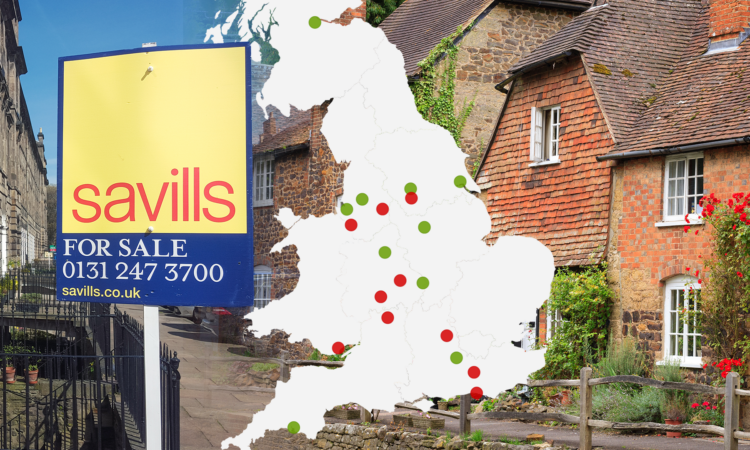
HOMEOWNERS in three lucky UK towns have hit the property jackpot this year, with house prices skyrocketing by double digits while the rest of the country plays catch-up.
While many families are tightening their belts, residents in a few select postcodes are sitting on a goldmine as new figures reveal a massive boom in local brick-and-mortar values.
The latest data from high street giant Lloyds shows that while London stalls, the real money is being made in the Midlands and on the coast.
Top of the pile is the stunning port city of Plymouth, which has been crowned the UK’s number one property hotspot for 2025.
Homes in the Devon city surged by a massive 12.6% in just 12 months, adding an average of £31,229 to the price tag of a standard home, which now sits at £278,808.
But the boom isn’t just by the seaside.


Stafford and Wigan also smashed the double-digit barrier, proving you don’t need a southern postcode to see your investment grow.
Stafford owners saw a 12% jump, cashing in over £34,000 on average, while Wigan properties leapt up by 10.5%.
The “Northern Powerhouse” is alive and kicking in the property market, with affordable hotspots like Wakefield, Liverpool, and Hull all charging into the top 10.
Scotland’s Falkirk also made the cut, showing that savvy buyers are looking north for value that keeps on growing.
Amanda Bryden, head of mortgages at Lloyds, said: “Our customers’ dream homes are found in pockets around the UK and we’ve supported thousands of people to take their next home-buying step this year.
“While property prices play a role, choosing where to live is also about finding a place that feels right – a community you connect with, a commute that works for you, and a lifestyle that fits you.”
Where has house price growth slowed?
The South East dominated the locations where the value of homes fell or grew most slowly in the past year, the report said.
Crawley and High Wycombe recorded the sharpest declines, with home values falling by 8.9% and 7.4% respectively.
A 6.4% fall in average property values was also recorded in Chester, but the north west of England overall recorded growth of 3.7% in property values, the report said.
Lloyds also recorded a 5.2% fall in average property values in Cardiff, despite home values rising in Wales by 2.3% generally.
Ms Bryden said: “If you’ve got your heart set on a particular location, it’s worth taking time out to do some research and see what’s happening with prices there, as swings in value at a local level can make a big difference to how much you may need for a deposit, stamp duty or wider moving costs.
“If you’re open to exploring, you might find places where your money goes further. Northern regions and Scotland are still generally more affordable than the south of England, with a huge amount to offer in terms of culture and history, alongside some of the most beautiful parts of the UK countryside.”
Lloyds compared property values over the 12 months to October 2025 with the same period a year earlier.
Locations were only included where Lloyds Banking Group had made a minimum of 150 mortgage offers during the period, excluding buy-to-let and shared ownership.
On a less localised level, Lloyds said that most parts of the UK recorded growth in the value of homes in 2025.
Northern Ireland led the way with growth of 5.8%, although property values fell in London by 0.1% on average.
How have regional property prices changed?
HERE are average home values in 2025 followed by the annual increase or decrease in cash and percentage terms, according to Lloyds:
- Northern Ireland: £240,486 = +£13,255 (+5.8%)
- Scotland: £257,399 = +£9,302 (+3.7%)
- North West: £281,722 = +£9,933 (+3.7%)
- Yorkshire and the Humber: £270,856 = +£9,501 (+3.6%)
- South West: £360,317 = +£9,278 (+2.6%)
- East Midlands: £297,588 = +£6,953 (+2.4%)
- Wales: £262,854 = +£5,961 (+2.3%)
- East of England: £417,897 = +£8,853 (+2.2%)
- West Midlands: £304,640 = +£3,856 (+1.3%)
- North East: £224,725 = +£1,787 (+0.8%)
- South East: £452,961 = +£3,507 (+0.8%)
- London: £574,514 = -£342 (-0.1%)