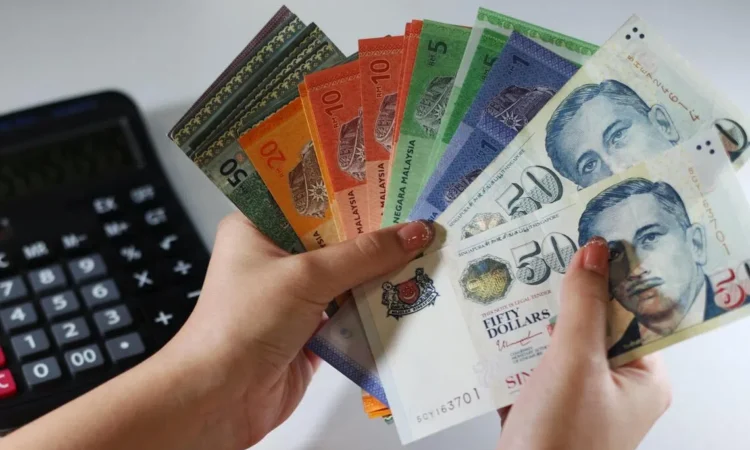
SINGAPORE – Singapore’s currency is standing out as a top haven in Asia as market volatility picks up, according to Mr Nathan Swami, Citigroup’s head of foreign-exchange trading for Asia-Pacific.
Singapore dollar has been Asia’s best performer against the greenback
since the start of 2020, a period that covered bouts of market volatility from a global pandemic to US President Donald Trump’s shake-up of the international trading system. That has fuelled expectations the city-state’s currency will be a safe space for foreign investors as turmoil rages elsewhere.
“The appreciation in the Singapore dollar is not by accident,” said Mr Swami, adding that low volatility and predictable monetary policy have bolstered the haven appeal of the currency. “Investors within Asia, particularly in ASEAN, look at it as essentially the safe haven.”
Mr Swami’s view comes as worries from geopolitical risks to stubborn inflation dent some of the appeal of traditional haven assets like the US dollar and Treasuries. Lofty valuations are plaguing gold, while the yen has been undermined by wild swings fuelled by shifts in monetary and fiscal policy.
The Singdollar was trading at 1.2630 to the US dollar at midday local time on Feb 13. It has risen 1.7 per cent against the greenback to date in 2026.
Singapore’s status as the biggest currency-trading hub in Asia has no doubt helped boost the appeal of its currency, with its share of global over-the-counter currency trading rising to 11.8 per cent in 2025 from 9.5 per cent in 2022, Bank for International Settlements data showed. By comparison, Britain and the US – home to the No. 1 and No. 2 top currency trading centres – saw their market share largely unchanged at around 38 per cent and 19 per cent, respectively.
“We can see that a lot of investors particularly here are positioning more actively” on Singapore’s dollar, Mr Swami said.
Unlike many of its global peers, Singapore’s central bank uses the exchange rate as its main policy tool rather than interest rates. The Monetary Authority of Singapore has let the local dollar drift higher against major trading partners’ currencies since 2022. But after it raised its inflation forecast in January, analysts braced for a more hawkish turn that could lead to an even faster appreciation of the currency.
“The flip from being dovish last year to employing a more hawkish stance in the face of inflation starting to pick up – I think that will make investors a little bit more supportive of staying in Singapore dollars,” said Mr Swami, who heads the Asia-Pacific division of one of the world’s major foreign-exchange trading businesses.
Mr Swami also sees potential for some other Asian currencies to gain in 2026, including the South Korean won.
The won, which has been one of the region’s worst-performers over the past six months, has been buffeted by retail investor outflows and the nation’s US$350 billion (S$441.8 billion) pledge to invest in the US. But once these moves play themselves out, it has room to appreciate, he said. BLOOMBERG