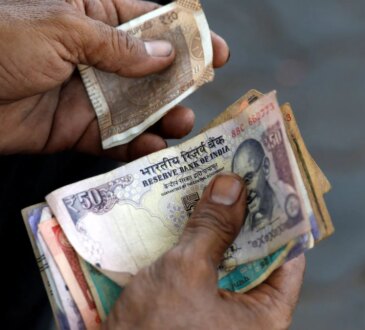
The local unit rose 21 paise to 90.73 against the US dollar in early deals, recovering from Friday’s (Febraury 20’s) close of 90.94.
Why the rupee strengthened
The currency drew support from multiple global and domestic factors.
A key trigger was a ruling by the USS Supreme Court striking down emergency tariff measures announced by US President Donald Trump. The decision led to a decline in the dollar index, which was down 0.33% at 97.47, making emerging market currencies relatively more attractive.
However, the relief was partial. Trump subsequently announced a fresh 10% levy on global imports and later raised it to 15%, reviving uncertainty over the global trade outlook. Analysts said the ruling removed the legal basis for earlier emergency tariffs but did not eliminate the broader tariff framework.
For India, the change in tariff structure alters the effective burden on exports to the US. Analysts estimate India’s effective tariff rate could settle around 11–13%, lower than earlier feared and broadly in line with several Asian peers.
Lower global crude oil prices also supported the rupee. Brent crude, the global benchmark, fell 1.09% to $70.98 per barrel. As India is a major oil importer, softer crude prices help ease pressure on the current account and reduce demand for dollars from oil marketing companies.
Domestic tailwinds
A strong opening in domestic equities added to the positive momentum. The BSE Sensex rose 621.78 points to 83,436.49 in early trade, while the Nifty 50 gained 180.05 points to 25,751.30.
India’s foreign exchange reserves also provided a cushion. The Reserve Bank of India said reserves jumped by $8.663 billion to a record $725.727 billion in the week ended February 13, strengthening the country’s external buffer.
What could limit gains
Despite the positive opening, traders flagged persistent dollar demand in the market. “The rupee opened stronger after the US Supreme Court’s decision on tariffs caused the dollar index to fall. Most Asian currencies have gained from their Friday close,” said Anil Kumar Bhansali, Head of Treasury and Executive Director at Finrex Treasury Advisors LLP.
He added that dollar-buying sentiment could weigh on the rupee as the session progresses.
Foreign institutional investors also remained sellers in the previous session, offloading equities worth ₹934.61 crore on Friday (February 20), according to exchange data. Sustained outflows could add pressure if global risk appetite weakens.
Overall, the rupee’s near-term trajectory will hinge on how global markets digest the evolving US tariff framework, movements in the dollar index and crude oil prices, and the sustainability of foreign capital flows into domestic assets.
–With agencies inputs