
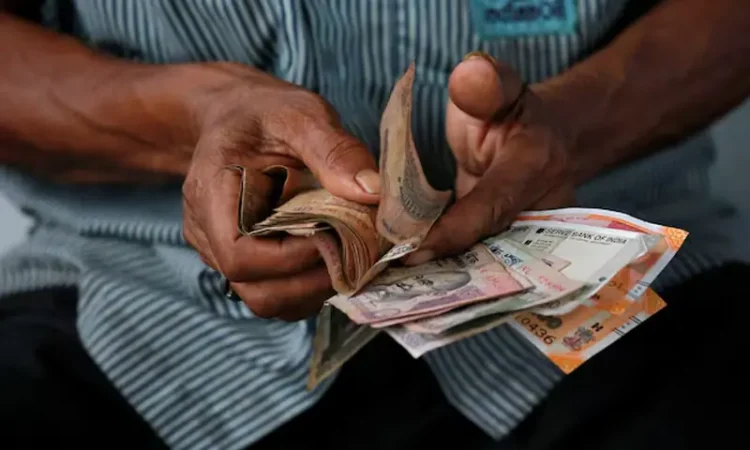
The Indian rupee fell to a record low of 93.84 against the US dollar on Monday as the Middle East conflict stoked fears of prolonged energy supply disruptions. Oil prices have surged over 50% this month.
MUMBAI: The Indian rupee slumped to a historic low on Monday as the intensifying Middle East conflict fuelled concerns over prolonged disruption to energy supplies, casting a shadow over the economic outlook of Asia’s third-largest economy.
The rupee dropped to 93.84 against the US dollar, surpassing its previous record low of 93.7350 registered on Friday. The continued depreciation reflects deepening anxiety among investors and traders over the trajectory of the ongoing crisis in the Middle East.
Asian currencies under pressure
The Indian currency was not alone in its decline. Asian currencies broadly weakened, falling between 0.1 per cent and 0.8 per cent, as hopes for a de-escalation in hostilities faded over the weekend. The dimming prospects for a resolution came as Washington and Tehran exchanged threats, with the war now entering its fourth week.
Oil prices surge over 50 per cent
The conflict has driven oil prices up by more than 50 per cent this month, placing immense pressure on energy-importing economies. The International Energy Agency (IEA) has stated that the crisis is worse than the two oil shocks of the 1970s combined, underscoring the severity of the disruption to global energy markets.
The rupee, considered among the currencies most vulnerable to sustained increases in oil prices, has weakened approximately 3 per cent since the war began. India’s heavy reliance on imported crude oil makes its currency particularly sensitive to geopolitical developments that threaten energy supply chains.
Revised forecasts reflect grim outlook
BofA Global Research has revised its outlook for the Indian currency, now expecting the rupee to trade at 94 against the dollar by June 2026. This is a significant downward revision from its earlier forecast of 89, though the updated projection assumes that the ongoing crisis resolves within a few weeks.
The sharp depreciation of the rupee and the broader sell-off in Asian currencies highlight the far-reaching economic consequences of the Middle East conflict, with energy-dependent economies bearing the brunt of the uncertainty. Market participants are closely watching diplomatic developments for any signs of a potential resolution that could ease pressure on oil prices and, in turn, on currencies like the rupee.


