
‘We’re trapped’: despair for sellers as Iran war knocks confidence in UK housing market | House prices
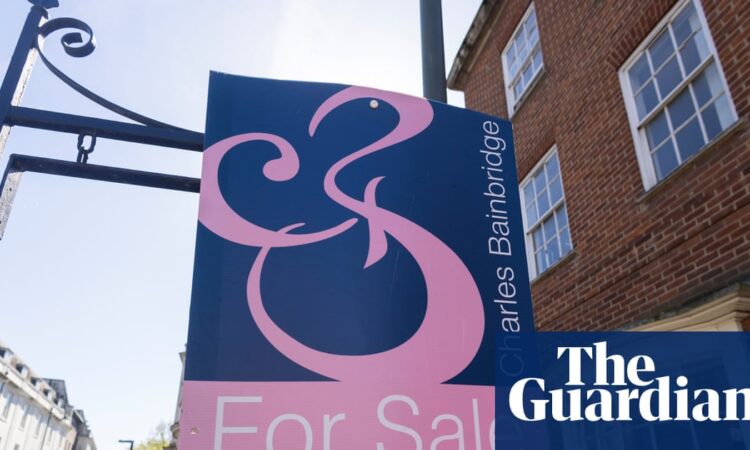
On a warm, spring morning in Canterbury, the cobbled streets are buzzing with activity and the white Tudor houses gleam in the sun.
It is a scene that seems far removed from events in the Middle East, but the conflict is undermining business and consumer confidence – rattling the city’s housing market just as the spring selling season began.
Spooked by surging oil prices and inflation fears, lenders pulled hundreds of mortgage products within 48 hours of the outbreak of war, replacing them with more expensive deals. Buyers and sellers, in turn, are having second thoughts and some are pulling out of deals altogether.
The mood is one of “fear and uncertainty”, says Andy Wicking, the director of the Charles Bainbridge estate agency. “It’s very nervous. There are lots of anxious people.”
In the first three months of this year, just 47% of homeowners who asked Wicking to value their property went on to list it – “quite a significant drop” on the 68% for the same period in 2025. In effect, owners are still asking for valuations but not acting on them.
At the bottom end, first-time buyers, those with the smallest deposits and the least experience of riding out a turbulent market, are pulling out. “The chains falling down at the lower end, they’re the really cautious ones,” Wicking says. “And funnily enough, they’re the ones that the market really, really needs.”
Wicking, who has spent 20 years selling homes across Kent, insists that sales are still moving and there are “always going to be deaths, debt and divorce, and people that have to sell”. But he is working to get deals across the line as fast as possible. “The longer a chain goes on, the more buyer’s remorse and fear sets in,” he says. “It’s very important to get the offer, get the deal done, get it across the line quick.”
For those who do make it to market, prices are slumping. “The competition and the confidence isn’t there now,” Wicking says. Sellers could expect bidding wars only a few months ago but a house he values at £600,000 may now go on at £575,000 to get buyers through the door. Surveyors are increasingly down-valuing properties too. It is, Wicking says with an estate agent’s cheerful confidence, a matter of “price to entice”.
Canterbury’s ancient cathedral and Roman walls speak to a deep history. Each house in the centre is unique, Wicking says, with Victorian terraces, Georgian townhouses and Tudor timber frames that lean out over the bunting-lined streets at improbable angles. “You buy with your heart down here,” he adds.
But that is not the only attraction. A city of fewer than 100,000 people, Canterbury is a mix of longstanding locals and London leavers who arrived after the pandemic in search of more space for their money. At the higher end, a London terrace worth more than £1m might buy something comparable here for half that price.
Martin Short has been trying to sell his home for three years but viewings have “dropped through the floor since Iran”, he said. The property was difficult to value – a converted Georgian pub in Bekesbourne, a village just outside Canterbury. It has already fallen from an asking price of £750,000 to £525,000, buffeted down repeatedly by high interest rates after Liz Truss’s mini-budget and uncertainty before Labour’s recent budgets.
His agents are pushing for another reduction but he is refusing: “It’s not the price of our property, it’s the lack of people able to proceed. The damage had already been done, and then we got this situation. Everybody’s sitting on their hands.”
Two chains had already collapsed on him before the Iran war started. Both buyers had properties of their own they needed to sell and both deals fell through. One of the buyers, a woman trying to move back to Kent from Bristol, is still in contact but she cannot sell her flat either. “We’re trapped,” Short says.
He knows of at least five houses where the price has been cut. In the nearby medieval town of Sandwich, a home has just come down to the price it fetched two years ago. Short says: “It’s not quite negative equity but they’re not going to make any money on it. Any value that’s accrued on that property in two years has disappeared.”
Similar stories are playing out across the country. Property prices fell by 0.5% in March compared with a month earlier, according to Halifax, pushing the average price of a home back below the £300,000 mark to £299,677. Annual price growth eased to 0.8%, down from 1.2% the previous month.
Brian Swint, an independent mortgage broker, sits between the lenders repricing their products and the buyers and sellers trying to keep up with rates. “We went from pricing in two or three interest rate cuts this year to two or three hikes,” he says. “That’s a huge swing within a month.”
The average two-year fixed-rate mortgage stood at 5.90% on Wednesday, up from 4.83% at the start of March and the highest since July 2024, according to the data provider Moneyfacts.
Swint, who is based in Brighton, said the anxiety was probably misplaced. “It’s the fear,” he says. “Objectively, mortgage rates aren’t crazy high … but people are worried.”
Nonetheless, nearly a million homeowners are due to come off five-year fixed deals this year, according to the Financial Conduct Authority. Those who have secured new deals are paying an average of £94 more a month, according to figures from the Connells Group estate agency.
All this has struck just when owners would usually bring their homes to market after hunkering down for the winter. “The timing couldn’t be worse for a huge energy shock – now is when people are really getting serious about moving,” Swint says.
A two-week ceasefire in Iran, agreed on Wednesday, brought some relief, with markets cutting their forecasts for UK interest rate rises. But mortgage experts have cautioned that rates are unlikely to fall quickly, and the volatility of the conflict could hammer markets again.
Back in Canterbury, Wicking, never one to knowingly undersell a market, is putting a positive spin on things. “I don’t mind a bit of chaos, I don’t mind a bit of uncertainty. It creates opportunity,” he says, adding that buyers now have an excuse to be “cheeky” with their offers. “I’ve never been in a bad market because it’s always good for somebody.”
Short, the seller, is more blunt: “You’re dominated by what’s happening the other side of the world. The opportunities are getting less. I do feel powerless.”


