Global Oil Shockwave: How US-Iran Tensions and Strait of Hormuz Crisis Threaten India With Inflation, Rupee Pressure and Wider Current Account Deficit
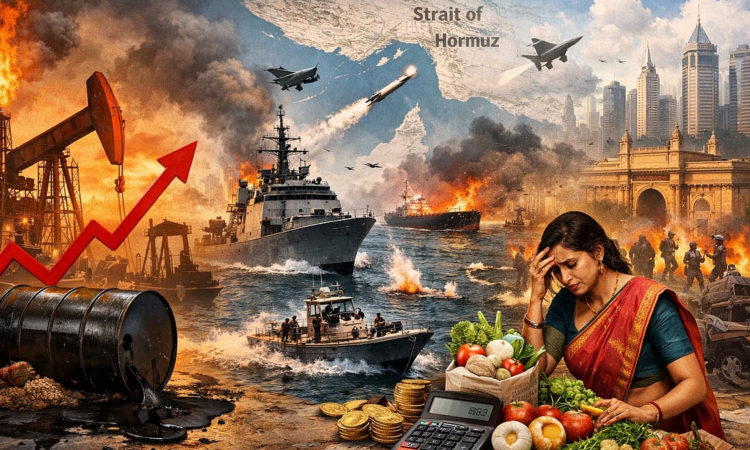
Tensions between the United States and Iran have escalated sharply, with both sides effectively locked in a prolonged conflict impacting global trade routes and energy supplies. At the centre of this crisis lies the strategically critical Strait of Hormuz, through which a significant portion of the world’s oil shipments pass.
With Iran restricting movement in the region and Donald Trump threatening a naval blockade of Iranian ports, global supply chains are facing severe disruptions. For India, which relies heavily on imported crude oil, this geopolitical flashpoint has immediate economic consequences.
According to Devendra Pant, Chief Economist at India Ratings and Research, the impact on India could be multi-layered and significant.
“The impact on the Indian economy will be felt through inflation, lower remittances if GCC (Gulf Cooperation Council) economies are impacted, higher subsidy (fiscal impact) and expansion of current account deficit leading to weakening of currency,” Pant told ANI.
In simple terms, higher oil prices increase the cost of imports, widen the current account deficit (CAD), and put pressure on the rupee. At the same time, if Gulf economies slow down due to the conflict, remittances from Indian workers abroad could decline, further straining the economy.
Pant also highlighted that rising fuel prices are already feeding into inflation and supply disruptions. “The impact of the US-Iran war not only has increased prices of petroleum products but has also increased supply bottlenecks,” he said.
The effects of rising oil prices are not limited to fuel alone, they ripple across industries.
Pant noted, “All industries using petroleum derivatives as raw material are likely to be impacted. Prices of LPG, industrial diesel and petrol have already been raised.”
From manufacturing to transportation, higher input costs could translate into more expensive goods and services for consumers. While oil marketing companies may initially absorb some of the shock, there are limits.
“Oil marketing companies can absorb shock to some extent; beyond that the consumers are likely to feel the burden. The government does not have enough fiscal space to absorb this shock,” he said.
Ultimately, the core issue remains supply disruption and uncertainty. “Ultimately, what is important is price of petroleum products, uncertainty (supply shock) and restoration of supply chain. Impact will be same whether US blocks it or Iran blocks it,” Pant explained.
When asked directly about the economic impact of a blockade, he summed it up succinctly: “It will reflect in price and inflation.”
Market experts are already warning of a sharp rise in crude oil prices.
Dinesh Somani, Founder of Prointellitrade Services, said, “The US statement on fully blocking Hormuz adds to risking geopolitical tensions. Prices of crude oil gained almost 6-7 per cent in the opening session, and a meltdown in equity continued. With no indications of a ceasefire ahead, prices of crude oil are likely to head up till USD 108-109 per barrel.”
He added, “With the recent Iran-US talks in Islamabad, Pakistan, ending without an agreement, the prices of crude oil are likely to head up till USD 108-109 per barrel.”
The failed 21-hour negotiations in Islamabad—marking the highest-level engagement since 1979—underscore how entrenched the conflict has become. With both sides unwilling to compromise on critical issues like nuclear capabilities and control over the Strait of Hormuz, the likelihood of near-term resolution remains low.