
India’s Yuan Payment for Iranian Oil Highlights Pragmatism, BRICS Push for Dollar Alternatives, Experts Say
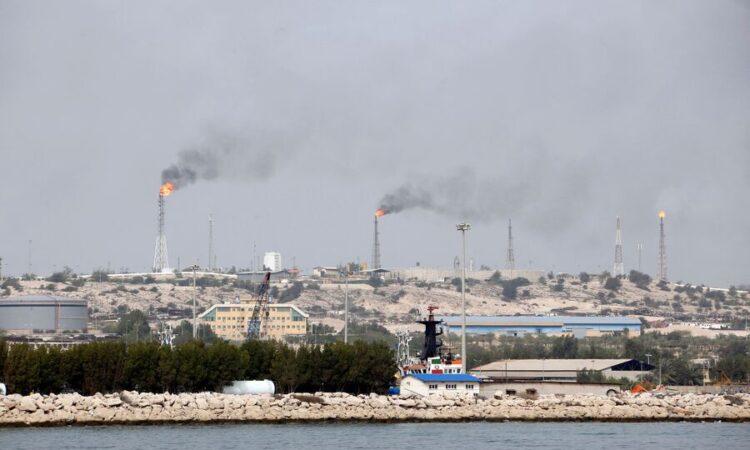
India’s decision to settle a recent Iranian oil purchase in Chinese yuan reflects a mix of wartime pragmatism and shifting global geoeconomics, as well as the growing role of BRICS currency alternatives, according to observers.
The transaction took place during a one-month waiver of U.S. sanctions on Iranian and Russian crude already at sea — a temporary measure aimed at easing global oil supply chain disruptions during the U.S.-Iran war.
As reported by The Times of India, the payment in yuan was made at Iran’s insistence by Indian Oil Corp. and Reliance Industries through ICICI Bank’s Shanghai branch.
Analysts told Vision Times that while the move was driven by immediate necessity, it also reflects deeper structural shifts. These include the increasing integration of Chinese financial systems in Iran, the evolving role of BRICS, and mounting pressure on traditional dollar-based trade systems.
“BRICS efforts at creating common currency gets a fillip as this is a market needing to look beyond the present commercial adversarial system,” Raviprasad Narayanan of Jawaharlal Nehru University said.
Success
You are now signed up for our newsletter
Success
Check your email to complete sign up
India has previously used alternative currencies — including yuan, rupees, and UAE dirhams — to settle Russian oil transactions under the pressure of sanctions.
Narayanan said such moves demonstrate how BRICS economic cooperation is gaining traction in response to geopolitical constraints.
“China and India have a combined population of 3 billion plus another 400 million of Brazil, Russia and South Africa. This is a global market with a template of geoeconomics, not quarantined by geopolitics,” he said.
Pragmatism amid sanctions and energy security pressures
Experts emphasized that India’s use of yuan does not signal an alignment with China. Instead, it reflects energy security priorities and practical constraints in global trade caused by the uncertainty around the Strait of Hormuz, which has been blocked on and off since the beginning of the U.S.-Israeli strikes in late February.
Vaibhav Agrawal, a Mumbai-based maritime and logistics legal expert, said the move does not threaten the dominance of the U.S. dollar in the near term.
“It sits in that uncomfortable grey zone where hard commercial necessity overrides the neat narratives we like to construct about alliances and monetary sovereignty,” he said.
Agrawal noted that in global energy trade, transactions often adapt quickly when sanctions or banking barriers disrupt dollar settlements.
“The moment sanctions, compliance filters, or banking hesitations begin to choke dollar settlements, market participants begin searching for alternative rails. That is precisely where the yuan enters the picture,” he said.
Indian officials have maintained that the priority remains securing energy supplies while complying with regulations. Sujata Sharma of the Petroleum Ministry told The Times of India that companies are working to ensure stable cargo flows.
Multidomain expert K. Siddhartha said the transaction reflects a broader transformation in global financial geopolitics following the Iran war.
“The present move reflects India’s strategic autonomy and tactical flexibility, bypassing dollar-based constraints and sanctions pressure while securing discounted crude from Iran and Russia,” he said.
Narayanan added that geography also plays a role, with Iran offering logistical advantages over more distant suppliers.
“With Iran, this gets negated and ICICI Bank using RMB is a welcome start to an eventual BRICS common currency,” he said.
China’s financial influence deepens in Iran
Experts say the transaction highlights how China’s financial infrastructure is becoming embedded in the Iranian economy, especially as Western systems retreat.
Agrawal said China’s role extends beyond trade into long-term financial integration tied to Belt and Road investments.
“Yuan denominated trade reduces Iran’s exposure to currencies that can be restricted or frozen. It also aligns Iranian exports with a buyer that is willing to absorb geopolitical risk at scale,” he said.
He added that this creates a parallel financial ecosystem where transactions may bypass Western financial institutions.
“Contracts, financing and dispute resolution may not always pass through traditional Western institutions and that has serious implications.”
War-driven trade disruptions and port crisis
The U.S.-Iran conflict has also triggered a broader global shipping and port crisis, complicating trade flows and financial arrangements.
Agrawal said maritime operations are under strain, with legal and contractual frameworks struggling to keep pace.
“Contracts are being stretched to accommodate realities they were never designed for. Force majeure clauses are being invoked in ways that would have seemed excessive a few years ago. Payment terms are being rewritten with multiple fallback currencies,” he said.
“Arbitration is becoming more complex because the underlying transactions themselves are layered with geopolitical sensitivities.”
Siddhartha said repeated transactions like this could accelerate the internationalization of the Chinese yuan and strengthen its role within BRICS.
However, he cautioned that the shift carries risks for India.
“A transaction of this nature as on paper, hints at an emerging multipolar currency order, but it also exposes India to currency risk… and the possibility of replacing one form of dependency [dollar hegemony] with another [yuan influence],” he said.
“In that sense the move is less a strategic breakthrough and more a cautious, constrained balancing act.”
“A transaction of this nature as on paper, hints at an emerging multipolar currency order, but it also exposes India to currency risk, with a reduced bargaining autonomy, and the possibility of replacing one form of dependency (dollar hegemony) with another (yuan influence),” said Siddhartha.
“In that sense the move is less a strategic breakthrough and more a cautious, constrained balancing act.”


