
On the other hand, an island change saw the biggest increase in home costs.

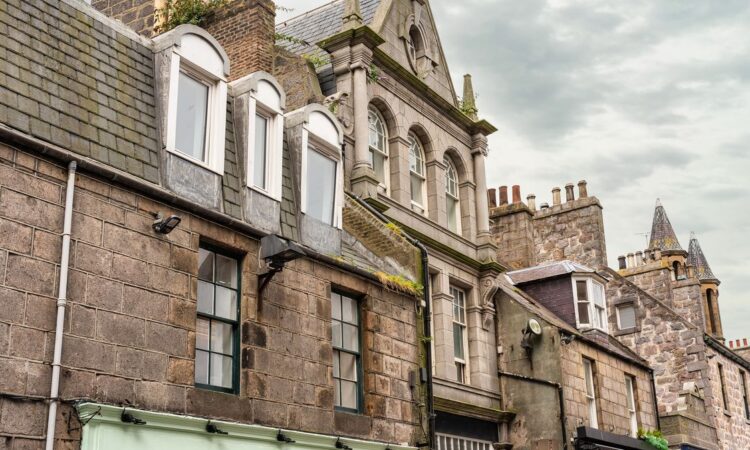
The city saw property prices fall by 6.4 per cent(Image: Jose Miguel Sanchez / Getty Images)
The areas of Scotland where property prices have fallen the most over the past year have been revealed by the UK Government. The parts of the country that saw the biggest increases in the average cost of a home were also named as part of the newly released research.
On Wednesday, April 22, the UK Government revealed the UK House Price Index Scotland: February 2026 report. The House Price Index is a monthly report that shows the average house prices in Scotland, detailing how property prices change over time in each of the country’s council areas.
According to the report, the average price of a property in Scotland in February 2026 was £187,000. Average house prices in Scotland increased by 2.3 per cent in the 12 months to February 2026, though decreased by 0.6 per cent between January 2026 and February 2026.
The area of Scotland that saw the lowest annual percentage change in property prices was the City of Aberdeen, where average house prices decreased by 6.4 per cent in the 12 months to February 2026. The average cost of a home in the city was £128,485 in February, compared to £137,271 the previous year.
Following behind, West Lothian experienced the second-largest decrease in property prices over the 12 months to February 2026. The average cost of a property in the council area was £212,551 in February and £215,750 the previous year, which equates to a decrease in price of 1.5 per cent.
Elsewhere, the Shetland Islands saw property prices decrease by 1.0 per cent between February 2025 and February 2026—falling from £201,475 to £199,491. However, according to the report, the low volume of property sales in Shetland can skew the results and so the data is less reliable.
On the other hand, the Orkney Islands were named as the area of Scotland that saw the largest rise in average property prices in the 12 months to February 2026 with an increase of 18.1 per cent. However, like with Shetland, low numbers of sales transactions in Orkney Islands can lead to volatility in the data.
Another area of Scotland that saw a steep increase in the average property price between February 2025 and February 2026 is Inverclyde. Those purchasing a home in the council area paid on average 7.5 per cent more this February compared to the previous year.
West Dunbartonshire also saw a large rise in the average cost of a home across the 12 months, seeing a 7.4 per cent increase. Property prices in the council area, which is situated to the northwest of Glasgow, in February 2025 were £117,982 on average and rose to £126,696 the following year.
The UK House Price Index Scotland: February 2026 report states: “In Scotland, 27 of the 32 local authority areas showed an increase in average house prices in the 12 months to February 2026. The highest annual percentage change was in Inverclyde, where average house prices increased by 7.5 per cent in the 12 months to February 2026 to £113,000. The lowest annual percentage change was in the City of Aberdeen, where average house prices decreased by 6.4 per cent in the 12 months to February 2026, to £128,000.”
A Registers of Scotland spokesperson added: “There was an increase of 2.3 per cent (to £187,000) in the average house price for Scotland in the 12 months to February 2026. This compares to an increase of 1.2 per cent (to £268,000) in average house prices for the UK as a whole.”
The report also revealed that semi-detached houses saw the highest annual percentage change out of all property types, rising by 4.1 per cent in the 12 months to February 2026 to £213,000. Flats and maisonettes experienced the lowest annual percentage change, increasing by just 0.8 per cent in the same timeframe to an average price of £131,000.
See below for the annual property price change for every local authority in Scotland between February 2025 and February 2026. More information can be found in the full UK House Price Index Scotland: February 2026 report on the UK Government website.
Annual price change by local authority for Scotland
- Aberdeenshire — 1.5%
- Angus 3.1%
- Argyll and Bute — 3.2%
- City of Aberdeen — -6.4%
- City of Dundee — 2.4%
- City of Edinburgh — 3.1%
- City of Glasgow — 2.0%
- Clackmannanshire — 3.7%
- Dumfries and Galloway — 1.6%
- East Ayrshire — 4.9%
- East Dunbartonshire — 3.6%
- East Lothian — -0.2%
- East Renfrewshire — 1.6%
- Falkirk — 3.2%
- Fife — 3.6%
- Highland — 1.3%
- Inverclyde — 7.5%
- Midlothian — -0.1%
- Moray — 4.8%
- Na h-Eileanan Siar — 3.0%
- North Ayrshire — 2.3%
- North Lanarkshire — 4.1%
- Orkney Islands — 18.1%
- Perth and Kinross — 0.9%
- Renfrewshire — 6.9%
- Scottish Borders — 6.6%
- Shetland Islands — -1.0%
- South Ayrshire — 3.1%
- South Lanarkshire — 3.5%
- Stirling — 1.6%
- West Dunbartonshire — 7.4%
- West Lothian — -1.5%


