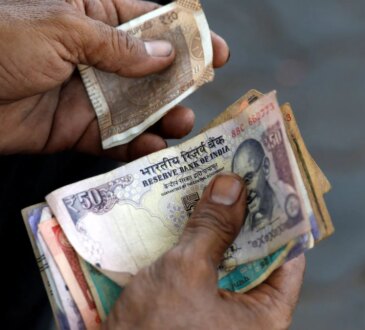
How many people actually spend currency on any given day tells a very different story from how much of it trades on foreign exchange desks. Most currency rankings measure interbank flows, speculative positions, and reserve allocations — activity that bypasses the average person almost entirely.
Consumption rankings measure something more grounded: real spending by individuals, businesses, and traders. Three variables determine where a currency lands:
● The domestic population uses it as primary money
● Official adoption by foreign governments or territories
● Informal acceptance in cross-border trade and remittance flows
How is “most consumed” actually measured?
FX trading volume captures how much a currency moves between financial institutions. Consumption volume captures how much of it changes hands at a point of sale, a market stall, or a mobile payment screen. A currency can dominate one measure while barely appearing on the other.
The Swiss franc is a useful illustration. Investors pour into it during periods of global instability — a safe-haven function that inflates FX turnover well beyond what domestic activity would generate — yet Switzerland has only 9 million residents.
The Nigerian naira, meanwhile, barely registers in global trading data but circulates among more than 240 million people daily. Population size, geographic spread, and cash velocity are the metrics that matter for consumption.
Top 10 most consumed currencies
The table below ranks currencies by estimated daily users, combining official domestic circulation with informal and cross-border use.
|
Rank |
Currency |
Code |
Est. daily users |
|
1 |
US Dollar |
USD |
400M+ |
|
2 |
Euro |
EUR |
450M+ |
|
3 |
Chinese Yuan |
CNY |
1.4B |
|
4 |
Indian Rupee |
INR |
1.5B+ |
|
5 |
Japanese Yen |
JPY |
123M |
|
6 |
Russian Ruble |
RUB |
150M+ |
|
7 |
Indonesian Rupiah |
IDR |
280M |
|
8 |
Brazilian Real |
BRL |
220M+ |
|
9 |
Mexican Peso |
MXN |
135M+ |
|
10 |
Nigerian Naira |
NGN |
250M+ |
The Indian rupee and Chinese yuan carry larger user bases by raw headcount than the dollar and euro combined, yet both rank lower. Cross-border adoption, not domestic scale, is what separates the top two from the rest.
Why does the dollar outrank currencies with far more users?
The dollar’s placement isn’t about American spending power alone — it’s about geographic reach.
Eleven countries have formally adopted USD as their sole legal tender (Ecuador, El Salvador, and Panama among them), and roughly half of all US banknotes in existence, approximately $1.2 trillion worth, circulate outside American borders.
In practice, that reach shows up in places like:
● Cambodian and Myanmar markets, where goods are routinely priced in dollars alongside local currency
● Canadian border towns, where retailers accept USD without second thought
● Zimbabwe and Venezuela, where households stockpile dollars as protection against local currency instability
● Caribbean and Central American hospitality sectors, where hotels and transport operators run largely on USD
The dollar also functions as a default intermediate in many international remittances, even when neither sender nor recipient has any direct link to the US.
For providers like RemitBee that handle high-volume USD corridors, this structural role produces narrower exchange spreads compared to less liquid currency pairs — a real cost benefit that flows through to the end user.
Which Asian currencies serve the most people?
Asia holds three of the top five positions on this list, but the currencies differ sharply in how far they travel beyond their home economies.
|
Currency |
Domestic users |
Cross-border reach |
Payment preference |
|
Indian Rupee (INR) |
1.42B |
Bhutan (legal tender), Nepal (widely accepted) |
Cash-heavy; UPI growing |
|
Chinese Yuan (CNY) |
1.4B |
Belt & Road regions, Southeast Asian borders |
Predominantly digital |
|
Japanese Yen (JPY) |
123M |
Minimal (mostly tourism contexts) |
Cash-dominant |
Indian rupee
India’s population alone gives the rupee the largest domestic user base of any currency.
The UPI payment network now processes over 10 billion transactions monthly, but cash remains dominant in rural markets and the informal sector (which accounts for a substantial share of economic activity).
The rupee formally circulates in Bhutan and is widely accepted in Nepal, where the Nepali rupee maintains a fixed peg to it.
Capital controls restrict how freely INR moves in international markets, suppressing its FX presence despite the enormous user base.
However, for remittances specifically, India is the world’s largest receiving country by volume — which makes INR corridors among the most price-competitive for transfer costs and settlement speed.
Chinese yuan
China’s scale puts the yuan among the top three by daily transaction volume, with much of that activity flowing through digital payment platforms rather than physical notes (at least in cities).
Internationally, the yuan circulates in parts of Southeast Asia and select African markets with active trade links.
However, the yuan’s limited global footprint is largely a policy decision rather than a market outcome — capital controls deliberately prevent free conversion, which is what keeps a currency serving 1.4 billion people from spreading the way a freely traded currency would.
Japanese yen
Japan’s 123 million residents use yen in a society with one of the world’s highest cash preferences.
Japanese households collectively hold over ¥1 quadrillion in cash savings, a figure that reflects cultural familiarity with physical money rather than any weakness in digital infrastructure. Cards and mobile payments are gaining ground, but cash still drives daily commerce for a significant portion of the population.
The yen’s high FX ranking comes from carry trade dynamics — not consumer spending. Investors borrow in low-interest yen to fund positions elsewhere, generating trading volume that has little connection to how many people spend the currency day-to-day.
How do regional currencies extend beyond their borders?
Several currencies circulate meaningfully outside their home country, not through formal policy, but through trade networks, migration patterns, and economic weight.
The euro offers the clearest example of deliberate regional reach: officially used across 20 EU member states, with influence extending further through currency pegs (the CFA franc used across 14 African nations is pegged to it) and informal acceptance in non-euro neighboring countries where cross-border commerce runs high.
Other regional currencies follow a similar logic, though more organically:
● The Russian ruble circulates in Abkhazia, South Ossetia, and Central Asian border markets; migrant remittances flowing back from Russia reinforce its regional footprint
● The Brazilian real serves informally in Venezuela’s frontier regions and in Paraguay’s Ciudad del Este, where Brazilian shoppers dominate retail
● The Mexican peso appears alongside the dollar in US border cities, accepted by a meaningful share of retailers in zones like El Paso and San Diego
● The Nigerian naira moves through West African informal markets in Benin, Niger, and Cameroon, wherever Nigerian traders operate
Why do trading rankings and daily-use rankings diverge?
The gap between FX trading rank and consumption rank can be substantial — and drawing conclusions from one when asking about the other produces misleading results.
|
Currency |
FX trading rank |
Consumption rank |
What explains the gap |
|
USD |
1 |
1 |
Dominates both measures |
|
EUR |
2 |
2 |
Large economy + broad adoption |
|
JPY |
3 |
5 |
Carry trade activity inflates FX rank |
|
GBP |
4 |
Not top 10 |
London is an FX hub ≠ for global consumer spending |
|
CNY |
5 |
3 |
Massive population, restricted convertibility |
|
INR |
Not top 10 |
4 |
Capital controls suppress trading presence |
|
IDR |
Not top 10 |
7 |
280M users; minimal FX footprint |
|
NGN |
Not top 10 |
10 |
Large user base; not freely convertible |
The British pound may be the most counterintuitive case here. London’s role as the world’s largest FX trading center pulls GBP volumes far above what UK consumer activity alone would generate.
The rupee and yuan, by contrast, serve vastly more people in daily life but barely register in trading data — because government policy constrains convertibility, not consumer demand.
What does currency consumption mean for international transfers?
Consumption depth affects transfer costs in ways that aren’t always obvious.
High-volume corridors handling widely used currencies attract more provider competition, which compresses fees and tightens exchange margins over time. Currencies serving large receiving populations — INR, PHP, PKR — draw similar competitive pressure into remittance markets specifically.
RemitBee covers several of these corridors, including CAD-to-INR and CAD-to-PKR transfers, where the receiving currency’s depth in the local economy determines how quickly funds become accessible — whether through mobile wallets, bank accounts, or cash pickup.