
The money transfer app market is growing rapidly due to increasing mobile usage and a shift towards digital finance. Key opportunities include fast, secure transactions and integration with tech features like AI, biometric security, and multi-currency support. Demand is rising globally, driven by convenience and financial inclusion efforts.
Money Transfer App Market

Dublin, April 27, 2026 (GLOBE NEWSWIRE) — The “Money Transfer App Market – Global Strategic Business Report” report has been added to ResearchAndMarkets.com’s offering.
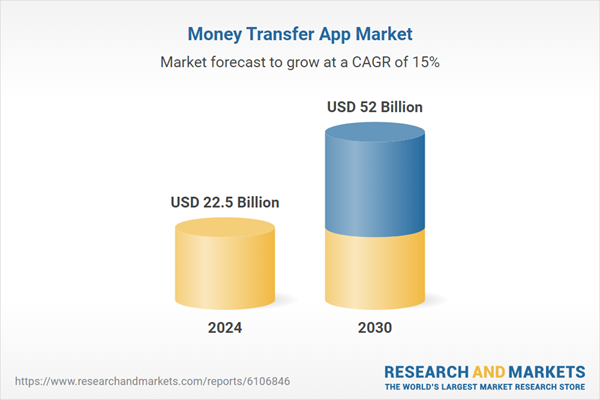
The global market for Money Transfer App was valued at US$22.5 Billion in 2024 and is projected to reach US$52 Billion by 2030, growing at a CAGR of 15% from 2024 to 2030. This comprehensive report provides an in-depth analysis of market trends, drivers, and forecasts, helping you make informed business decisions.
Money transfer apps are rapidly becoming the preferred method for sending and receiving funds, both domestically and across borders. These apps offer fast, secure, and user-friendly solutions for individuals, families, freelancers, and small businesses looking to manage payments without visiting physical outlets or banks. Users can transfer money, pay bills, split expenses, and even convert currencies within a few taps on their mobile device. This convenience, combined with transparent fees and real-time tracking, has driven significant adoption.
The rise in mobile phone usage and increased comfort with digital financial services are key contributors to market growth. Users across demographics are turning to apps for day-to-day financial transactions, especially in regions where mobile-first behavior dominates. In addition to speed and flexibility, users are drawn to features like biometric security, digital receipts, multi-currency support, and integration with contact lists and QR code payments.
How Are Features and Technologies Evolving Within These Apps?
Money transfer apps are evolving through the integration of advanced technologies aimed at improving user experience, security, and speed. Many apps now use AI and machine learning to detect fraud, recommend preferred payment methods, and personalize interfaces based on usage patterns. End-to-end encryption and two-factor authentication have become standard, increasing user confidence in app-based transfers.
Multi-currency wallets, real-time exchange rate visibility, and peer-to-peer payment capabilities are also enhancing functionality. Several apps now support instant transfers across different platforms and countries using networks like SWIFT alternatives or blockchain-backed infrastructure. Some apps offer additional features such as budgeting tools, digital banking services, and integration with investment platforms. Customer support features, including chatbots and multilingual assistance, are being added to reduce friction and support global users.
Where Is Demand Rising and Who Are the Core Users?
Adoption is expanding across urban and semi-urban areas where users seek faster, more affordable alternatives to banks and traditional remittance services. Young adults, working professionals, gig economy workers, and migrants sending money to family members are core users of these platforms. Small businesses and freelancers increasingly rely on money transfer apps for invoicing and payment collection, especially when working across borders.
In developed economies, users are turning to apps for convenience and cost-effectiveness, while in emerging markets, these apps serve as a bridge to financial services for the unbanked or underbanked. Government cash assistance programs, donation drives, and peer lending models are also using app-based platforms to distribute funds efficiently. E-commerce, travel, and education-related payments are additional use cases contributing to rising demand.
What Factors Are Driving Growth In The Money Transfer App Market?
Growth in the money transfer app market is driven by several factors including the rise in mobile penetration, growing preference for digital financial services, and demand for low-cost, fast transactions. Shifting consumer expectations around convenience and transparency are encouraging developers to enhance app performance and add value-added features. Expansion of cashless economies, digital ID integration, and open banking regulations are also supporting app-based financial ecosystems.
Cross-border remittances, especially by migrant workers, continue to be a major contributor to volume. Advancements in fintech infrastructure, partnerships with global payment networks, and increasing trust in digital platforms are further enabling scale. As financial inclusion efforts deepen and global commerce becomes more connected, money transfer apps are expected to remain central to both personal finance management and small-scale business transactions worldwide.