‘Keeps me awake at night’: Bank of England warns stocks may crash as market risks build. Protect your portfolio now
Moneywise and Yahoo Finance LLC may earn commission or revenue through links in the content below.
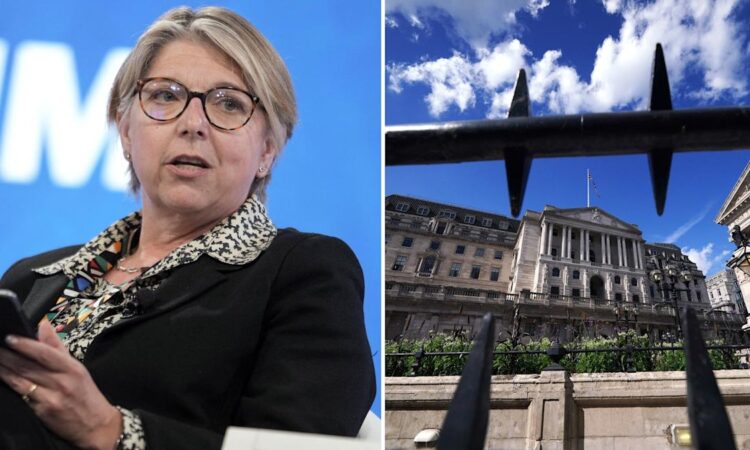
Global stock markets have surged to record highs despite the Iran War, yet Bank of England’s head of financial stability, Sarah Breeden, recently warned that asset prices may not fully reflect the growing threats facing the global economy (1).
“There’s a lot of risk out there and yet asset prices are at all-time highs,” Breeden told the BBC. “We expect there will be an adjustment at some point.”
Top Picks
While Breeden declined to predict when a downturn might occur (or how severe it could be), her warning for investors is that they might be underestimating the risks of today’s market. Central bank officials rarely speak so directly about potential market declines.
In this case, Breeden isn’t merely flagging a single weak point in the market, but the risk of multiple pressures hitting all at once. Historically, routine corrections have led to deep downturns.
For example, during the dotcom bubble, overvalued tech stocks didn’t fall on their own. The decline was compounded by tight financial conditions and the drying up of venture capital, leading to a broad pullback in investment that saw the stock market lose 10% of its value (2).
“The thing that really keeps me awake at night is the likelihood of a number of risks crystallizing at the same time,” Breeden told the BBC, alluding to the fear that macroeconomic shocks, lower private credit confidence and AI could triple-whammy the market at any time.
Then, she asked the question every investor might want to consider: “Are we prepared for it?”
Markets are soaring despite consumer sentiment
The S&P 500 has surged roughly 30% over the past year, hitting a string of all-time highs. The UK’s FTSE 100 index followed a similar path, rising more than 20% over the same period.
Much of today’s market momentum is driven by a massive wave of investment into artificial intelligence. The International Monetary Fund goes as far as to describe AI as the “defining drive of global economic conversation—and, increasingly, of economic growth itself (3).”
Tech companies have poured hundreds of billions of dollars into AI infrastructure. The scale of the spending has been intense enough that some observers have even described it as a “frenzy,” whilst directly comparing it to the dotcom bubble (4).