(Bloomberg) — Sharp moves in the Japanese yen that sent the currency to a 10-week high are renewing speculation that the country is intervening in the market.
Most Read from Bloomberg
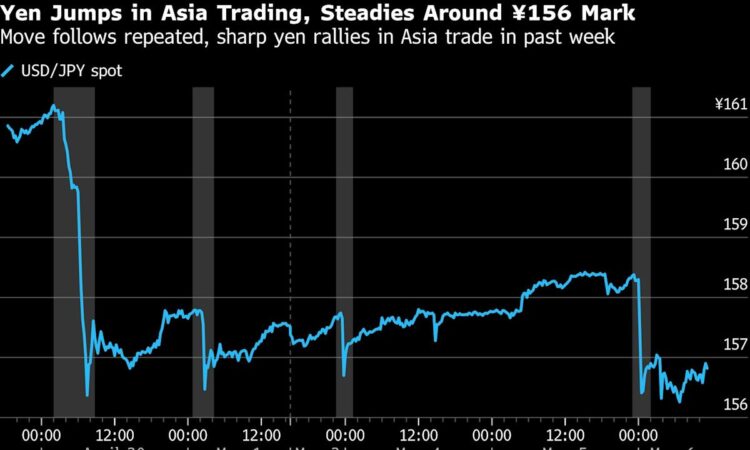
The yen surged about 1.8% in the span of a half hour during the afternoon of the Asia session and topped 155.04 per dollar. The currency later pared some of the advance, trading around 156.46 as of 12 p.m. in New York.
Japan’s markets were shut for a holiday on Wednesday, but analysts said the currency’s jump wasn’t due to thin liquidity. The Ministry of Finance, or MOF, did not immediately respond to a request for comment outside regular working hours.
“The quick-fire move may partly reflect intervention as Japanese officials likely leaned into broad dollar weakness,” said Elias Haddad, global head of markets strategy at Brown Brothers Harriman.
Talk about Japan’s market action has dominated trader discussions in recent days, with many seeing the 160 level as a trigger point for currency officials. In late April, the government intervened for the first time since 2024, causing the yen to surge as much as 3% in intraday trading.
While Japanese officials have declined to comment directly on whether authorities stepped in, people familiar with the matter have said it took place on April 30 and analysis of Bank of Japan accounts indicates that it likely spent around $34.5 billion.
Japan has the firepower to intervene 30 times in currency markets at last week’s scale, though officials are expected to conserve their reserves and step in at more effective moments, analysts at Goldman Sachs Group Inc. said.
The dollar-yen pair “had been trading much closer to cyclical fundamentals recently than it had been in the lead-up to the last rounds of intervention in 2024, and an extension of these fundamental trends should continue to apply downward pressure on the yen in the weeks ahead,” a Goldman team including Stuart Jenkins and Teresa Alves wrote Wednesday.
Japanese authorities spent a total of around $100 billion in buying the yen several times in 2024 after the currency tumbled to around 160.17. Additional steps were taken on days when the yen reached 157.99, 161.76 and 159.45.
Options pricing suggests traders expect further bouts of action. One-week risk reversals, which depict the difference in demand between bullish and bearish bets, show yen sentiment is near the most bullish since February, hovering near levels that have previously been associated with currency intervention risk since 2022.