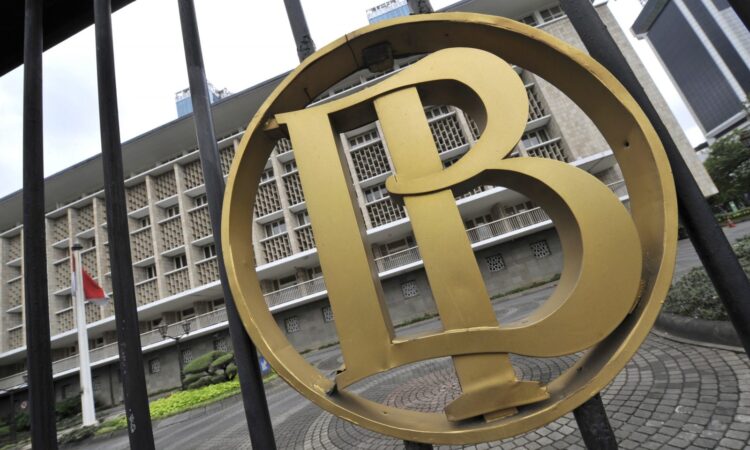
On May 5, the rupiah closed at 17,445 per dollar — its weakest level on record — and by evening Bank Indonesia had tightened foreign-exchange rules for the third time in two months.
Cash dollar purchases without underlying documentation are now capped at US$25,000, down from $100,000 in March. Bank Indonesia Governor Perry Warjiyo, briefing reporters alongside President Prabowo Subianto’s economic ministers, declared the currency undervalued and the central bank’s resolve undimmed.
The rupiah may yet recover or weaken further, but the question of Bank Indonesia’s policy toolkit stands either way. The instruments are now being deployed faster than at any point since the 1997-98 Asian financial crisis.
Whether they still fit the problem they were built for is the harder question — and one Jakarta’s central bank peers in Manila, Mumbai, Seoul and elsewhere in Asia are beginning to ask themselves.
In the first quarter of 2026, Bank Indonesia drew down $8.3 billion from its foreign exchange reserves, leaving the stockpile at $148.2 billion by end-March, the lowest since July 2024.
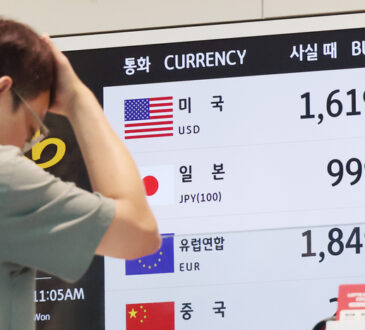
The pattern extends across the region: the Indian rupee, the Philippine peso and the South Korean won have each hit record or multi-year lows, with the won recently touching its lowest level in 17 years.
On paper, these currencies should have some breathing room. The US Dollar Index is down 10.91% over the past 12 months, the US Federal Reserve is expected to cut rates further and the dollar’s share of global reserves has slipped from 66% in 2015 to 56% by 2025.
Clearly, something in the usual transmission between a softer dollar and calmer emerging markets has stopped working.
A recent Asia Times analysis noted that the ongoing Iran war has disrupted the familiar dynamic in which geopolitical tension meant buying dollars and selling Asia, with Southeast Asian currencies now diverging according to their own fundamentals.
Indonesia fills in the less comfortable half of that picture. The global reserve-currency transition under way — echoing the pound sterling’s fall from 70% of global reserves in 1940 to 2% by 1980 — is a slow structural process. Harvard’s Kenneth Rogoff, among others, argues that dollar dominance has probably reached its peak.
The more immediate question is whether the policy playbook that emerging markets assembled in the aftermath of the 1997-98 Asian financial crisis still offers sufficient protection during the de-dollarization transition.
Much of the public debate revolves around questions easy to pose but difficult to answer — whether the yuan, gold or some combination will eventually take the dollar’s place. A more tractable story unfolds inside the operations rooms of emerging-market central banks, where the tools built to manage life under dollar dominance are increasingly mismatched with the dollar they now face.
For almost three decades, the working consensus among emerging-market policymakers has been fairly stable: build reserves, anchor inflation credibly, intervene with discretion, keep policy rates roughly aligned with external conditions. That framework was built for a world of steady dollar dominance and predictable Fed cycles.
Those assumptions and conditions, however, no longer hold. The dollar now moves on Trump-era policy whiplash, on disputes about Federal Reserve independence and on geopolitical shocks whose rhythm does not fit standard intervention models.
Bank Indonesia is currently deploying four instruments at once — offshore non-deliverable forwards (NDFs), domestic non-deliverable forwards (DNDFs), the spot market and secondary government bonds — in the posture of an institution assembling a rupiah defense from every available tool, because no single instrument carries enough weight on its own.
Tuesday’s tightening of dollar-purchase thresholds adds an administrative fifth. Bank Indonesia’s willingness to layer on capital-flow management tools, spelled capital controls, alongside market intervention is itself a significant signal: the conventional toolkit is no longer enough.
The structural backdrop, however, makes these tools harder to wield. Indonesia exports commodities priced in dollars — nickel, coal, palm oil — while importing dollar-denominated essentials such as refined fuel, capital goods and food.
When oil prices spiked because of the Iran war, rising import costs outpaced commodity export gains, widening rather than narrowing the trade deficit. A multipolar currency order offers ways out of this asymmetry in principle, but the plumbing is still being laid.
ASEAN’s Local Currency Transaction framework covers only a thin slice of regional trade, and BRICS payment infrastructure is still more a geopolitical signaling device than a functioning financial clearing system.
As European Central Bank chief economist Philip Lane has warned, heavy reliance on dominant payment systems leaves countries “outsourcing” their own financial infrastructure. Emerging markets are thus being asked to manage yesterday’s crisis with tomorrow’s tools – tools that have yet to be built and deployed.
The third element of the old playbook, monetary policy autonomy, has quietly become the most constrained. The standard prescription — cut rates to support growth, raise them to defend the currency — assumes domestic and external objectives can be balanced. But that balance has narrowed.
Bank Indonesia has cut rates by 150 basis points since September 2024 to 4.75%. That’s defensible on domestic grounds with inflation inside the 2.5% target band, and GDP projected at between 4.9% and 5.7%.
Each cut, though, narrows the rate differential with the US Fed and weighs on capital flows, leaving the central bank caught between the growth its government expects and the currency stability its external balance demands.
The pressure extends beyond Indonesia. The Reserve Bank of India has intervened heavily even as its reserves, worth about $274 billion nominally, or roughly $202 billion in 2015 dollars after stripping out inflation, indicate a more modest buffer than the headline figure suggests. Bangko Sentral ng Pilipinas, the Philippines’ central bank, has meanwhile recently seen the peso drift to multi-year lows.
Recent IMF research offers some reassurance: credible emerging markets have historically absorbed dollar-cycle spillovers more smoothly than less disciplined peers, so the policy playbook has broadly worked until now.
The question is whether “working” is now a high enough bar, given that a 10% dollar appreciation is estimated to cut emerging-market output by 1.9% over two years, against just 0.6% in advanced economies.
Indonesia’s significance here lies in how ordinary it is by emerging-market standards. Its inflation is contained, its institutions enjoy reasonable credibility and its economic growth outlook is among the sturdiest in the G20.
The lessons of Turkey and Argentina are by now familiar — cautionary tales about the downward spiral caused by political pressure on central banks, serial default and lost credibility.
Indonesia’s May 5 move, though, raises a harder question: what does it mean when an economy doing everything by the book still finds itself hemorrhaging foreign reserves and tightening FX rules for the third time in barely two months?
The diagnostic value may lie more with the strong cases than with the weak ones. The canary here is a healthy bird, making the signal worth noting.
Much of the de-dollarization debate concentrates on the geopolitics of payment systems – on whether BRICS can build a rival to SWIFT or whether the yuan might eventually contest the dollar’s safe-haven role. These are legitimate questions, though they crowd out a more immediate one.
For finance ministers and central bank governors from Jakarta to Manila to Pretoria, the daily reality is simpler and harder: the dollar is weakening, their own currencies are under pressure and the instruments they inherited from the late 1990s are showing their age.
Until the Global South builds the financial infrastructure that matches the multipolar order it is already part of, even its better-run economies will keep spending reserves on a defense that no longer fits the threat.
Irvan Maulana is a researcher at the Centre for Economic and Social Innovation Studies (CESIS), a think tank based in Jakarta.