borrowers. You could see that selectivity across the region: Mexico’s peso rose even after Banco de México (Banxico) cut rates, while other markets moved less as local growth and politics stayed in focus.
Why should I care?
For markets: Lower stress on dollar debt is opening funding windows.
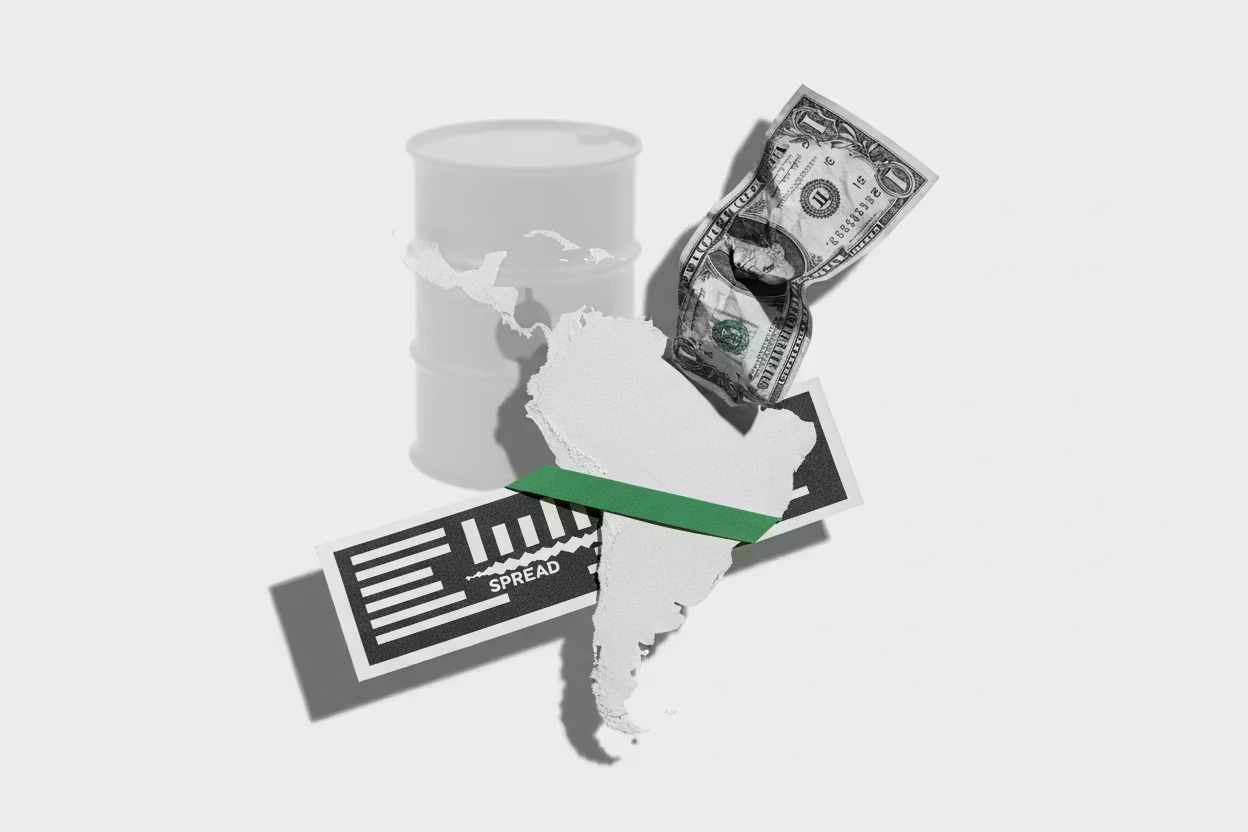
London Stock Exchange Group (LSEG), a market-data and trading firm, showed emerging-market bond spreads – the extra interest borrowers pay over US Treasuries – narrowing to their tightest since the global financial crisis. When those gaps shrink, it usually means investors feel more comfortable taking credit risk, which can revive new bond issuance. That’s the real-world test: Bolivia returned with a $1 billion sovereign bond deal after a tough stretch for access, and Saudi Arabia’s Public Investment Fund, a state-backed investor, raised $7 billion across three bond tranches.
For you: Rate cuts can pause if the currency starts to wobble.
In places like Mexico, central banks want to lower borrowing costs, but they also watch the exchange rate because big currency swings can scare off foreign investors and push inflation back up. Banxico’s quarter-point cut didn’t knock the peso down, but Macquarie, an Australian investment bank, said more cuts likely need clearer cooling in prices and “orderly external conditions”. In other words, policy can stay restrictive for longer than a single cut suggests – keeping variable-rate loan costs and savings rates tied closely to where the benchmark rate settles.