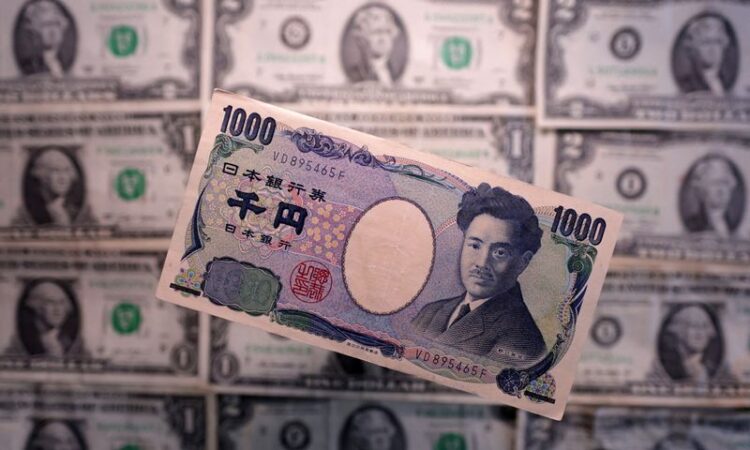
By Makiko Yamazaki and Leika Kihara
TOKYO, May 7 (Reuters) – Japan faces no constraints on how often it can intervene in currency markets and is in daily contact with U.S. authorities, its top currency diplomat said on Thursday, reinforcing Tokyo’s resolve to defend the embattled yen.
The remarks by Atsushi Mimura come ahead of a visit to Japan next week by U.S. Treasury Secretary Scott Bessent, placing the yen, possible intervention and the Bank of Japan’s rate path firmly under the spotlight as investors weigh whether Tokyo can shore up its currency on its own, or will need U.S. backing to do so.
Bessent is expected to discuss yen moves with his Japanese counterpart, Satsuki Katayama. Markets are on alert for any comments Bessent might make on the yen and the Bank of Japan’s monetary policy, given his past remarks favouring speedier rate hikes.
Inflation risks from the Middle East conflict exposed a hawkish divide at the BOJ last month, lifting expectations of a June rate hike despite its decision to hold policy steady, analysts say.
Mimura, vice finance minister for international affairs, declined to comment on Bessent’s visit but said he remained in daily contact with U.S. authorities, adding that his counterparts “fully understand our thinking and our actions”.
“Our focus, consistently and without change, is directed in all directions,” he told reporters, stressing that Tokyo continues to see speculative moves in the currency market.
During a three-day visit to Japan starting on Monday, Bessent will meet Prime Minister Sanae Takaichi as well as Katayama and BOJ Governor Kazuo Ueda, a source familiar with the matter said, confirming a report by Nikkei newspaper.
“The market’s biggest focus is whether the U.S. will join Japan in intervening. For now, it’s highly likely to be solo, which won’t be as powerful as joint action,” said Shota Ryu, FX strategist at Mitsubishi UFJ Morgan Stanley Securities.
“The U.S. probably feels the yen’s weakness is not due to speculative action but slow BOJ rate hikes. Bessent may thus informally call on the BOJ to raise rates in June,” he said.
In January, Bessent urged “sound” BOJ policy to curb excessive yen weakness, the same month Washington carried out rare rate checks that gave the currency a lift.
STRATEGY WITH LIMITS
Sources told Reuters that authorities intervened on Thursday last week, with money market data suggesting they sold about $35 billion to support the yen.
Since then, the market has seen three abrupt spikes in the yen through to Wednesday, when it jumped as high as 155.00. The latest money market data suggests Japan may have spent another $32 billion in additional bouts of intervention.