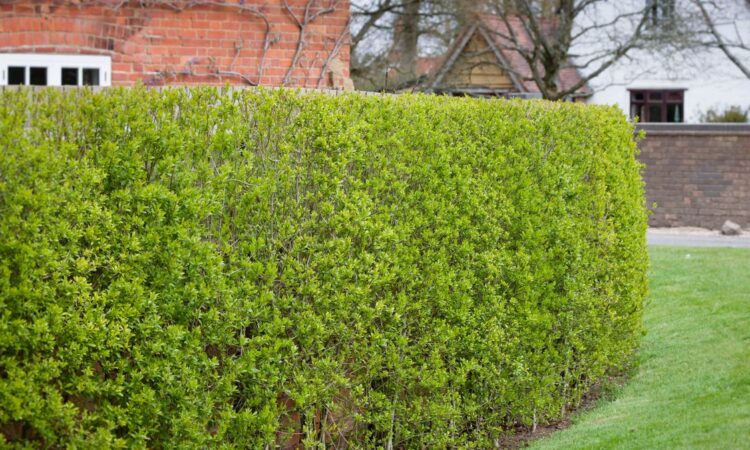
There are rules set out in government law when it comes to the rights and wrongs of hedges in neighbour disputes

(Image: PaulMaguire via Getty Images)
We all hope to have good relations with our neighbours, but disagreements can occur – and hedges often prove to be a source of contention. When a neighbour’s hedge grows excessively tall, it may cast your garden or property into shadow, or block your view.
Government legislation actually contains specific provisions addressing the issue of overgrown hedges. The Anti-Social Behaviour Act 2003 empowers local authorities to handle complaints about high hedges.
Official guidance on the gov.uk website features no fewer than 30 questions surrounding this matter – and other documents run to dozens of pages. The questions cover everything from when complaints can be lodged and what can be complained about, to the required height of a hedge, its location and how to measure it.
Gov.uk explains: “When councils are determining a complaint they must first decide whether the height of the high hedge is having an adverse effect on a neighbour’s enjoyment of their home and/or its garden or yard. If it is, then councils can order the owner of a high hedge to take action to put right the problem and stop it from happening again. The legislation also allows councils to set and charge fees for handling these complaints.”
The government recommends that if you’re bothered by someone else’s hedge, the most effective approach is to discuss it with them directly. Involving the council or pursuing legal action, particularly without initially approaching your neighbour yourself, could potentially escalate the situation.
It’s mutually beneficial to attempt to resolve matters amicably is the official advice. After all, you must continue living in close proximity to one another and so it’s better if you are on good terms.
The council may refuse to investigate your complaint if they believe you haven’t made every reasonable effort to resolve the dispute without their involvement. However, your local authority is likely to examine your complaint provided specific conditions are satisfied.
What types of hedge complaint can your council examine?
The hedge must act as an obstruction to light or access, be predominantly evergreen or semi-evergreen in nature, stand at more than two metres in height from ground level, and consist of a row of at least two trees or shrubs. The hedge must also be situated on property owned or occupied by another party. Additionally, it must “harm the reasonable enjoyment of a home you own or occupy and/or its garden or yard”. To lodge a complaint, you must be either the owner or occupier of the affected property.
If the hedge you have concerns over meets the criteria, the local council should be in a position to consider your complaint. However, one aspect the legislation doesn’t address is hedge roots. The council won’t handle complaints submitted under this law regarding issues such as root-related property damage, including subsidence or roots depleting moisture and nutrients from the soil.
Above All Tree Care recommends that when disagreements occur, you should maintain comprehensive records of communication attempts, photographic evidence of the hedge’s impact, and documentation of any informal agreements.
Evergreen Hedging states on its website that it is advisable to try to work things out with your neighbour before making a formal complaint. The website advises: “If this is not possible or you cannot agree on what to do about the hedge, then you should consider mediation. This means asking an independent person to help you understand each other’s point of view.” It notes this service is typically provided free of charge.
What happens if the council says my neighbour’s hedge is too tall?
Should the council decide to intervene, it has the power to issue a ‘remedial notice’ requiring your neighbour to trim the hedge to a height that will resolve the issues and prevent them from recurring. However, 2 metres will only be appropriate in certain circumstances. The council can also instruct your neighbour to take measures to prevent future problems with the hedge.
They cannot, however, order the complete removal or destruction of the hedge. Additionally, a neighbour may be granted weeks or even months to comply with the notice.
According to the government document, “high hedges complaints: prevention and cure”, failing to comply with the requirements of a remedial notice constitutes an offence punishable, upon conviction in the magistrates’ court, by a fine of up to £1,000.
The court may then – either alongside or instead of a fine – issue an order requiring the offender to complete the necessary work within a specified timeframe. Non-compliance with the court order would constitute a further offence, subject to a similar fine. From this stage, the court would also have the authority to impose a daily penalty for each day the work remains incomplete.
However, do not take matters into your own hands. If you cut your neighbour’s hedge, your neighbour could pursue legal action against you for causing damage to their property.
According to Above All Tree Care, homeowners possess a legal entitlement to plant and maintain hedges along boundary lines. However, they say this entitlement must be weighed against neighbours’ rights to reasonable enjoyment of their own property.
Summarising the legislation surrounding tall hedges, they state: “The 2 metre hedge rule represents a practical threshold for addressing hedge disputes whilst respecting property owners’ rights to maintain boundary vegetation. Success in resolving hedge conflicts typically depends on early communication, reasonable compromise, and understanding that local authority intervention should be a last resort after exhausting informal resolution methods.”