Experts reveal why SMSFs and commercial property just became more attractive to everyday investors
The dust is settling on the 2026 Budget, and many commercial investors are asking what it means for them, particularly for those investing through their self-managed super and through trusts.
Housing was a major focus in this year’s budget, with reforms directed towards the residential property market. The abolishment of negative gearing for investors purchasing an existing home – new builds are largely exempt – could drive more ‘mum and dad’ investors towards commercial property in search of higher yields, experts say.
The 50% capital gains tax (CGT) discount will also be replaced with an inflation indexation model from July next year, which applies to all assets, not just residential property.

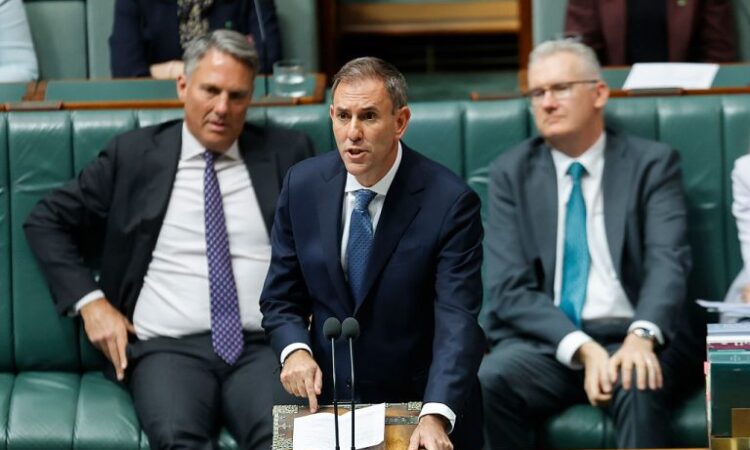
Treasurer Jim Chalmers delivered his fifth budget, and this year’s was his most ambitious. Picture: Getty
While commercial property investors are exempt from the negative gearing changes, CBRE’s head of research Sameer Chopra believes the shakeup to capital gains tax (CGT) will force a re-think in strategy.
“Just about everyone should get their property valued before 1 July 2027 because the 50% CGT discount will still apply, but you need to have a valuation by then. We would expect that there’d be a significant increase in valuation activity,” Mr Chopra told realcommercial.com.au.

CBRE’s head of research Sameer Chopra. Picture: Supplied
“To fully benefit from indexation, you’ve got to hold the property for multiple years, whereas with a 50% discount – even if you had it for two years or five years – you still have a 50% discount. Now that is not the case, so I think holding periods will become longer.”
Trust changes a ‘big deal’ for commercial property investors
From 1 July 2028, discretionary trusts will face a 30% minimum tax rate. Trusts are popular methods to invest in property, as it disperses the gains and yield among trustees, potentially lowering an individual’s overall tax burden.
The budget papers said that 10% of the wealthiest households hold more than 90% of the value of private trusts. It’s set to raise around $4.5 billion in revenue over the next few financial years.
Ray White head of research Vanessa Rader said this is a big deal for commercial property investors.
“The discretionary trust is the dominant holding structure for private commercial property investment in Australia, and the government’s own revenue estimate of $4.47 billion in 2029-30 alone signals the scale of the structural change anticipated,” Ms Rader said.

Vanessa Rader, Ray White Group head of research.
She said that while the residential changes create a “meaningful incentive shift” towards commercial property assets, it’s not a straightforward pivot.
“For some private investors, this budget may be the prompt to consider diversifying into commercial property for the first time. The income yields are compelling, averaging above residential yields across most commercial assets, often with long leases and sticky tenants providing income certainty that residential investment rarely matches,” Ms Rader said.
“That said, the pivot is not straightforward. Commercial property carries a meaningfully different risk profile to residential. Entry costs are higher, financing is more complex and often negative gearing is not possible, and lease vacancy or tenant default can have a more immediate impact on cash flow than a vacant residential property.
“For private investors without prior commercial exposure, the learning curve is steep.”
‘Almost impossible to justify’ residential investment
While entry-level investors may approach the commercial property market with caution, industry professionals anticipate a pickup with sophisticated investors.
Scott O’Neill, CEO of commercial investment buyers’ agency Rethink Group, said inflows to the sector has been strong.
“The volume of investors coming to us specifically because they are reassessing their residential strategy has accelerated meaningfully in the past few months,” Mr O’Neill told realcommercial.com.au

Scott O’Neill, CEO at Rethink Group. Picture: Supplied
“The numbers tell the story clearly. Quality commercial assets are delivering net yields of 6% to 8% compared to residential gross yields of 3% to 4% in Sydney and Melbourne.
“When you layer on top of that the removal of negative gearing concessions and a reduced CGT discount on residential the gap between the two asset classes becomes almost impossible to justify staying in residential for a sophisticated investor with options.”
What it means for SMSFs
In the lead up to budget night, there had been speculation of a clamp-down on SMSFs via limiting or outright banning limited-recourse borrowing arrangements (LRBA) for residential property. LRBAs allow an SMSF to borrow funds to purchase an asset.
Indeed, this has been a rumour leading up to many budgets and elections in recent memory, and those self-managing their super understandably have jitters, according to Mr O’Neill.
“The government has a clear pattern of identifying tax structures that are sheltering gains from their intended policy changes and then closing those structures in subsequent budgets,” he said.
“SMSFs in pension phase paying zero CGT is an extraordinarily powerful concession and it would be naive to assume that remains untouched indefinitely if the government believes it is being used to circumvent the intent of the CGT changes.”
While SMSF loans typically operate under a bare trust structure, they aren’t in the scope of the clampdown on trusts.
As Raine and Horne executive chairman Angus Raine points out, the government has left the door wide open for SMSF holders as it looks like a lot of the policy changes largely exempt properties held within self-managed super.
“Feedback from commercial property experts across the Raine & Horne Group indicates that commercial property is often held in the name of a SMSF,” Mr Raine said.
“The Budget reforms could increase the appeal of commercial property among SMSF investors.”

Angus Raine, Executive Chairman of Raine & Horne. Picture: Supplied
Commercial property investments through self-managed super are a popular asset allocation. At the end of 2025, tax office data indicated there was more than $118 billion invested in commercial property through SMSFs – nearly twice that of residential property.
Limited-recourse borrowing arrangements (LRBAs) or SMSF loans hit nearly $78 billion; ostensibly some of that is used for leveraged purchases of commercial property.
Both of these are at record levels and each about $25 billion higher than when the ATO started the data collection in June 2020.
However CBRE’s Mr Chopra issued a word of warning.
“It boils down to ticket size. The moment you cross that $3 million to $10 million threshold in superannuation, the tax rate starts to jump. For commercial property, it’s a wait and see.”
Will residential investors take the leap to commercial?
Except for most new builds, experts say residential property investment could become decidedly less attractive after 1 July 2027.
AMP Capital analysis found that a residential ‘investor retreat’ could lower property prices by 5% in the short term. So, the question is: Where are these investors going to park their capital?

2026’s Budget significantly shakes up the property investment tax framework. Picture: NewsWire / John Gass
Mr Raine said “mum and dad investors” will increasingly look to commercial property.
“Commercial property is already a very cost-effective investment as the tenant, rather than the owner, normally pays many of the ongoing costs associated with the property,” he said.
The Instant Asset Write Off (IAWO) of $20,000 for small businesses has also been made permanent, which could fan the flames.
“The certainty of the IAWO will further add to the appeal of commercial property because small business tenants will be able to claim an instant tax break for fit-outs of their premises,” Mr Raine said.
The latest commercial property news
Get the latest news and insights straight to you.
Knight Frank chief economist Ben Burston said investors will increasingly want to chase yield and will be attracted to commercial sectors.
“We have already seen increased interest from private investors in the commercial market in recent years in response to the higher interest rate environment which has incentivised investors to acquire higher yielding investments, and these changes will add further impetus to demand,” he said.

Knight Frank chief economist Ben Burston. Picture: Supplied
However, according to Ray White’s Ms Rader, it doesn’t automatically mean a 1:1 swap into commercial property.
“Asset selection requires a clearer understanding of location fundamentals, tenant covenant strength, and lease expiry profiles,” she said.
“The opportunity is genuine but requires more considered due diligence than simply redirecting residential investment capital into the nearest commercial asset.”
Take the next six to 12 months to assess
Where the experts are aligned is that the next six to 12 months should be used by investors to assess their portfolios and seek professional tax advice.
“Make sure that you’re structured right, at least for the next 12 months. Do you buy in a trust? Do you buy in a superannuation fund? Do you buy it in your name or through a company? You just have to rethink that now going forward,” Mr Chopra said.
Mr O’Neill said investors should use the current window to review their structure with a qualified accountant and financial adviser.
“The investors who build genuine cash flow positive commercial portfolios in appropriate structures are the ones who will sleep at night regardless of what the next budget brings.”