
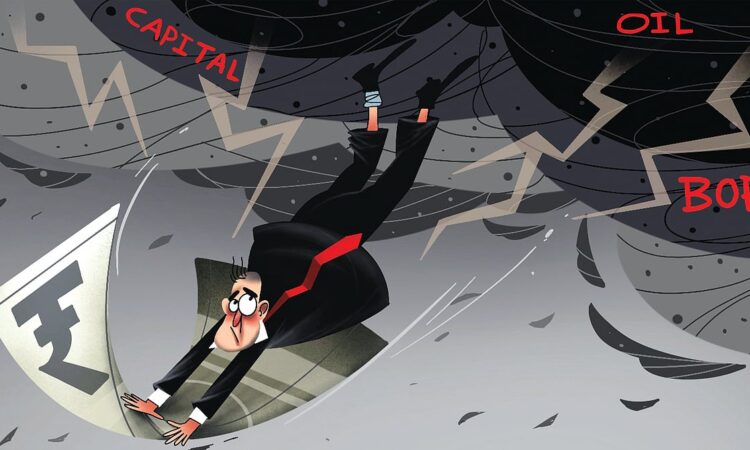
Remittances have been India’s great external stabiliser—larger than any single export category. But they should not be taken for granted. NRI deposits have helped, but in the past they have fled at the first sign of trouble.
So, what should be done?
First, stop pretending this is only market mispricing. The rupee may be undervalued relative to fundamentals, but the BoP stress is real. A crisis is not born on the day reserves run out. It begins when confidence weakens, capital inflows dry up, importers rush to cover dollars, residents buy gold and the central bank is forced to lean repeatedly against the wind.
Second, India must allow gradual pass-through of oil prices, while protecting the poor directly with targeted transfers. Subsidise people, not products. LPG support for poor households, cash transfers for vulnerable groups and targeted public transport support are better than suppressing pump prices.
Third, conserve dollars without crushing growth. Austerity that merely tells people to consume less will fail if it does not address equity. Asking citizens to cut gold, fuel and travel while elite consumption remains untouched will not command legitimacy. Any forex conservation drive must begin with visible restraint by government, public sector entities and luxury import consumers.
Fourth, treat gold demand as a financial market failure, not merely a cultural habit. India needs more trusted, inflation-protected savings instruments, easier access to sovereign gold bonds, or gold-linked financial products without physical import pressure, and deeper household financialisation. People buy gold because they trust it. The rupee must earn that trust.
Fifth, rebuild capital inflow credibility. Stable tax policy, faster dispute resolution, predictable regulation and genuine ease of doing business matter more than roadshows. Floating a dollar bond for NRIs with some protection against depreciation, as was tried successfully in 2013, can be explored. Also remove impediments for foreign investment in corporate bonds.
Sixth, export policy must emphasise and support product and market diversification. Services exports remain India’s strength, but merchandise exports need scale, logistics efficiency, cheaper power, faster customs and fewer policy shocks. Domestic production must become globally competitive.
Finally, build resilience before the next shock. Brazil and South Korea also face global turbulence, but their currencies have not been punished the same way. India’s vulnerability comes from chronic dependence on imported oil, imported gold, imported electronics, imported fertilisers and volatile capital inflows. A country aspiring to be a major power cannot remain permanently exposed to every oil spike, every dollar surge and every bout of foreign investor nervousness. Our energy policy has to leverage the full potential of solar. Coal-based gasification has to grow exponentially.
The rupee is not collapsing. But it is warning us. The correct response is neither panic nor denial. It is disciplined urgency. India still has time to avoid a full-blown currency crisis. But the window for complacency has closed.
Ajit Ranade | Economist based in Pune
(Views are personal)


