
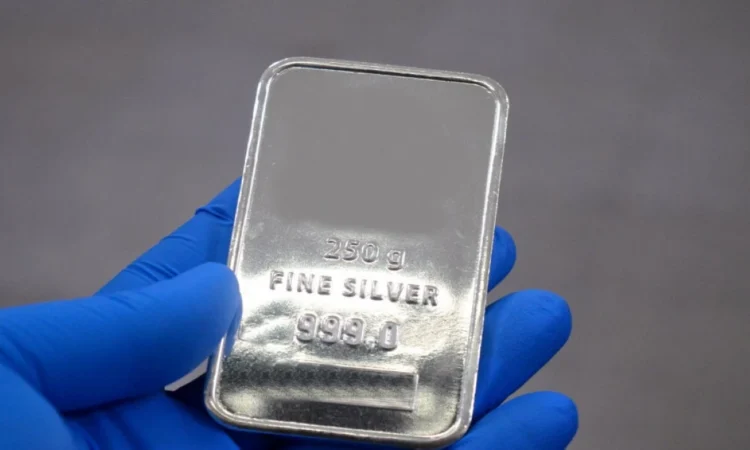
New Delhi, India – The Indian government has announced a package of urgent measures to restrict silver imports in an attempt to curb the outflow of foreign currency. These measures also aim to control the widening trade deficit, fueled by the sharp rise in global oil prices due to the US-Iran trade war. This has caused the rupee to plummet to a record low.
Strict import restrictions under the supervision of the Ministry of Commerce
Reuters and Bloomberg reported on Sunday, May 17, 2026, that the Indian government has officially classified all silver products as restricted import goods. Under this decision, importing silver bars or jewelry will only be permitted with prior special authorization from the Directorate General of Foreign Trade (DGFT) of the Ministry of Commerce and Industry.
This move follows a series of steps taken by New Delhi to curb imports of precious metals. The government recently raised customs duties on gold and silver from 6% to 15% and restricted the amount of customs exemptions available to manufacturers. Prime Minister Narendra Modi delivered a national address on May 10, urging citizens to refrain from buying gold and silver to support the national economy.
Record levels for investment silver and gold imports
Official data showed that India’s silver imports for the fiscal year 2025-2026, which ended last March, jumped to a record high of $12 billion. This is 2.5 times the previous year’s figure. The record increase is attributed to capital flows into silver exchange-traded funds (ETFs) as a hedge, rather than traditional consumption. Meanwhile, annual gold imports rose by 24.1% to $71.98 billion.
In a statement to Reuters, a senior official in the gold trade at a commercial bank in Mumbai said: “It appears that the government is moving towards allowing the import of industrial silver only on a limited scale, while it will work to curb the import of silver products for short-term investment purposes.”
Widening trade deficit and a historic collapse of the rupee
India is facing severe economic pressures, with its merchandise trade deficit jumping 37.3% last month to $28.38 billion. This was driven by a 53% increase in oil imports to $18.63 billion and an 84% surge in gold imports to $5.63 billion.
This sharp increase in the deficit led to a historic collapse in the value of the local currency on May 15. The exchange rate briefly surpassed 96 rupees to the US dollar for the first time ever. Simultaneously, state-owned energy companies, led by Indian Oil Corporation (IOC), raised retail prices for gasoline and diesel by approximately 3%. This was the first fuel price hike in India in nearly four years, raising the specter of a new wave of inflation.


