
1.4 Automotive sector still the leader, while energy linked greenfield investment up sixfold
The three top sectors for Chinese FDI in Europe remained unchanged in 2025. The automotive sector received the largest share of Chinese FDI in Europe, pulling in EUR 7.6 billion in 2025, up 46 percent from EUR 5.2 billion in 2024. This made 2025 the second strongest year on record for Chinese automotive investment in Europe, after EUR 7.9 billion in 2015. The EV supply chain continued to dominate, making up 93 percent of Chinese automotive FDI in 2025 (vs. 94 percent in 2024). Among the largest new EV-related projects breaking ground were CALB’s EUR 2 billion battery factory in Portugal, CATL’s EUR 2.1 billion battery plant in Spain, and Gotion’s EUR 900 million battery plant in Slovakia. Thanks in part to these projects, battery investment exceeded EV manufacturing investment.
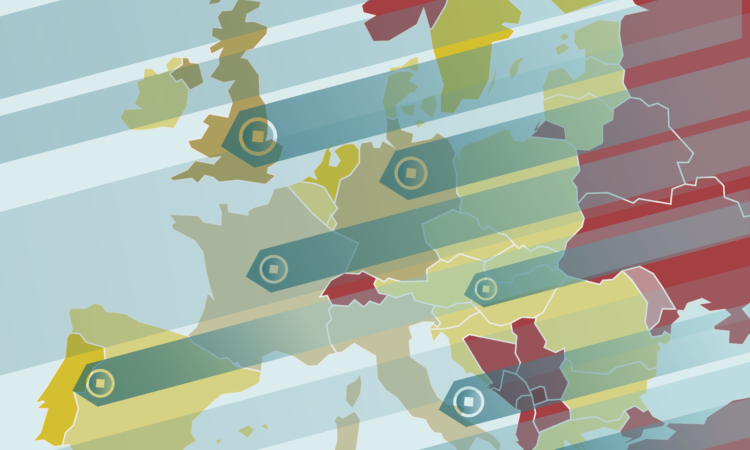
As in recent years, the bulk of Chinese EV investment in Europe went to Hungary, which attracted EUR 3.8 billion in 2025, up 18 percent from EUR 3.2 billion in 2024. But momentum shifted towards Germany, which saw investment rise 88 percent, and Spain, where it increased by 147 percent. Germany ranked second after Hungary for EV-related investment with EUR 783 million, while Spain ranked third, receiving EUR 642 million. Major projects included CATL’s new project in Spain, as well as Gotion’s ongoing project and new projects by Li Auto and Xiaomi in Germany.
The automotive sector’s importance declined slightly in relative terms, as its share of Chinese investment in Europe fell from 52 percent in 2024 to 45 percent in 2025.
Crucially, in 2025 there was another fall in the value of newly announced EV projects, which slipped to EUR 4 billion, down from EUR 5.3 billion in 2024, after plunging by two thirds from a record EUR 16.3 billion in 2023. Chinese EV investment in Europe is likely to remain stable for some years, as projects have multi-year construction periods and several broke ground in 2025. But it could decline sharply over a longer time horizon if fresh EV investment stays at these low levels (see section II).
Entertainment was the second most important sector in 2025, drawing in EUR 2.3 billion or 14 percent of Chinese FDI in Europe, an increase of 52 percent compared to the previous year. The consumer products and services sector ranked third with EUR 2 billion or 12 percent, up 93 percent on 2024.
Despite the high growth in these sectors, they are ill-suited to replace the automotive sector as a stable anchor for Chinese FDI in Europe. Both are dominated by M&A transactions, which tend to fluctuate on an annual basis. Investment in the entertainment sector in 2025 took the form of only two transactions, Tencent’s investment in Vantage Studios and its acquisition of Cyprus-based Easybrain.
As in 2024, ICT and energy were the second and third largest sectors for Chinese greenfield investment. They displayed stronger momentum in 2025 than before. Greenfield investment in ICT grew by 35 percent to EUR 592 million, while in the energy sector it surged more than sixfold to EUR 1.2 billion. Red Rock’s Inch Cape offshore windfarm was paramount for the energy sector, contributing EUR 754 million. Other examples are Red Rock’s Benbrack onshore windfarm, also in Scotland, and DAS Solar’s solar module factory in France. In ICT, important projects included the construction of TikTok’s datacenter in Finland, Wingtech-owned Nexperia’s production plant in Hamburg, and Huawei’s completed but still empty phone manufacturing plant in France.


