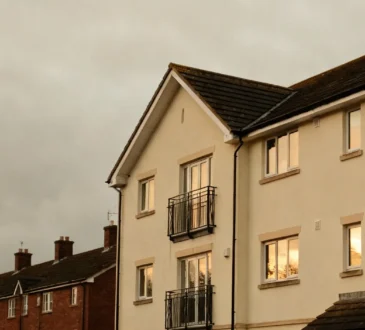
Mike Cox thought he was on the brink of owning his first home when an unexpected delay brought everything to a halt.
The property’s local authority search – a small but crucial part of the conveyancing process that identifies any risks or plans for the area – had failed to arrive.
Without it, his solicitor said he couldn’t move forward with the purchase despite the fact that he had agreed an offer on a two-bedroom property and secured a fixed mortgage deal from HSBC.
Cox, 28, is one of hundreds of homebuyers whose property purchases have been thrown into disarray as councils race to update legacy planning systems.
Under HM Land Registry’s local land charges programme, all councils must migrate their existing land search data on to a single, national register by 2029.
Amid the push to digitise, local authorities have begun switching from outmoded systems – which in some cases haven’t been updated since the 1990s – to new cloud-based software.
However, the move has already brought down services in at least two councils, leaving buyers unable to complete crucial checks on property purchases and raising fears that other systems could suffer the same fate.
A typical search by Bracknell Forest council, the Berkshire authority in which Cox is hoping to buy, should take 10 days.
Yet nearly three months later, he is still “wasting money on rent” as he waits for updates, while living out of cardboard boxes packed in anticipation of a quick move.
Bracknell Forest council’s local authority search – also known as land charge – IT system went down in early February after it started its data migration. In April, it issued an update and an apology, naming Arcus Global – a key government software supplier – as the company involved.
Nearly 700 property purchases in the area have since been stuck in limbo. The council says the upgrade has been “complex and complicated” and that it is working to fix the issue.
“If this falls through, I’m lost,” Cox says. “I can’t afford to start this again until January next year because the mortgage offer was based on [an annual] commission that I don’t get again until then.”
Cambridge-based software company Arcus Global is one of four contracted government suppliers tasked with delivering system upgrades. It works with more than 60 councils in a range of areas, and charges around £300,000 for a three-year contract to use its built environment software.
Last year, it turned over £8m from its various public sector contracts.
In Havant borough council, near Portsmouth, residents suffered an almost identical chain of events involving the same supplier last summer. The upgrade brought down its local authority search function and directly hit more than 100 house sales when the authority migrated its data to Arcus’ system.
Like in Bracknell, buyers were left to wait months for planning checks to come back amid the backlog, putting chains at risk of collapse and forcing many to take out indemnity insurance at additional expense in a last-ditch attempt to complete the sale without the check.
“It challenged a few people’s patience,” says Stuart Hutchings, of Chapplins, an estate agency in Havant. “Some sales were delayed by up to three months.”
Buying agent Henry Pryor says breakdowns in time-critical local searches ultimately hit homebuyers’ pockets and throw plans “into jeopardy”.
“Local searches are the oil that keeps the housing market working and without them it grinds to a halt,” he says. “Without them, most mortgage lenders won’t lend. When this happens, people lose money.”