
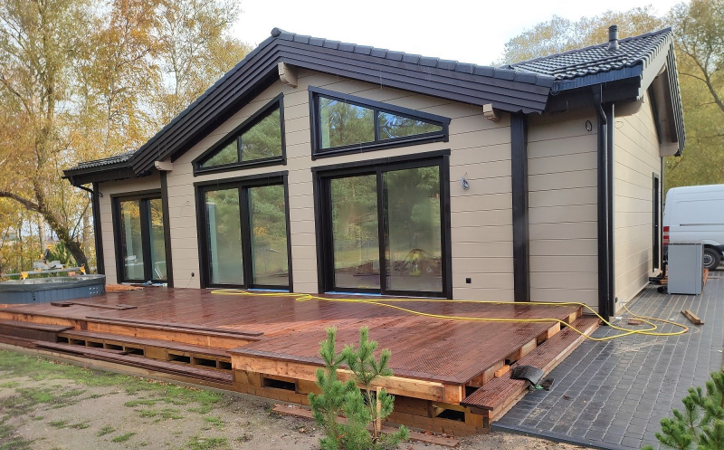
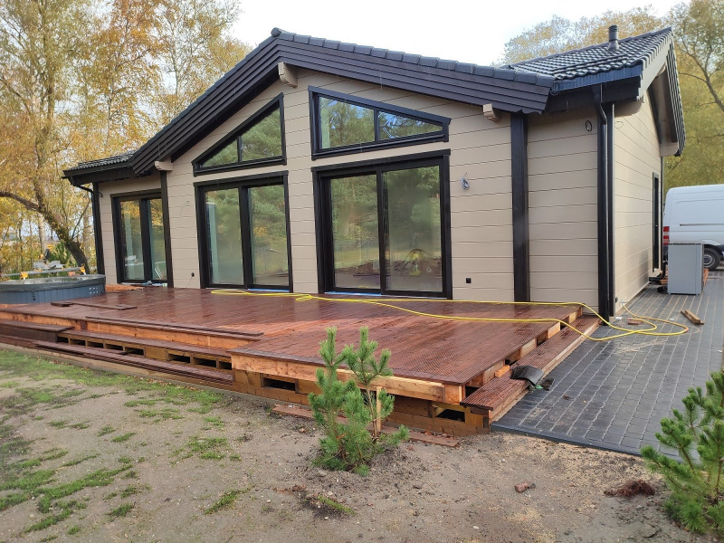
UK landlords have spent the last three years under sustained margin pressure. Section 24 mortgage interest relief is fully phased out, base rate movements have repriced refinancing across the buy-to-let market, and the regulatory environment continues to tighten through the Renters’ Rights legislation. Against this backdrop, a quietly growing segment of small and mid-portfolio landlords is exploring an ancillary income stream that requires no additional property purchase: garden cabins on existing assets.
The play is not new, but the economics have shifted. Prefabricated garden cabins, garden studios and lodge-style timber buildings that once served as hobby spaces are now being deployed as short-term let extensions, ancillary accommodation for whole-property rentals, and as part of Rent a Room arrangements. The capital cost is modest by property investment standards. The regulatory framework, when correctly understood, supports the use case. And the yield enhancement on a single existing asset can be material.
This analysis sets out the Permitted Development rules that determine what is and is not allowed, the use cases that work in practice, the realistic ROI math, and the supplier-selection criteria that separate a yield-accretive asset from a depreciating compliance headache.
The Permitted Development Framework
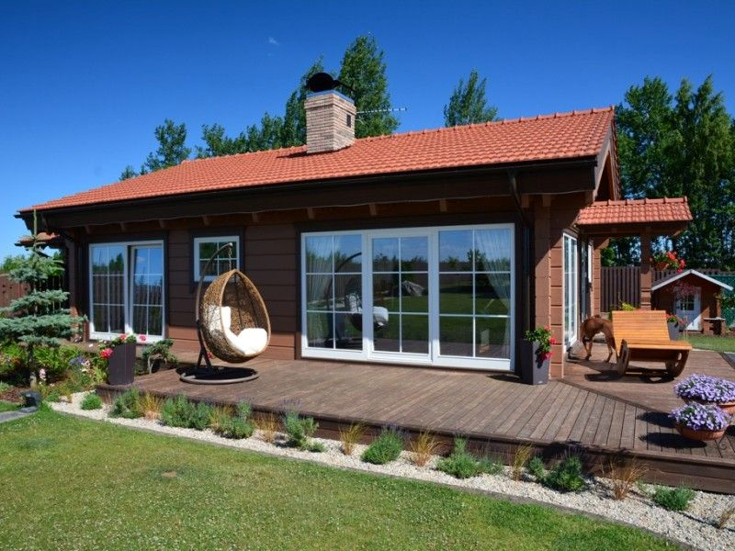
The Town and Country Planning (General Permitted Development) (England) Order 2015, Schedule 2, Part 1, Class E sets out the rules for outbuildings within the curtilage of a dwellinghouse. The key constraints are well-defined.
The outbuilding must be single storey. Maximum eaves height is 2.5 metres. Maximum overall height is 4 metres for a dual-pitched roof and 3 metres for any other roof type. Where the building is sited within 2 metres of any boundary, the total height drops to 2.5 metres. The total area of outbuildings and extensions combined must not exceed 50% of the curtilage area excluding the original dwellinghouse footprint.
The most commonly misunderstood condition is the use restriction. The outbuilding must be incidental to the enjoyment of the main dwellinghouse. This means it cannot be used as a separate, self-contained dwelling. A cabin with full kitchen and bathroom facilities being rented to a tenant on an Assured Shorthold Tenancy as a standalone unit falls outside Class E and requires full planning permission with change of use to C3.
Article 4 Directions in conservation areas, AONBs and some London boroughs remove or restrict PDR. Landlords with assets in these zones must check the specific local planning authority position before any installation. Council tax implications also matter: if the cabin is assessed as a separate dwelling, it can attract its own banding, which alters the net yield calculation materially.
The Use Cases That Actually Work
Within the PDR framework, four use cases consistently work for UK landlords.
Whole-property short-term let with the cabin as bonus accommodation. A two-bedroom house with a garden cabin sleeping two becomes a four-person property on Airbnb or Booking.com listings. The headline nightly rate uplift typically runs 30 to 60 per cent. The cabin sits within Class E as ancillary space, not as a separate dwelling.
Garden office or studio in a long-term tenancy. Landlords offering a garden office space alongside a standard AST achieve rent premiums of £100 to £350 per month depending on region and finish quality. This is now a meaningful differentiator in the post-2020 rental market where work-from-home professionals are willing to pay for dedicated workspace.
Rent a Room scheme arrangements. Owner-occupier landlords can use a garden cabin as the lodger’s space, with the lodger sharing the main house facilities. Under the Rent a Room scheme, up to £7,500 per year is tax-free. The cabin functions as bedroom and storage; bathroom and kitchen use is shared with the main house, keeping the arrangement within the scheme rules.
Short-term let in the garden of an owner-occupied primary residence. Where the landlord lives in the main house and rents out the cabin on a short-stay basis, this typically falls within Class E provided the cabin is not configured as a self-contained dwelling. Local council interpretation varies; checking before installation is essential.
The use case that does not work is a fully self-contained rental unit with its own kitchen, bathroom and separate tenancy. This requires planning permission, building regulations approval and change of use, and is treated as a separate dwelling for council tax. Many landlords attempt this configuration and discover the compliance cost only after a neighbour complaint or council enforcement notice.
The ROI Math
Capital expenditure varies significantly by specification. A flat-pack timber garden cabin in the 15 to 25 square metre range with double glazing, insulation and a basic electrical fit-out typically costs between £8,000 and £18,000 ex-delivery. A higher-specification insulated lodge with proper foundations, full electrics, plumbing and finished interior typically runs £20,000 to £40,000 turnkey. Adding furnishing for short-term let use adds another £2,000 to £5,000.
On the revenue side, short-term let configurations in mid-tier UK locations generate £14,000 to £28,000 gross annually at 50 to 65 per cent occupancy and £90 to £130 average nightly rate. Garden office uplifts on long-term tenancies generate £1,500 to £4,200 per year. Whole-property rent uplift from the additional bedroom space typically runs £1,500 to £3,000 annually in non-prime areas, more in commuter belts.
After cleaning, platform fees, utilities, maintenance and management costs, net yields on the cabin investment alone range from 18 to 38 per cent in short-term let configurations and 12 to 22 per cent in long-term arrangements. Payback periods commonly fall in the 2 to 4 year range, after which the cabin contributes pure margin uplift to the underlying asset’s yield profile.
Supplier Selection
The questions that matter when sourcing a garden cabin for rental yield purposes are not the same as those for a personal garden building. Thermal performance must support year-round occupancy, which means insulated walls, double or triple glazing, and a properly specified roof. Lead times affect when the asset starts generating yield; established prefab manufacturers ship from order within 8 to 16 weeks, while bespoke builds can extend to 6 months.
Building specification matters for insurance. Standard landlord buildings insurance often excludes garden buildings above a certain value unless they are specifically declared, and short-term let insurance providers require evidence of the build standard. Suppliers who provide engineering documentation, thermal calculations and standard compliance certificates make the insurance and lender conversations straightforward.
European prefab manufacturers have served the UK garden cabin market for over a decade, with established freight routes through the channel ports and a network of UK distributors handling installation. Lithuanian producers such as Eurodita specialise in this segment, manufacturing prefab garden cabins and insulated lodge units in configurations sized to fit within PDR thresholds. Production-line manufacturing keeps the capex predictable, which is the variable that most affects the yield calculation. Resource libraries such as eurodita.com publish technical specifications and PDR-compliant size charts useful at the planning stage.
Risk Factors
Three risks materially affect the investment case and should be priced into any landlord’s decision.
First, council interpretation of PDR conditions varies, and enforcement is reactive — usually triggered by neighbour complaint. Investing on an unclear regulatory position is a poor risk-adjusted decision. A pre-installation enquiry to the local planning authority, or a Certificate of Lawfulness application costing around £103, removes this risk.
Second, mortgage lender consent. Some buy-to-let mortgage conditions restrict outbuilding installations or short-term letting activity. Reviewing the mortgage terms before installation is essential. Switching products to a lender that permits short-term lets may be required to unlock the full yield case.
Third, regulatory direction of travel. Local authorities in high-tourism areas are increasingly introducing additional licensing for short-term lets. Wales has already moved on this front; Scotland’s licensing regime is in force; English coastal councils are following. Landlords building their case around short-term let yield should stress-test the model against a 90-day annual limit, which is the direction policy is moving.
Closing Note
The garden cabin yield play is a defensible income enhancement strategy for UK landlords with the right asset, the right configuration and the right supplier. The capital outlay is modest relative to property purchase, the regulatory framework supports the use case when correctly applied, and the payback period is short enough to absorb the risk. The most common failure mode is not regulatory but operational: installing the wrong product specification for the intended use case, which converts a yield-accretive asset into a maintenance liability within three years. The supplier conversation is therefore the conversation that determines whether the investment works.


