This Artificial Intelligence (AI) Chip Stock Just Joined Nvidia, Broadcom, Taiwan Semiconductor, and Samsung in the $1 Trillion Club. Is It a Buy Now?
Micron (MU +19.41%) has been one of the biggest stories on the stock market, and it just hit a major milestone.
Shares of the memory chip superstar just topped the $1 trillion market cap threshold for the first time in its history, joining top chip stocks like Nvidia, Broadcom, Taiwan Semiconductor, and Samsung in the club.
An unusually aggressive price target hike from UBS was the catalyst for today’s pop, driving the stock up as much as 18.7% today as of noon ET, topping $1 trillion in market cap at one point.

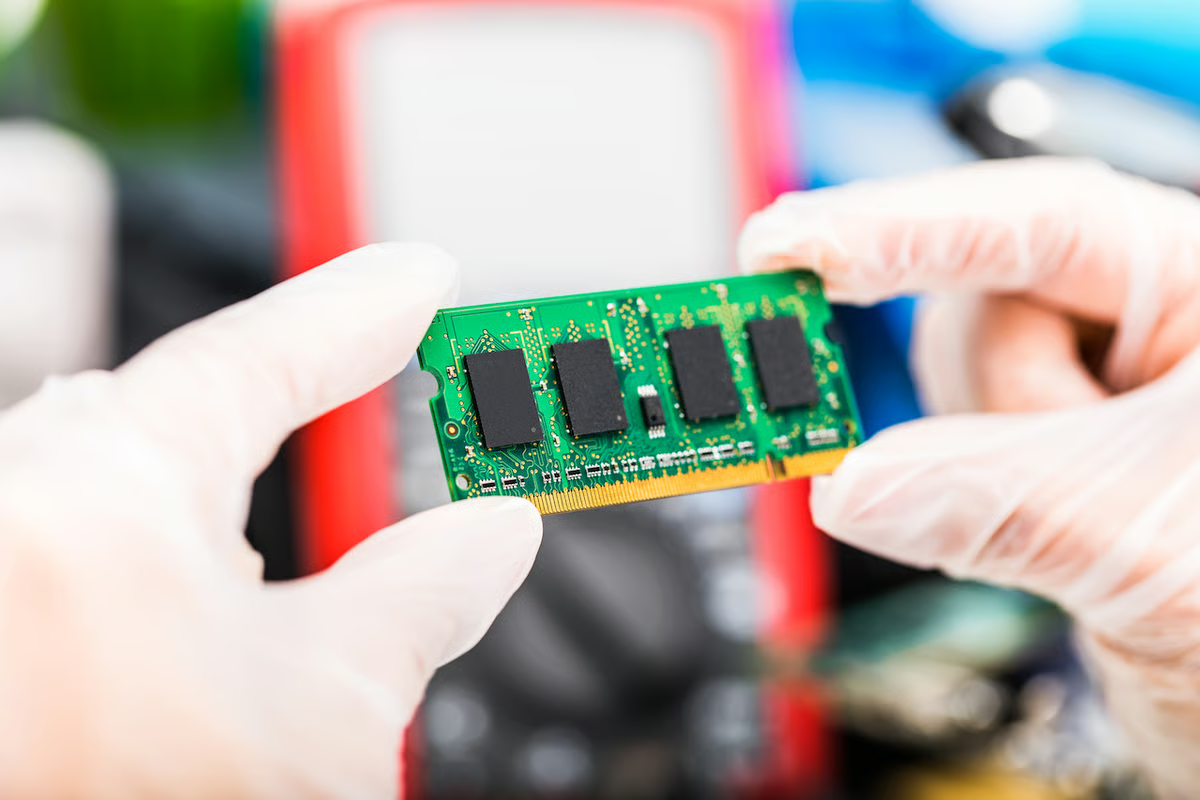
Image source: Getty Images.
Why Micron was flying higher today
UBS lifted its price target from $535 to a street-high $1,625 on the memory chip stock, implying that shares would more than double from their closing price on Friday.
In the note, UBS observed that Micron should benefit from long-term memory supply agreements with buyers such as Nvidia that could lock in pricing and demand visibility through 2029. It expects that to drive significantly higher earnings and free cash flow forecasts, and said that AI-driven changes improve the durability and stability of the memory market, mitigating a key risk factor for the stock.
A double-digit gain on a price target hike is rare, but it’s also unusual for a Wall Street firm to give a price target implying the stock will more than double. UBS’s note seemed to confirm that there’s plenty of room to run for Micron.
How Micron got to $1 trillion
Memory stocks have skyrocketed since last fall due to an epic shortage driven by the AI boom. That’s caused prices to spike, driving soaring profits for Micron and its peers. As you can see from the chart below, the stock is up more than 800% over the last year.
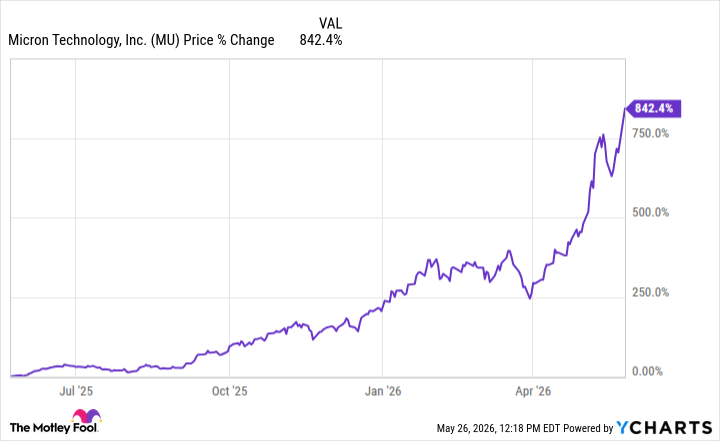
But unlike some breakout stocks, which are driven by multiple expansion, Micron has the numbers to back it up.
In its most recent quarter, revenue nearly tripled, jumping 196% to $23.9 billion, well ahead of estimates at $19.2 billion. Its operating margin expanded from 22% to 67.6%, and its net income jumped by nearly 10x to $13.8 billion. Meanwhile, its adjusted earnings per share of $12.20 was also well ahead of the Wall Street consensus at $8.65.
That shows that Micron is both delivering blowout results and that Wall Street has underestimated it, and it could be underestimating its future growth as well.
Is Micron a buy?
Over the last eight months, Micron shares have gained steam as the memory shortage has become clear and investors seem to be realizing that the AI cycle is different. The tailwinds benefiting the company could last at least through 2029, as the UBS note says.
Micron is on track to be one of the most profitable companies in the world this year, based on net income, which shows how much money is flowing into memory chips.
However, the stock is arguably cheap, trading at a forward P/E of just 15, significantly cheaper than its chip stock peers and other big tech stocks, even though Micron is growing much faster.
Yes, the cyclical nature of memory presents a risk, but the bottom of this cycle is likely to be much higher than in the past, given that AI seems to have transformed the industry.
While the cycle remains a risk, the stock looks like a buy, especially as there’s still huge upside potential for Micron. The UBS price target implies its market cap reaching $1.8 trillion.