HONG KONG: Asian currencies gained, and stocks rallied to a record high on Thursday, buoyed by hopes that the Middle East war would end as Iran reviewed a US peace proposal, sending oil prices lower and fuelling risk plays.
US President Donald Trump expected the war in Iran to be over soon as he sought a peace deal with Tehran to end the stalemate and reopen the Strait of Hormuz, which channels a fifth of global oil supplies.
Oil prices fell to two-week lows on Wednesday, but rose about US$1 in Asian trade on Thursday. The MSCI’s gauge of emerging Asian stocks hit a record high and is up 23.4 per cent this year so far.
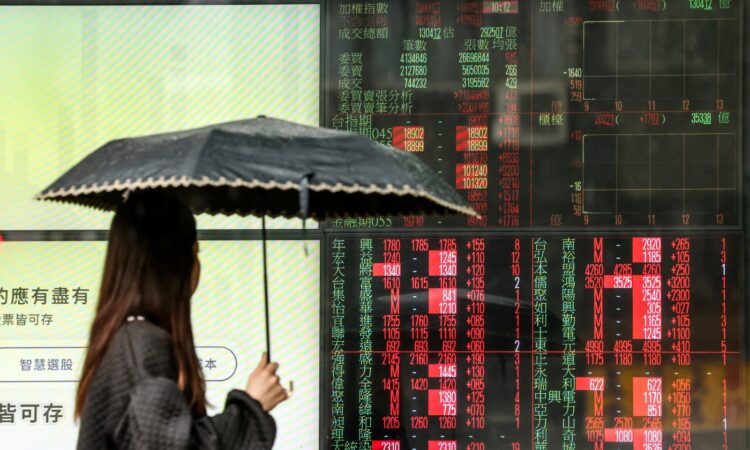
Taiwan climbed 2.5 per cent to an all-time high, bringing 2026 gains to more than 45 per cent, as investors shifted focus to rallying chip stocks while worries over the conflict eased.
In the Philippines, stocks added as much as 2.3 per cent to hit their strongest level since April 10, providing some respite to the underperforming equities.
The benchmark posted losses in three of the previous four years. Indonesian stocks added over 1 per cent, up for a fourth straight session.
Thai and Singapore stocks rose 0.2 per cent each. Currencies also gained ground. The Taiwan dollar strengthened as much as 0.5 per cent to 31.338, its highest level since early March.
The Singapore dollar gained 0.1 per cent and is up 1.45 per cent this year, outperforming most Asian currencies. “Further de-escalation in the Middle East, such as Iran accepting the US proposed deal and a gradual reopening of the Strait of Hormuz, could continue to support gains in Asian forex,” analysts at MUFG said in a note.
The Malaysian ringgit was up 0.3 per cent at 3.9080 per US dollar. The country’s central bank will release its monetary policy decision later in the day and is widely expected to stand pat on rates, keeping them unchanged through the rest of the year.
The Malaysian economy has been largely resilient despite the Middle East conflict, clocking benign inflation and steady growth. The Philippine peso eased 0.1 per cent, and the Thai baht fell 0.4 per cent.
The currencies are down 3.2 per cent and 2.7 per cent this year, respectively, amid higher oil prices that have fueled inflation. The Middle East conflict caused inflation in bothcountries to jump to three-year highs. Prices in South Korea rose to a near two-year high. The higher oil bill is beginning to weigh on growth as well.