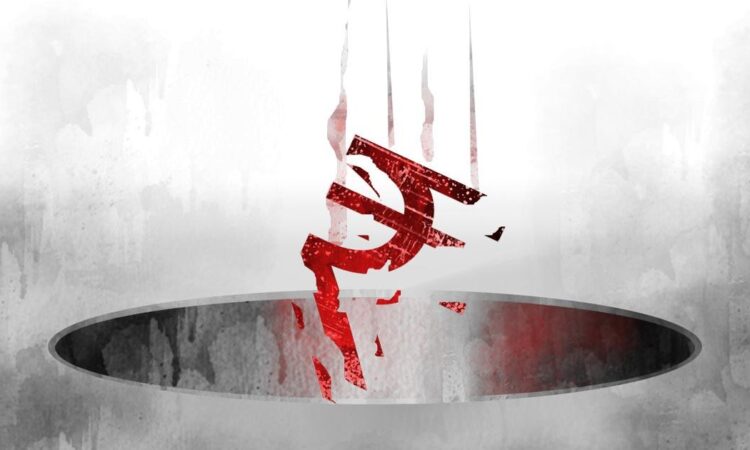
The Indian rupee faces significant vulnerability among Asian currencies, with leading financial institutions Barclays and MUFG forecasting a potential depreciation towards 100/$ if the West Asia conflict continues, exacerbated by widening current account deficits and elevated crude oil prices.
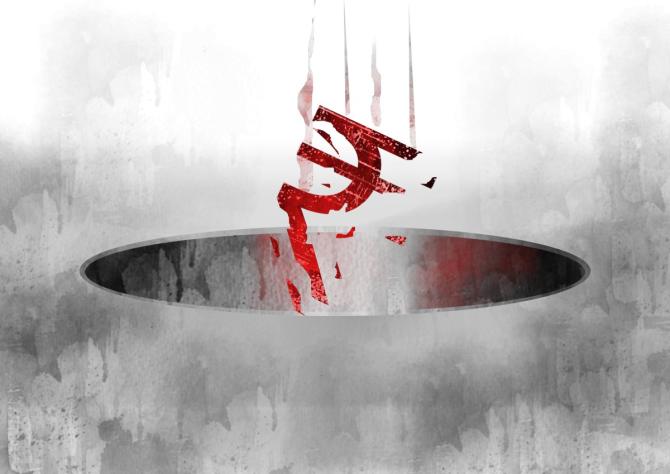
Illustration: Dominic Xavier/Rediff
Key Points
- The Indian rupee is considered one of the most vulnerable Asian currencies due to high crude oil prices and a widening current account deficit.
- Barclays and MUFG predict the rupee could depreciate towards 98.00 levels, with 100.00/$ in sight if the West Asia conflict escalates or prolongs.
- India was the largest seller of US dollars in both spot and forward markets since the West Asia conflict began, followed by China and the Philippines.
- Structural weaknesses in India’s balance of payments, including declining net direct investment inflows, predate the Iran conflict.
- The RBI may raise the repo rate by at least 50 basis points in FY27 to 5.75 per cent to support the rupee and manage inflation expectations.
The Indian rupee is one of the most vulnerable among Asian currencies due to a combination of factors including widening current account deficit due to elevated crude oil prices, Barclays and MUGF said in separate reports.
The Indian rupee, Indonesian rupiah, the Philippine peso and Malaysian ringgit are among the most vulnerable Asian currencies due to their exposure to external financing pressures and rising import costs, British investment bank Barclays said, warning that sustained strength in the dollar and crude oil prices could increase pressure on regional currencies and foreign exchange (FX) reserves.
Rupee’s Potential Dip to 100/$
Japanese bank Mitsubishi UFJ Financial group (MUFG) said the rupee hitting 100/$ is in sight if the West Asia conflict continues.
“We continue to view the Indian rupee as vulnerable across a range of scenarios on the Strait of Hormuz, with USD/INR likely moving towards 98.00 levels and even 100.00 is in sight if the conflict prolongs or escalates,” MUGF said.
The investment bank’s expectation, assuming a de-escalation and baseline forecasts for USD/INR to trade between 95.00 to 96.00, implies INR weakening further against Asia and G10 FX (forex market for 120 most heavily traded currencies) including the euro, Japanese Yen and Chinese Yuan.
The rupee depreciated over 6 per cent in 2026 with the pace of the fall becoming rapid after the war in West Asia started in late February.
India: Top Seller of Dollars
“India was the biggest USD seller, both in spot and forwards, since the war began, followed by China and the Philippines,” a Barclays note said.
The Reserve Bank of India (RBI) sold $9.7 billion in the spot market in March, according to latest data, with a net short position of the forward book swelling to $103.06 billion at the end of FY26.
Barclays noted that despite intervention, Asian countries’ FX reserves have not fallen significantly and reserve adequacy ratios remain relatively healthy.
It, however, added: “Should the USD and oil prices continue to firm, the risk of a sharper draw down will grow.
“We think the INR, IDR (Indonesian Rupiah), PHP (Philippine peso) MYR (Malaysian ringgit) would be most at risk.”
The report estimated Asian central banks have sold around $33 billion in the spot market and a similar amount in forwards since the West Asia conflict intensified in March-April to support their currencies, although intervention has not yet turned aggressive.
“The two biggest gold holders in Asia are China and India and they have seen the value of their gold reserves drop by $43.4 billion and $11.4 billion, respectively, since the war began,” Barclays said.
India was the largest seller of dollars in both spot and forward markets during the period, followed by China and the Philippines, the report said.
Singapore and Malaysia, meanwhile, were net buyers of dollars.
Why the Rupee is Underperforming
The MUGF report attributed the expected underperformance of the rupee to a combination of weak capital inflows, a widening current account deficit and the risk of energy supply disruptions if shipping through the Strait of Hormuz remains affected.
It also flagged additional risks from a weak southwest monsoon, a possible “super El-Nino” event and uncertainty around further increases in US Treasury yields.
MUFG said structural weakness in India’s balance of payments predates the Iran conflict, pointing to a sharp decline in net direct investment inflows as foreign investors increasingly repatriate profits from existing investments.
It projected that RBI may raise the repo rate by at least 50 basis points (bps) in FY27 to 5.75 per cent to support the rupee and anchor inflation expectations.
In more adverse scenarios, the terminal repo rate could rise to between 6.25 per cent and 6.75 per cent, it said.
RBI and the government are also likely to consider additional measures to support the rupee, according to MUFG.
These include tighter restrictions on outward remittances, curbs on overseas direct investment by Indian companies, further increases in fuel prices and foreign currency bond issuance targeted at non-resident Indians.