The Stock Market Has Been Here Precisely Once Before. Buckle Up as Kevin Warsh Tries to Land the Plane
Quick Read
-
Tech now commands 31% of the S&P 500 versus 14% in 2001, meaning today’s matching 3.64% rate hits valuations far harder than it did then.
-
Microsoft and Nvidia trade at forward P/Es of 22x to 37x, and a 50-basis-point rate shift could compress those valuations by up to 12%.
-
FactSet projects 23% S&P 500 earnings growth in 2026, giving Warsh a strong buffer, though that cushion holds only if rate expectations stay anchored.
-
Don’t wait: the analyst who called NVIDIA in 2010 just revealed his top 10 AI stocks. See the full list FREE now.
The market has a way of pretending it has seen everything — until it hasn’t. Stocks sit near record territory, liquidity is still abundant by historical standards, and yet the Federal Reserve is once again trying to thread a very narrow needle: cool inflation without cracking growth. The current federal funds rate, sitting around 3.64% according to Federal Reserve Economic (FRED) data, puts policy in a zone that feels familiar but isn’t comfortable.
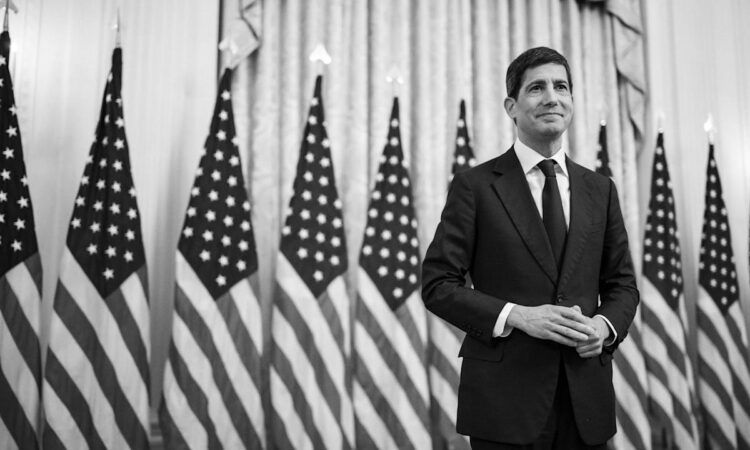
Here’s the tension investors are wrestling with: can the economy absorb tighter financial conditions while $8.6 trillion in aggregate market value hangs in the balance of policy interpretation alone? That’s the backdrop as Kevin Warsh has stepped in as Federal Reserve chair in what may become the most closely watched “soft landing” attempt since the early 2000s.
The real question is, has the stock market truly been here before, or is this a rerun with higher stakes and fewer safety nets?
The Only True Comparison: 2001’s Pre-Recession Tightrope
If you’re looking for historical parallels, there’s really only one that comes close. In August 2001, the effective federal funds rate hovered near 3.65%, just before the economy slipped into recession later that year.
That period matters because it wasn’t just about rates — it was about timing. Policy was tight enough to slow demand, but not tight enough to immediately signal distress. That’s the same delicate positioning investors are trying to decode today.
Let’s compare the setups:
Don’t wait: the analyst who called NVIDIA in 2010 just revealed his top 10 AI stocks. See the full list FREE now.
|
Metric |
2001 Cycle |
2026 Cycle |
|
Fed Funds Rate |
~3.65% (FRED) |
~3.64% (FRED) |
|
S&P 500 Forward P/E |
~19.5x (S&P Global data) |
~21.2x (FactSet consensus) |
|
Tech Weight in S&P 500 |
~14% |
~31% |
|
Market Sensitivity to Rates |
Moderate |
Elevated due to duration-heavy equities |
Surprisingly, the biggest difference isn’t the rate level — it’s composition. Today’s index is far more concentrated in long-duration growth assets, meaning every 25-basis-point shift in discount expectations hits valuations harder than it did two decades ago.