The BRICS bank targets India and prepares an unprecedented issuance in rupees that could move up to $500 million, reduce dollar dependency in infrastructure projects, and open the Indian capital market to investors from emerging countries.

Rupee bonds change the logic of infrastructure financing in India
India has taken a significant step in the strategy of financing infrastructure in local currency. According to Outlook Money, on May 13, 2026, it published the circular that authorized the funds of the National Pension System, the NPS, to invest in rupee-denominated bonds issued by the New Development Bank, the multilateral bank created by the BRICS.
The decision took effect immediately and came after prior approval from the Indian Ministry of Finance, through the Department of Economic Affairs. The papers must follow the same minimum AA rating standard already required for other eligible NPS instruments. In practice, the measure opened the country’s largest pension capital pool to a new class of bonds linked to the BRICS bank.
India’s NPS becomes gateway for the first rupee issuance of the BRICS bank
According to Outlook Money, the NPS manages more than Rs 16 lakh crore, approximately US$ 190 billion. This volume gathers resources from public servants, private sector workers, and voluntary investors, forming an institutional base large enough to comfortably absorb the inaugural issuance that the bank had been preparing.
The planned operation revolves around US$ 400 million to US$ 500 million, with a term between three and five years. If it goes as planned, it will be the first rupee bond in the history of the NDB, which until now has focused issuances mainly in Chinese yuan and South African rand.
The practical effect of the authorization is direct. Even if only a fraction of the money managed by the NPS is allocated to these papers, the mere eligibility already creates a relevant domestic demand base for the BRICS bank’s debut in the Indian market in local currency.
Rupee Bonds Change the Logic of Infrastructure Financing in India
The central point of this operation is the exchange rate risk. In many emerging countries, infrastructure projects generate revenue in local currency but are financed in dollars. When the domestic currency loses value, the real cost of the debt rises, even if the project continues to operate normally.
According to Reuters, the BRICS bank is working with the goal of increasing the share of local currencies in its financing commitments to 30% within the 2022-2026 strategy. By raising funds in rupees and lending in rupees, the bank eliminates the mismatch between the currency of the debt and the currency of the project’s revenue.
This changes the financial structure of the operation. An Indian airport receives in rupees. A toll road receives in rupees. A power plant also collects in rupees. When the financing exists in the same currency, the project is less exposed to dollar volatility and gains long-term predictability.
According to Reuters, the NDB had already raised about a third of its total portfolio in local currencies, especially in yuan and rand. The experience in these markets served as a laboratory to expand the model to other countries in the bloc.
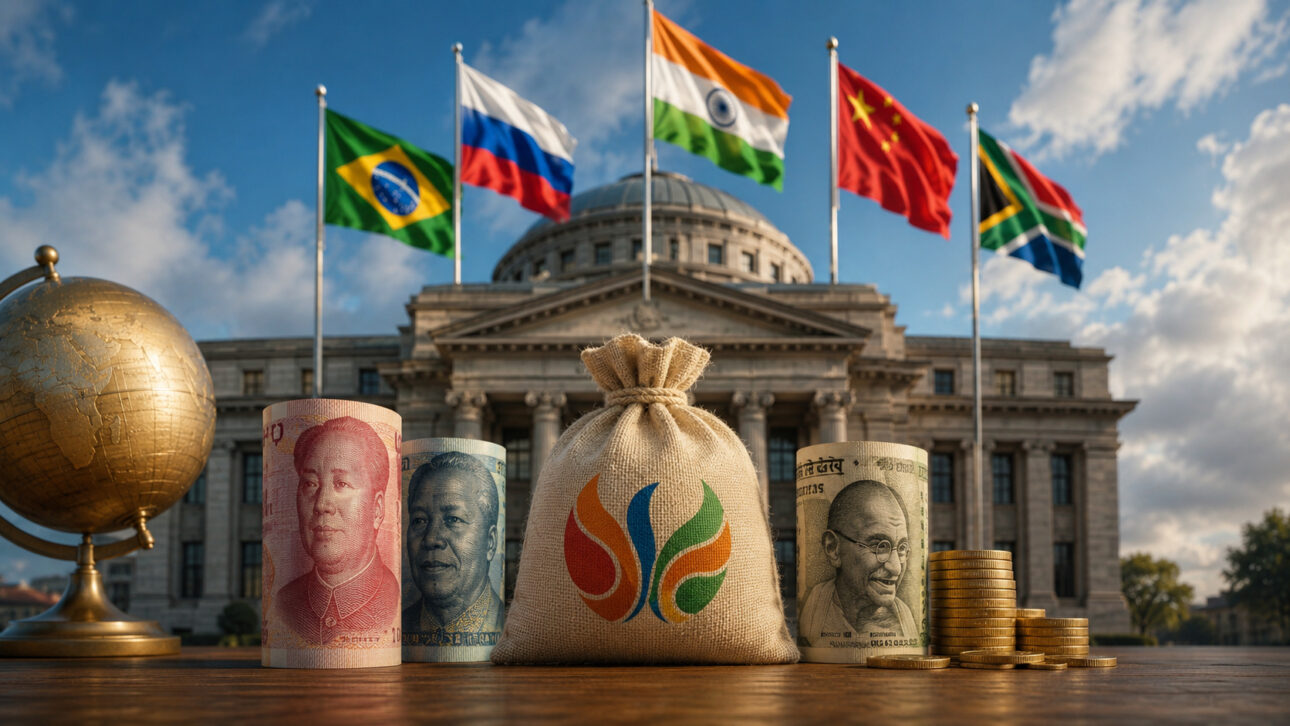
The issuance in yuan was the most natural because China offers a deep and internationalized domestic market. The issuance in rand showed that the bank can also operate in less liquid markets. The rupee now emerges as the next logical step, as India brings together institutional scale, a relevant debt market, and a broad base of long-term investors.
The entry of NPS as an eligible buyer further reinforces this logic. Pension funds do not operate with a short horizon. They tend to hold positions for years, which matches the medium-term maturities planned by the bank for this debut in Indian currency.
Regulatory approval strengthens market confidence and can reduce funding costs
The decision by PFRDA does not guarantee automatic purchase of the securities, but greatly improves the environment for issuance. When the pension regulator allows NPS funds to invest in these papers, it sends a clear signal to the market that the instrument meets the minimum institutional criteria required in the country.
This usually helps in demand formation and can even reduce funding costs. For a debut in a new market, this point is crucial, because one of the biggest risks is always the liquidity of the offer and the appetite of investors in the first issuance.
In the case of India, this risk decreases because the operation starts to engage with a very large domestic capital universe, institutional and with a more stable profile. It is precisely this type of investor that a multilateral bank usually seeks when it wants to consolidate its presence in a local currency.
India sets a precedent that interests Brazil and other BRICS members
The advance in rupees is not an isolated case. According to Reuters, the BRICS bank has already indicated that it may consider issuances in other member countries’ currencies, including the real. This makes the Indian experience especially relevant for the rest of the bloc.
If the model works well, the logic could be replicated. The bank raises funds in local currency, lends in local currency, and reduces dependence on the dollar for infrastructure financing. For countries like Brazil, this would create a relevant alternative for long-term projects that today still face strong currency exposure.
More than political discourse, the issuance in rupees shows a concrete attempt to build a financial architecture based on domestic markets, national regulators, and local institutional investors. This is the point that gives strategic weight to the Indian decision.
Authorization granted, but the first NDB rupee bond still depends on final steps
The regulatory approval of May 13, 2026 does not mean that the bonds have already been issued. It means that the most sensitive stage on the Indian side has been overcome. The bank still needs to meet market requirements to complete the offer.
According to Outlook Money, all the protection mechanisms already provided in the NPS guidelines, including the requirement for a minimum AA rating, remain valid. Additionally, the issuance still depends on registration in the relevant market structures and the final setup of the operation with the coordinators responsible for distribution.
By early June 2026, these steps had not yet been publicly confirmed as completed. Even so, the main signal has already been given. The regulator overseeing the largest volume of pension capital in India has authorized this money to purchase rupee bonds from the BRICS bank.
BRICS Bank gains in India the market it needed to advance in the local currency strategy
India’s decision is significant because it brings together three elements that are difficult to gather at the same time: favorable regulation, a large-scale institutional base, and a real need to finance infrastructure without carrying excessive currency risk.
By opening the US$ 190 billion of the NPS to the NDB’s rupee bonds, India not only facilitates an inaugural issuance. It helps consolidate a local currency financing model that the BRICS bank has been trying to expand since it began diversifying its funding beyond the dollar.
If the operation is completed as planned, India will join China and South Africa as markets where the BRICS bank can raise funds in domestic currency. And this will make the rupee not just a new issuance currency, but an important piece in the attempt to redesign infrastructure financing in emerging economies, reducing the traditional dependence on the dollar.