
Thirty years of investing in communities: Alumna Shannon Lawder on language, philanthropy, and following your passion
Key takeaways
- UC Santa Cruz’s Education Abroad Program and humanities curriculum gave Lawder the language skills and foundation to help launch her career.
- For over 31 years at the Mott Foundation, Lawder has led grantmaking efforts worldwide.
- Lawder believes in the value of a humanities degree paired with practical experience and encourages current students to build a career rooted in their passions.
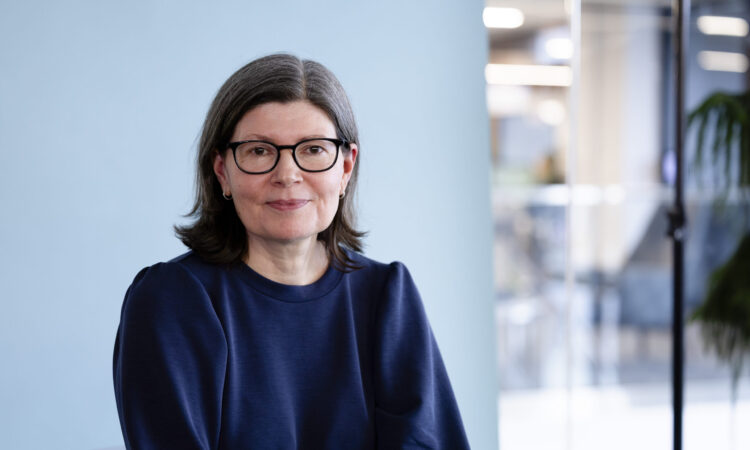
When Shannon Lawder (Kresge ’91, Russian studies) chose to study Russian at the University of California, Santa Cruz, she was following a passion, not a plan. Over 30 years later, that passion has taken her across the globe, shaping a career at the forefront of international philanthropy.
As the director of the Civil Society Program at the Mott Foundation, Lawder’s work supports communities around the world by uplifting and equipping community foundations with the resources to solve local issues, widening access to knowledge about justice systems, and strengthening the philanthropic ecosystem.
For Lawder, some of the most impactful change happens through long-term investment in civil society organizations and local community foundations. She’s seen it firsthand in communities worldwide—in the U.S., the U.K., South Africa, Eastern Europe, and beyond. The Mott Foundation has supported this work for 100 years, and Lawder has been part of that mission for 31 years.
“Everybody lives in a community, and everybody wants the best for their community,” Lawder said.
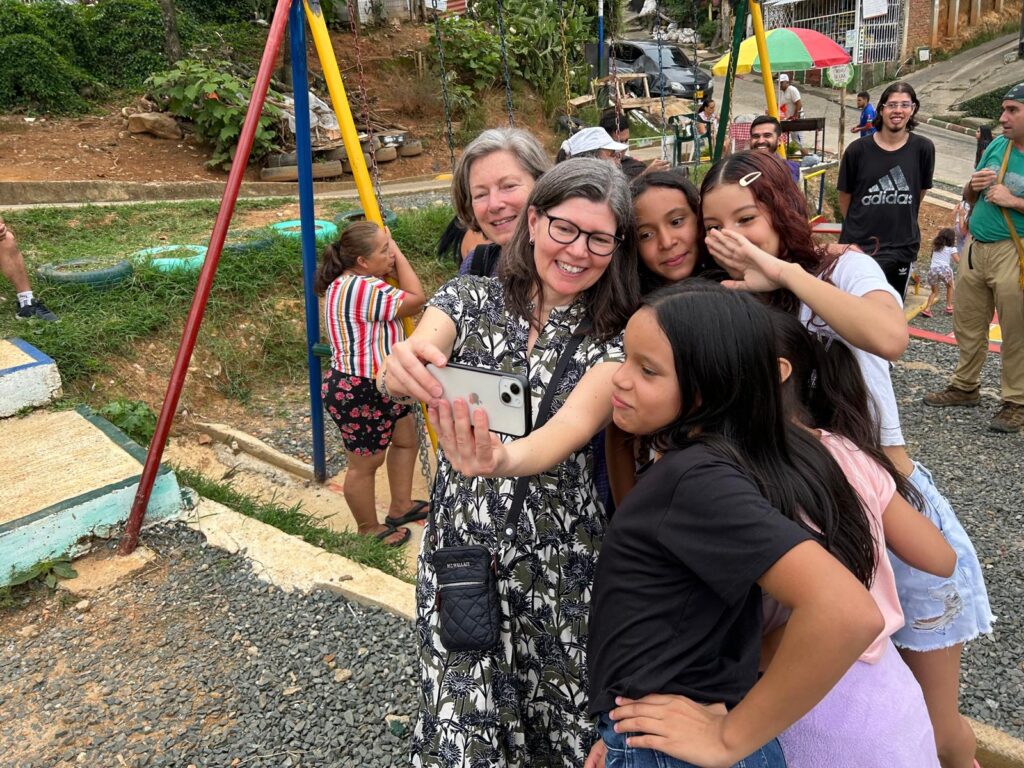
Among the most striking examples of that long-term investment is the Mott Foundation’s work in Ukraine. Beginning in the mid-1990s, Lawder and her team spent decades building relationships with and funding local civil society organizations as the country emerged from the collapse of the Soviet Union. When Russia launched its full-scale invasion in 2022, those organizations were ready.
“We spent decades supporting local organizations in Ukraine as they grew and matured,” Lawder said in a Q&A with the Mott Foundation. “Fast-forward to 2022, when Russia launched its full-scale invasion, and some of those same organizations we’d supported since the 1990s were ready and able to respond immediately to support their communities. That experience underscores the importance of long-term, patient funding.”
As the director of the Civil Society Program, Lawder manages a team of people across Mott Foundation offices in Michigan, London, and Johannesburg. The Civil Society Program distributes around $20 million a year in grants to charitable organizations and nonprofits across multiple continents.

“We’ve learned, time and again, that independent and diverse civil society organizations are crucial to the health of thriving communities,” Lawder said.
Lawder credits her UC Santa Cruz education in the humanities with opening the doors to her career.
From Canada to the Bay Area to Europe
Lawder moved to the United States from Canada when she was 10 years old. She attended the Urban School in San Francisco, an independent high school with a nontraditional grading system, small classes, and first-name relationships between students and teachers. She was also a trained ballet dancer, attending the San Francisco Ballet School.
When it came time to go to college, Lawder’s father encouraged her and her sister to attend a University of California school. UC Santa Cruz, which at the time used narrative evaluations rather than a typical grading system, felt compatible with the kind of education Lawder had grown to enjoy at the Urban School.
Lawder began her first year at UC Santa Cruz in 1987, two years before the collapse of the Berlin Wall and four years before the total fall of the Soviet Union. Her interest in politics had grown over the years, and while she wasn’t pursuing ballet anymore, she was deeply drawn toward Russian ballet. The combination of her interests and encouragement from the university to pursue a foreign language led Lawder to pursue the Russian language. Lawder said that studying the language became a gateway to learning more about the culture and literature and, eventually, the impetus for switching her major from politics to Russian studies.
“Once you start studying Russian, then you want to study the history; you want to study the literature,” Lawder said. “I just went down this rabbit hole, and then I realized that I didn’t have a politics major; I had a Russian studies major.”
Professors like Peter Kenez inspired her to dive deeper into her studies. She began learning German as well to aid her translation of historical documents.
In 1989, Lawder was accepted into the Education Abroad Program to study in Russia. She spent her fall quarter in St. Petersburg, Leningrad at the time, and traveled to different areas of the Soviet Union including the Baltics, Central Asia, and the Caucasus.
“Had I not had that exposure and immersion in Russia, my Russian would not have been that great when I graduated,” Lawder said about her experience in St. Petersburg. “That was really essential to making me a more attractive prospect for an employer to take a risk on me.”

In 1991, as Lawder was preparing to graduate from UC Santa Cruz, she was accepted into an internship program for graduating students. She was matched with an internship in Prague, working as a point of contact between a bank and consulting firm. She made many connections in Prague, one of which led her to a job working for the Olga Havel Foundation, supporting people with disabilities and chronic illnesses, as its International Programs Coordinator. In this role, she facilitated donations from abroad and quickly learned Czech.
Russia, however, remained Lawder’s true passion. At a gala dinner held during a major international philanthropy conference in Prague, where Olga Havel was the keynote speaker, Lawder was seated alongside William White, then-president of the Charles Stewart Mott Foundation, who was looking to expand the foundation’s work into Russia and Ukraine. Learning that Lawder spoke Russian, White asked if she would be interested in a program officer role.
Though the hiring process took nearly two years, Lawder secured the position in 1995 and credits her Russian language skills as the decisive factor that set her apart despite her lack of grantmaking experience.
“There’s no way I would have been hired had I not spoken Russian,” Lawder said. “I had Russian language and a background in the nonprofit sector and an interest—but without [Russian], I wouldn’t have been hired.”
Lawder is a strong advocate for a humanities degree, pointing to the critical thinking, research, and analytical skills it builds as genuinely valuable in any career, and she encourages students to pair that foundation with a practical hook, whether a foreign language, a specific issue area, hands-on field experience, or a graduate or professional degree.
“It’s really about pursuing your passions and your interests and staying true to [them],” Lawder added. “These things happen very organically. Taking a risk on something that is interesting and career building is going to pay off in the long run.”


