
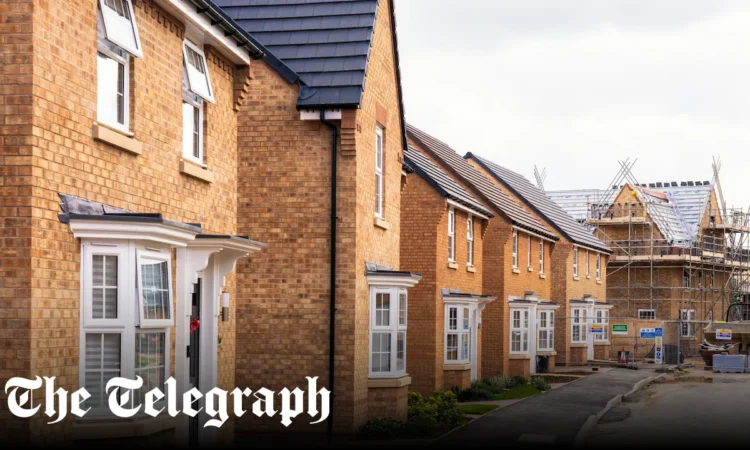
Vistry announced earlier this year that it would discount new-build homes for the private sales market to help boost sales and raise cash. The company hasn’t shared the level of price reductions, but said in May that the cost-cutting drive was set to significantly dent its profits this year.
RBC’s research covered 1,273 of Vistry’s newly built homes put up for sale between Jan 3 and May 29 this year. Not all were discounted, but of those that were, the average discount was 8.4pc.
In one case, two five-bed homes next door to each other were listed at £460,000 at the start of the year, before being cut to £425,000 in the first week of February.
One was then cut to £400,000 a week later and sold. The other stayed at £425,000 and was sold two weeks later.
Anthony Codling, an analyst at RBC, said Vistry may need to continue cutting prices if Andy Burnham challenges Sir Keir Starmer for the Labour leadership, as a change of prime minister could “slow the wheels” of Labour’s social housing programme. The housebuilder has received hundreds of millions of pounds a year in taxpayer-funded loans and grants under the scheme.
“It could be a summer and autumn of discontent for Vistry,” Mr Codling said.
Trouble has been brewing at Vistry since late 2024, when it revealed cost overruns of £165m on its projects, leading to a string of profit warnings.
Vistry recently warned it could face a cash crunch under what it called a “severe but plausible downside scenario”.
It has reportedly ordered subcontractors to down tools on private-sector projects that are either unsold or will not be completed until after June 30.
In March, Greg Fitzgerald, then chief executive, told analysts that he had “demanded that each business unit go forth and double their sales rate” in an effort to raise cash.
Mr Codling said Vistry’s sales rates “have yet to double” but rose by 30pc in May for the builder’s open-market homes, where properties are sold directly to the public.
Mr Fitzgerald has since been replaced by Adam Daniels. Mr Codling said: “The new chief executive appears to be keeping the policy of his predecessor: cutting prices to drive sales rates. The big question is, how low will they have to go?”
All of Britain’s major housebuilders have been hit this year by rising build costs as the war in Iran drives up inflation. The conflict has also kept mortgage rates high, denting demand for properties.
A spokesman for Vistry said: “We have clearly outlined the actions we are taking to improve cash generation and reduce debt levels, which include targeted pricing initiatives to reduce inventory.
“Whilst current market conditions are challenging for all companies in our sector, the group has a robust forward order book of £4.5bn, and we continue to build at scale and pace, delivering the homes this country so desperately needs.”


