
The best 1990s interiors from the House & Garden archive (and what we can learn from them)
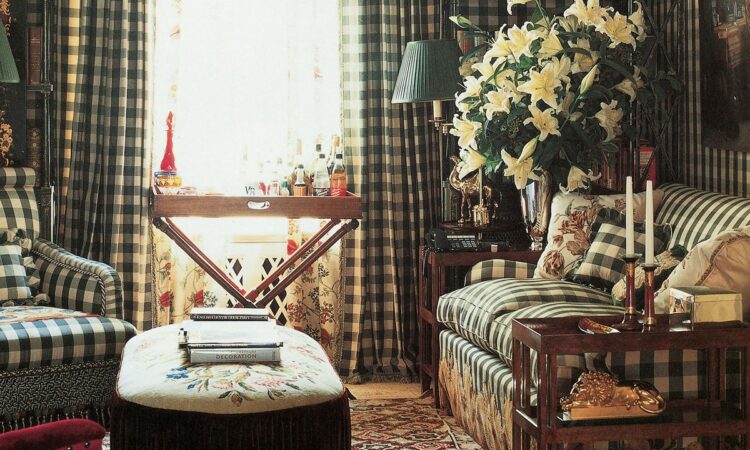
They feature many 1990s homes, as well as late 1980s and 2000s (let’s call it the long 1990s) that appealed to the same sensibility as the diorama (including many a Donald Judd-esque bright loft-studio space with a mattress on the floor). Yet despite my preconceptions about what 90s interiors are, the more I scroll and save, the less sure I am I know how to define them. At times they feel futuristic and functional, with a touch of the surreal (such as Sylvie Fleury’s ‘Bedroom Ensemble’). And-or they feel whimsical and anachronistic (see Lorenzo Prando and Riccardo Rosso’s Milan apartment, where a Renaissance painting sits next to a Memphis bed on wheels). Indeed, the 90s was caught between the opulent excess of the 80s and the more pared back 00s, Marta explains over email: ‘The era of white, purity and balance.’ What does comes through in the homes featured is the personality. ‘Homes that feel like someone’s,’ says Hannah. ‘In the 1980s and 1990s, what you see is an interest in cultivating personal style.’ Marta agrees: ‘Be brave and be yourself.’
Despite the Y2K trend that is currently dominating fashion, 1990s and 2000s interiors are generally still less popular than those of the 1970s and 1980s. ‘The hashtag for 1990s and noughties interiors is, like, nonexistent,’ says Hannah. However she believes that certain trends are due a comeback, particularly the use of colour: ‘Citrus colours […] like lime and tangerine and hot pinks which have been out of circulation for a while – or just purple in any variety.’ And for the DIYers: ‘sponge-painting – that washy painting which is very grunge-meets-medieval,’ Hannah adds. Marta notes some other 90s tropes that will or won’t be making a comeback: ‘some trends nowadays would be considered insane – for example carpets on walls.’ An East-meets-West aesthetic, or use of African sculptures, for good reason, will also unlikely find its way onto magazine pages today.
‘It is interesting to look back at what curators in the late 1990s thought would be the defining style of the time,’ says Louis Platman, who has closely researched the 1998 diorama, which was first installed 25 years ago. ‘For the most part it is very constructed – pretty much everything that’s in there was made in the nineties, whereas no one’s home is actually totally period appropriate,’ he says. Industrial-style loft conversions became popular in a post-Thatcher Britain, particularly in areas of London formerly populated by factories – such as Hackney, when the Dockyards closed – and invaded by ‘yuppies – people who were successful in the post-industrial economy,’ says Louis. Whilst it was not initially indicated, the museum’s curators always intended for the imagined couple to be gay (a lack of labelling which has now been corrected). When updating the installation in 2021, he put a call out on Twitter for objects to add – which led to the addition of specific VHS tapes on the bookshelf.
Indeed, perhaps the interiors objects that define different eras the most are not decorative, but the most functional, technological ones – such as the boxy monitor mentioned above. Hannah says that the images people respond to her most on Domicile File tend to have a piece of bygone technology in it. ‘I post something with an old TV and people are like, “oh a TV!”’ Whereas people keep a sofa or a table for many decades, we replace our electronics with more alacrity. ‘There’s a novelty to how people configure their space with a certain piece of equipment or a sound system,’ adds Hannah.
Louis says the plan for the Museum of the Home is to make the room more interactive, with features such as ‘slotting a VHS into a tape player’. Although hard to believe, for anyone under the age of 20 ‘this will be something they have never done before,’ Louis notes. For others, however, it will be merely an embodied memory, or an interaction with objects that they still dearly cling onto: ‘I often overhear people say “oh I own that,”’ Louis says of the loft apartment: ‘so how can it be in a museum?’


