
Chinese millionaire faces deportation despite $100M Hawaii real estate investment | HNN Investigates
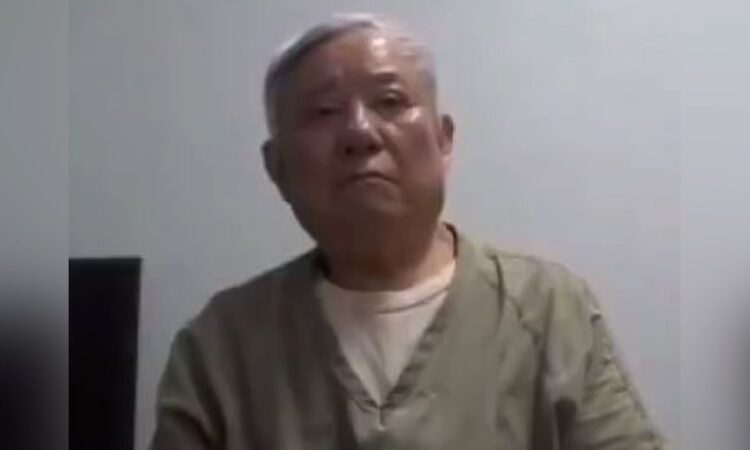
HONOLULU (HawaiiNewsNow) – A Chinese millionaire who has invested more than $100 million in Hawaii real estate is fighting deportation by the U.S. government, claiming he fears retaliation for supporting democracy while officials say he smuggled aliens and has communist ties.
Chunming Wang, 77, spoke from the Honolulu Federal Detention Center, where he has been held since June 2, 2025.
“I will fight hard with them because what they did to me was illegal,” Wang said through a translator. “I will fight to the end.”
Wang asked why he thinks the government wants to deport him.
“Because they just want to cover the crime they committed,” he said.
Wang is no stranger to international attention. In 2016, the BBC interviewed him at his luxury hotel in Chengdu, China, about his promised $200 million investment in a small English city.
After that deal fell through, Wang turned to Hawaii. He built a massive family memorial site in Temple Valley rich with patriotic symbols, including stone reliefs of the Capitol, White House, Washington and Lincoln. He also began buying local property.
Wang said he owns about $70 million in Hawaii property. He spent nearly $16 million on a beachfront estate in Aina Haina, paid $8.3 million for the former Spalding House and art museum property in Makiki, bought a half-acre apartment complex for redevelopment on Young Street and purchased at least six $2 million condos in the Aeo building in Kakaako.
He also bought millions of dollars of stock in Bank of Hawaii and First Hawaiian Bank, saying he wanted to help boost Hawaii’s economy during the pandemic.
“If Hawaii’s economy is not doing well, it’s going to have big impact on the whole United States economy,” Wang said.
Wang’s U.S. citizen daughter petitioned for him to be admitted as an immigrant. But after five years of investigation, the government denied his petition last May.
Officials cited visits by Chinese leader Xi Jinping to his company and his membership in the Chinese Communist Party, which supported his companies and allowed him to invest in the U.S.
“He was inadmissible under two separate sections of the law, being a member of the Communist Party and having engaged in alien smuggling,” said Charles Foster, a national immigration law expert.
The alien smuggling charge was because Wang allegedly brought some Chinese staffers in on visitor visas even though they worked as his employees in the U.S.
In numerous hearing while in detention Wang denied the allegations.
Wang learned his application was denied when he showed up for a meeting with immigration officials and was taken into detention on June 2 of last year. He remains in custody.
“Because this case reflects a basic fundamental system corruption problem,” Wang said through a translator.
Records show agents told Wang he might get better treatment if he could name Chinese spies in the U.S. A judge denied Wang’s habeas petition where lawyers claimed his detention was illegal. Despite offering a $100 million bond, the immigration judge said he was ineligible for release while fighting his case.
“Very few multi-millionaires or perhaps even a billionaire wind up in deportation proceedings,” Foster said. “The fact that he was held for such a long period time is unusual.”
Foster is a Texas attorney and presidential advisor on immigration policy. He said most people in Wang’s position would just give up and leave the country.
Wang is arguing that his pro-democracy activities mean he will be persecuted in China. He cited a wall praising democracy he built in Chengdu, which was taken down by officials in 2019. He has erected similar structures in Hawaii.
At the site of the former Contemporary Museum in Makiki, a wall is going up carved in marble. It praises democracy and says “I look forward to the democratic constitutionalism to usher in lasting peace in China.” It is signed Chunming Wang, February 2010.
Wang said that wall and his democracy-praising memorial in Temple Valley prove he is no communist.
“No Communist Party member would transfer like thousands of millions of U.S. dollars to the United States,” Wang said. “And also, if I am a Communist Party member, I wouldn’t want to die in the United States.”
That claim has not worked. In a ruling issued last week, immigration judge Kiley Hyatt said “wealth and an investor’s status does not allow an individual to bypass our legal requirements or to be favorably treated.”
She concluded Wang had “circumvented and disregarded immigration laws” and said “the respondent was not candid and truthful to the court.”
“The law is the law and we often tell clients that these subjective factors are not going to meaningful in any way,” Foster said.
The judge ruled that Wang can voluntarily leave the country rather than being deported to China. But he said he intends to keep fighting and keep investing — another $50 million to build affordable rentals at his lot on Young Street and another $50 million to restore the former museum site.
Copyright 2026 Hawaii News Now. All rights reserved.


