
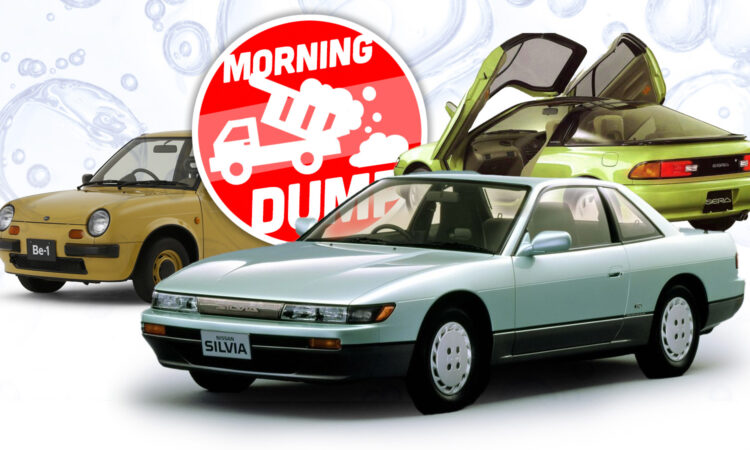
Here’s a stat that’ll turn the hair on your back white: At the height of the Japanese Asset Bubble in 1988, the value of land in Japan was 4x all the land in the United States on paper. The “on paper” part is the key term there, as a period of overheated economic growth morphed into a mix of financial engineering and deregulation that led to a massive crash. This devastated the Japanese economy, although it brought us some spectacular cars. The Japanese stock market just hit a new record this morning. Does this mean we can expect a new era of Bubble Cars?
The old adage about questions in headlines does not apply to The Morning Dump, as the answer, I think, is not an automatic “no.” Japan is probably not in a bubble, and most of the country’s automakers don’t have the capital to build wild cars for an otherwise mixed Japanese domestic market, though I’m going to argue that America is in line to get the side of the Bubble Era that rarely gets mentioned. Part of the reason for the sudden uptick is optimism around chemicals flowing back into Japan. With the stock market improving, why don’t most Japanese automakers have a ton of capital to spend? Some of it is tariffs, and some of it is electrification, though the market in the US is at least stabilizing a bit according to the latest data.


Le Mans has finished and I didn’t get to go this year, but I’m dreaming of Paris. In particular, I’m dreaming of the Rétromobile show, which is growing into another major car event.
The Forgotten Decade Still Produced Some Great Regular Cars
The Japanese stock market had a great day today (it’s already closed because it’s in a very different time zone), with the Nikkei Stock Average eclipsing 70,000 for the first time ever. While the number fell to 69,404.5 at the end of the day, that’s still a record close. The market is bullish, and a lot of it has to do with the Bank of Japan raising rates to the highest level since 1995, as the business outlet Nikkei Asia explains:
The decision follows an interim peace deal between the U.S. and Iran that is expected to be signed Friday. The military conflict and closure of the Strait of Hormuz touched off a global energy crisis, raising anxiety over accelerating inflation.
Markets had largely predicted the rate increase, with data from Totan Research and Totan ICAP putting the implied probability of a June rate hike at 99%.
In its statement, the BOJ explained that despite higher energy prices from the Iran war, “high levels of corporate profits” as well as “improvement in the employment and income situation” have supported the Japanese economy. Other supporting factors the BOJ listed were the “government’s various measures, including those to reduce the household burden of higher energy prices.”
While inflation in Japan remains a concern, the easing of fuel prices at the end (one hopes) of the Iran conflict should eventually help there a bit. The Japanese government and business community have also improved corporate governance and accounting practices in the last few years, with the introduction of more independent boards and fewer cross-held shares. One thing that hasn’t changed much, overall, is the value of the JPY to the USD, with the yen continuing a mostly slow descent relative to the dollar.
When I write about how currency is often the largest unseen force that controls the car market, the examples I use are often the role of a devalued Korean won in the success of Hyundai, or the rising German Mark as the cause for the Merkur XR4TI’s failure. Another currency feature that doesn’t get remarked on enough is how the rise and subsequent fall of the yen is why we got The Fast and the Furious movies. I need to write up that take at some point in the future, but needless to say the Japanese Bubble Era resulted in Japan suddenly producing as many over-engineered, over-styled, and over-priced cars as it could, primarily for its own exploding market.
These famous bubble cars include the Toyota Sera, the Autech Stelvio AZ-1, the Acura NSX, and many many many more including the Pike Factory weirdos (like the Pao below). While we got some of these cars initially (the NSX and 3000GT/Stealth, for example), most remained forbidden fruit. The wild stuff was for Japan. What the rest of us got, though, were exceptional everyday drivers.

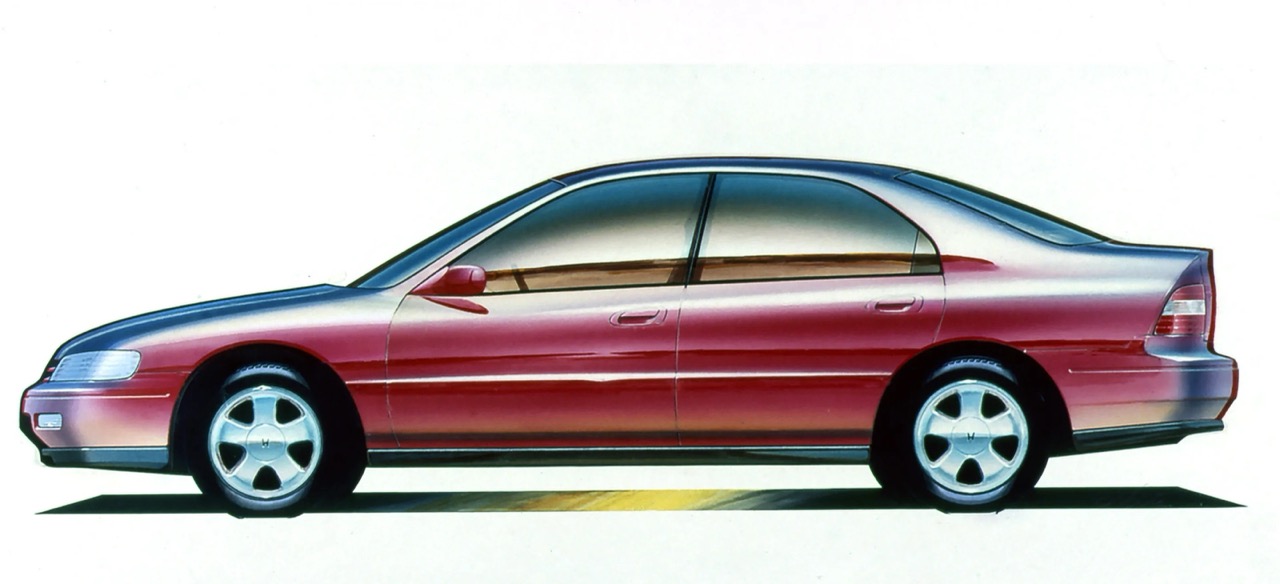
As enthusiasts, I think automotive journalists (myself included) overlook the incredible mid-90s cars like the 5th gen Accord, XV10 Toyota Camry, U13 Altima, and even the Galant because they’re not as sexy as an R32 Skyline. Plus, we got them, so they were ubiquitous and ubiquity breeds, if not contempt, then at least disinterest. However, it’s these cars that largely allowed Japanese automakers to survive the explosion in their home market. Remarkably, even with the collapse, Honda was able to ride the success of the Honda Accord in the United States to profits in the ’90s.
That’s not Honda today. It couldn’t survive the combination of tariffs and bad bets on EVs, leading it to report its first corporate loss in its 69-year history as a public company. With the exception of Mazda, basically every Japanese automaker took a huge write-down due to the creation of dead-end electric cars. The halo cars you’d have expected from a hot Japanese market? Those were EV projects that may never see the light of day.
On the other hand, the shift back to cars Americans might actually like is underway. Honda is going to build big hybrids for the American market, finally. While Toyota is still going forward with a number of EVs, it can do so because it makes numerous great hybrid vehicles across its range. Nissan, of all automakers, is the one I’m most excited about, with a new Nissan Xterra and other vehicles on the way.
Will we get a Mazda RX-9 or a new Acura NSX? My guess is we probably won’t, at least we won’t any time soon. Will we get the other side of the Bubble Car era in the form of very good vehicles everyone can afford? I think that’s coming, and it’s partially coming because automakers blew their wad on EVs (as opposed to sports cars) and now have no choice but to deliver great cars for everyone else.
At least that’s my hopeful take.
Japanese Repair Shops Are Fighting For Paint As The World Watches Iran

I think most people take for granted that supply chains are so complex, and that the fact that you can get Cheetos at every gas station in America is actually an enormous societal achievement. To wit, even getting paint for cars has become more complex because of the closing of the Strait of Hormuz as Reuters reports:
Japan’s transport ministry has begun surveying repair shops nationwide on supplies of engine oil, paint and other chemicals, as it tracks volumes, delivery frequency, price changes and the risk of shortages, according to the Automobile Business & Culture Association of Japan.
For now, at least, smaller businesses appear to be bearing the brunt. Major paint makers likely prioritize supplies to automakers over the repair market, according to some analysts.
After the conflict erupted in the Middle East, some customers placed larger-than-usual orders with major paint makers, although the big paint companies have been declining such requests, said Shunta Omura, an analyst at UBS.
A Japanese trade ministry official said overall supply was holding up. Still, he acknowledged that strong demand for popular colors such as white may create shortages.
See, this is why you shouldn’t paint your car white.
EV Registrations Only Fall 9.8% In April
A lot of people will be disappointed that the number of electric vehicles sold isn’t increasing every month, and some of that is due to the lack of government support for EVs. Some of it is due to charging infrastructure. A lot of it, I think, is just due to cost. Either way, the downturn in EV registrations in April isn’t that big of a deal.
U.S. electric vehicle registrations are recovering from the loss of federal tax credits, with April’s 9.8 percent decline marking the smallest year-over-year drop so far this year and a signal the market is stabilizing.
U.S. new EV registrations fell to 89,147 in April compared with the same month a year ago, according to S&P Global Mobility. Yet that’s the highest tally of 2026.
The number of new EVs registered fell 25 percent in March, 37 percent in February and 41 percent in January.
The EV share of the U.S. light-vehicle market held steady at 6.2 percent, the same as in March, but down from 6.6 percent a year ago.
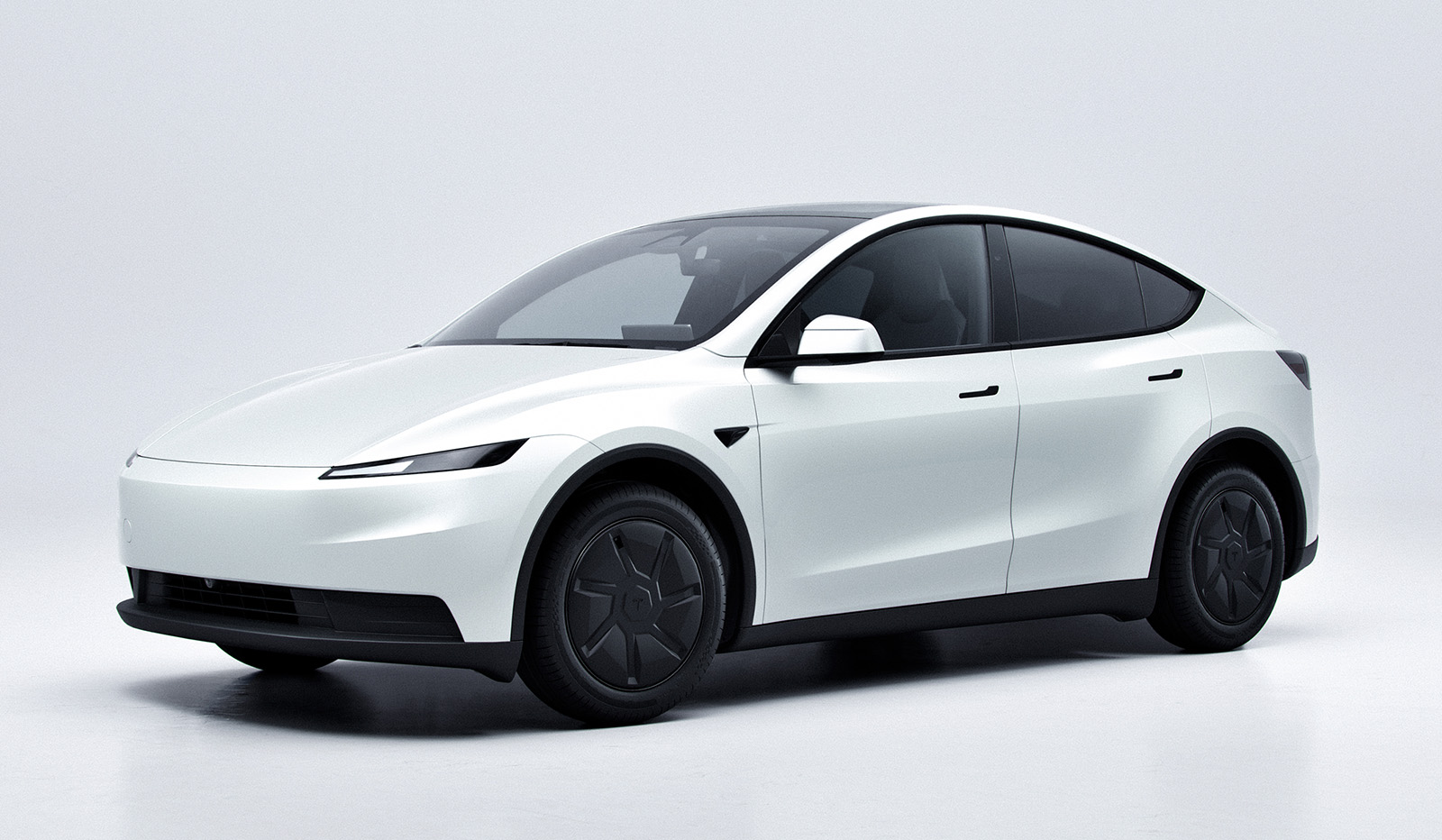
The market is stabilizing, which is good. Tesla, which had a huge lead on production and offers a good value in the market, has gotten its share back above 51%, which is both a reflection of the continued to appeal of the Model Y and the fact that many other automakers are backing off EVs after the loss of the tax credit.
Broad Arrow Auctions Are Coming To Rétromobile 2027

I love the Rétromobile show in Paris, which seems to bring out a larger and larger number of incredible and rare cars every year. I say I love it, but I’ve never been. The vibes I get are good, though, and it feels like it’s joining Goodwood, Pebble, Amelia, and Villa d’Este as one of those must attend events.
To prove that it’s growing in esteem, Broad Arrow Auctions is going to be doing an event at next year’s Rétromobile:
This incredibly exciting new auction in the heart of Paris will feature some of the world’s most desirable collector cars, all presented in one of the most iconic locations in the French capital, the Peninsula Paris on the exclusive Avenue Kléber. Set to coincide with one of the biggest events in the classic car world, Rétromobile, it promises to attract collectors from around the world for what will surely be a highlight of the international collector car auction calendar.
“We are immensely honoured to partner with The Peninsula Paris to host our new Paris Auction in 2027,” says Joe Twyman, VP of Sales EMEA Region for Broad Arrow Auctions. “The Peninsula Paris is a world-class destination for what will surely be one of the premier European collector car auctions in 2027 and which perfectly complements Broad Arrow’s sales at the Concorso d’Eleganza Villa d’Este, the Zoute Concours Auction and The Zürich Auction.”
I’ve only done Paris in the summer, though I’m sure it has its charms in February!
What I’m Listening To While Writing TMD
I’m still feeling a high from the Knicks, which means it’s time for Joe Jackson’s orchestral and wonderful “Loisaida.” I gotta put that in a movie somehow.
The Big Question
What’s your favorite normal Japanese car from the 1990s?
Top photo: Nissan, Toyota


