
Juniper removal touted as drought resilience investment
Published 3:00 pm Wednesday, June 17, 2026
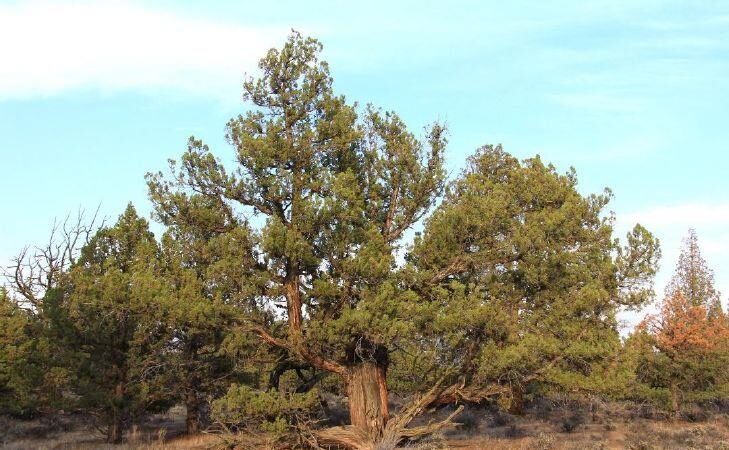
Juniper trees take up immense amounts of water
Though lawmakers can’t increase precipitation levels in Oregon, they can steer available water to more beneficial uses by investing in juniper removal, experts say.
With Oregon facing its worst drought in over a decade, experts urged lawmakers to keep directing state money to controlling juniper trees, which consume water that can otherwise contribute to in-stream flows and wildlife habitat.
“We’re here to tell you one thing you can actually do that is yielding results,” said Doug Riggs, lobbyist for the Central Oregon Cities Organization, during a recent legislative hearing. “It’s very exciting to see something that works and actually creates water that didn’t exist before.”
More precisely, cutting, piling and removing junipers prevents them from sucking up the water that Central and Eastern Oregon do receive, increasing late season stream flows by up to 225%, he said.
Juniper trees have expanded tenfold in Oregon over historical levels, disrupting natural ecological and hydrological cycles to the detriment of native vegetation, experts recently told the House Agriculture Committee.
“Juniper is one of those species that is migrating north as the planet gets drier,” said Carlos Ochoa, an ecohydrology professor at Oregon State University.
The trees are highly adaptable to drought conditions, varying their water uptake depending on how much is available on the landscape, he said. A mature juniper can consume nearly twice as much water in a wet year as in a dry one.
“It pretty much uses as much water as it can use,” Ochoa said.
239,000 gallons an acre
The ability to consume the maximum amount of water when it’s available, but withstand drought conditions when its not, often allows the tree to crowd out vegetation that’s important for habitat, such as sage brush, experts said.
A study comparing 250-acre plots over the past two decades has found that untreated juniper trees uptake about 15 times more water annually compared to an area where the trees were removed — 239,000 gallons per acre versus 15,600 gallons per acre.
The treated area was roughly three times more productive than the non-treated site in terms of producing native shrubs and grasses, with continued effects long after the junipers were removed.
The ongoing study is examining when the positive impacts of juniper control begin diminishing, Ochoa said. “So far, 20 years post-treatment, we don’t see that happening yet.”
In recent years, state investments in juniper removal have allowed scientists to begin studying its effects on a much larger “landscape” scale: 4,000-14,000 acres, compared to 500 acres, according to experts.
“That really allows us to see how much water is coming out of the system and where it is going,” Ochoa said.
In 2023, lawmakers approved $2.6 million for juniper removal by OSU and soil and water conservation districts in Crook, Deschutes, Harney, Jefferson, Klamath, Lake and Wheeler counties.
In 2025, those same counties received another $4.6 million from the Legislature for juniper removal, plus $500,000 for monitoring efforts.
Such state investments can be “leveraged” to obtain grant funding from the federal government as well, multiplying their impact, said Jason Kessling, manager of the Harney Soil and Water Conservation District.
“Because of your seed money, we were able to double or triple our money essentially and work with the feds to make sure we were getting as big of treatments as possible,” he said.


