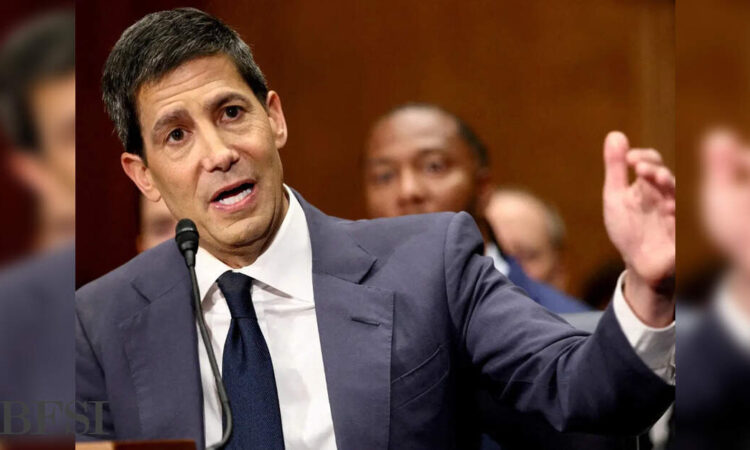
Kevin Warsh’s early days at the helm of the Federal Reserve are a tough reminder that when it comes to currencies, the US central bank isn’t always going to act with the best interests of international markets.
Warsh is signaling he will be firmly focused on controlling inflation. The Fed chief was far more hawkish than anticipated in presiding over his first policy meeting, and officials are leaning toward an interest-rate hike this year. That was a surprise because Warsh had presented himself, prior to taking office last month, as sympathetic to US President Donald Trump’s wish for easier money. The dollar surged in response and looks set for a period of relative strength. That is precisely what beleaguered Asian currencies don’t need.
Asia needs a healthy US economy, with prices contained and spending robust, given its dependence on exports. The region just doesn’t want that to come at its expense. Key nations have spent substantial sums intervening in the market and pushed borrowing costs higher. They would have loved a break from the Fed.
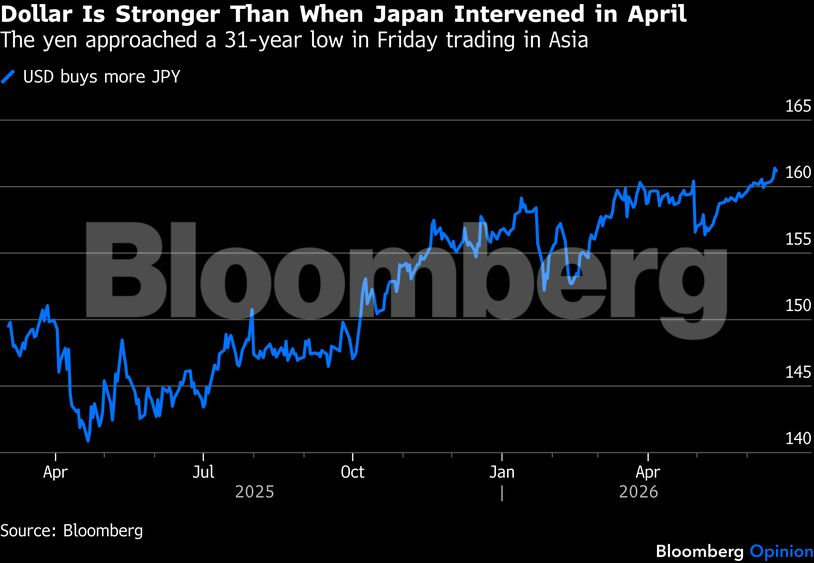
This is particularly true for Japan, which has been grappling with a sliding currency despite five rate hikes beginning in 2024. Had Warsh been more muted, that would have counted as a short-term win for the yen, which is hovering near its weakest level since 1986. Tokyo has waded into markets on numerous occasions in the past few years, most recently to prevent the currency retreating much beyond 160 per dollar.
Traders were on alert Friday for additional efforts to prop up the yen. It was recently trading at around 161, a touch weaker than its levels of late April that prompted the last round of support. Japan spent an unprecedented $74 billion in the month to May 27 to back the yen. Prime Minister Sanae Takaichi’s government can either throw more money at defending that kind of range or let the currency retreat a bit more before stepping in. Given the momentum behind the dollar this week, Takaichi might not get the same kind of traction as she did six weeks ago.
Japan may do better to hang back a little and wait for dollar bulls to become overstretched. Intervention is as much about timing as intent. Officials are often looking to change the psychology of the market. Given the surprising message from Warsh, that might take a while. Bets on further rate hikes from the Bank of Japan won’t move the needle much.
Japan isn’t alone in grappling with this new reality. The dollar rally is an opportunity for Asian capitals to reconsider their options. Indonesia and India, whose currencies have also been under siege, could have used a less muscular tone from Warsh. That might also have been just the breather that South Korea and the Philippines were looking for.
Nor is Asia an isolated case. Turkey’s lira, among the worst emerging market performers this year, needs to look beyond Washington for a lifeline. Prospects aren’t encouraging, considering that being the governor of the Turkish central bank is a precarious position to occupy: President Recep Tayyip Erdogan hasn’t hesitated to dismiss monetary chiefs who tighten aggressively. Erdogan may now be forced to indulge at least some hikes. The South African rand and the Chilean peso have held up well, but could find themselves soon falling from favor.
The biggest pain from the Fed’s repositioning may come in Southeast Asia. Indonesia is first in the firing line. The central bank has waded into the market repeatedly over the past year as the rupiah has fallen to record lows. But developments became more serious this month, when it broke through the important level of 18,000 per dollar and demand for the country’s bonds crumbled. That pushed Bank Indonesia into an emergency quarter-point rate increase, followed by a hike of the same magnitude on Thursday. The extraordinary measures bought a reprieve. Jakarta could have used just a little more time to get settings right and restore confidence. Scrutiny of President Prabowo Subianto’s team and its policies will intensify — there is speculation that the finance minister will be replaced.It won’t be all smooth sailing for the dollar. Trump’s sweeping tariffs announced in April 2025 and the ham-handed calculations behind them were a fiasco. His intensified threats against Jerome Powell, Warsh’s predecessor, and efforts to oust another Fed governor, Lisa Cook, were an assault on the cherished independence of the institution. The dollar fell 8% against major currencies last year, and for a while ‘Sell America’ was the mantra in trading rooms.
Still, never bet against the greenback for long. It accounts for the lion’s share of foreign-exchange transactions, invoicing and cross-border lending. Shifts in the Fed’s stance reverberate around the world.
The Warsh era has arrived. In his first press conference, the chair described it as a new chapter for the Fed. Asia needs to read in quickly.