Among Asian currencies, the Philippine peso sustained the second-largest losses against the United States (US) dollar since the US Federal Reserve (Fed) meeting, with analysts blaming the country’s reliance on foreign capital and persistent current account deficit.
While regional markets grappled with a surging greenback, the peso found itself particularly exposed to shifting global sentiment.
Japanese financial giant MUFG Bank Ltd. wrote in a June 26 market analysis that the peso’s decline mirrored its “structural current account deficit and dependence on external financing, leaving it more exposed when global rates remain high.”
A wider current account deficit puts depreciation pressure on currencies such as the peso because it reflects greater demand for foreign exchange (forex) to pay for imports than the supply generated by exports and remittances.
A week after the Federal Open Market Committee (FOMC) meeting, the peso weakened by 0.8 percent to ₱61.250:$1. Since January, the local currency has dropped by 4.1 percent.
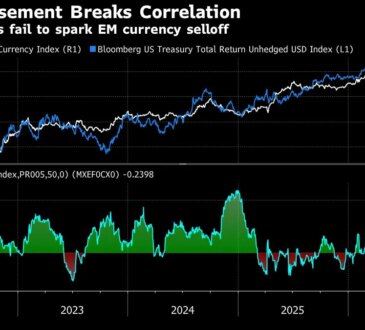
Besides the peso, other regional currencies have also been on a downward trend. However, MUFG identified the peso, Thai baht, and South Korean won as the “worst performers,” reflecting the rally in the US dollar and persistent vulnerabilities in their domestic environments.
Data monitored by MUFG analysts showed the baht emerged as the region’s primary underperformer, sliding 2.4 percent since the FOMC meeting due to its low-yield profile. Similarly, the won faced heavy pressure from foreign equity outflows.
Analysts noted that the peso underperformed largely due to “its reliance on external funding, the high-for-longer US yield weighed on the currency despite oil-related support this week.”
MUFG Global Markets Research senior currency analyst Lloyd Chan noted in a separate commentary on Monday, June 29, that although the peso offered higher yields relative to regional peers, it still came under pressure from elevated US interest rates.
“The Philippine peso, despite offering relatively higher yields, has not been sufficiently insulated from depreciation pressures given elevated US rates,” Chan said.
Under new US Fed Chair Kevin Warsh, the central bank has signaled a stronger commitment to containing inflation, which has kept Asian currencies under significant pressure.
“We have observed that the Thai baht, South Korean won, and Philippine peso have led regional losses since the Fed meeting,” Chan said. This stood in contrast to the Indian rupee and Vietnamese dong, which remained relatively stable despite the challenging offshore developments.
Domestically, the Philippines continues to grapple with persistent price pressures that complicate the monetary outlook.
Inflation eased to 6.8 percent in May from the more-than-three-year high of 7.2 percent in April. Still, it exceeded the Bangko Sentral ng Pilipinas’ (BSP) inflation target of two to four percent. This price pressure could keep the central bank on a tightening bias after raising the key interest rate by a cumulative 50 basis points (bps) to 4.75 percent in two consecutive regular policy meetings.
Chan suggested that “the scope for further weakness could be moderated should the BSP extend policy tightening, although this remains contingent on external factors, particularly the absence of another energy price shock.”