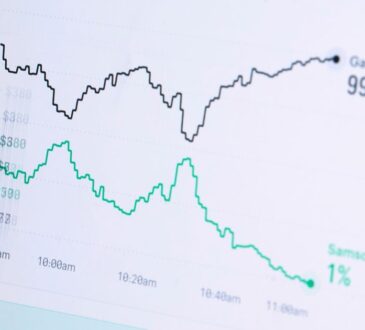
Samsung unleashed fresh pain on the US chip trade on Tuesday.
Chipmakers led US tech shares lower in the session, as investors rushed to take money off the table and rotated into other areas of the market. The trigger? A blowout earnings report from Samsung, which reported record revenue on AI demand in the last quarter.
The electronics giant said operating profits rose to 89.4 trillion won over the last three-month period, and it anticipated that figure to more than double to 171 trillion won. But the results failed to satisfy investors, leading Samsung shares to slide 7% during trading in Korea on Tuesday.
The report looked like a “sell-the-news” event for investors, who have steadily ramped up earnings expectations while also worrying about whether the money spent on the AI buildout will actually be “recouped through use,” Anthony Saglimbene, chief market strategist at Ameriprise, wrote in a note on Tuesday.
Samsung, Micron, and SK Hynix have also become key bellwethers of the AI trade, since all three companies are “emblematic of the high costs of the AI buildout,” Jose Torres, a senior economist at Interactive Brokers, told Business Insider.
“Firms have been pulling all kinds of levers to raise the significant dollars necessary to fund these AI initiatives,” Torres said, pointing to how booming profits for these chipmakers could stoke investor concern overbuilding AI infrastructure, which ends up hurting the chips sector.
The moves also foreshadow potential selling pressure that could arise if US chipmakers and AI-linked companies fail to meet sky-high expectations.
The sell-off on Tuesday quickly spread across Asian markets, and eventually hit the US market once trading began. South Korea’s KOSPI Index dropped nearly 5% on Tuesday, while Japan’s Nikkei 225 Index fell 2%.
The Philadelphia Semiconductor Sector Index, which ended the second quarter with its best-ever three-month gain, slid 5%. The index is now down 15% from its peak last Tuesday.
Intel, Marvell, and Micron, which have been among the biggest beneficiaries of the latest AI feeding frenzy among investors, were some of the market’s big losers during the session.
Here were some of the biggest losses in the chips sector:
The selling this week may also be fueled by higher rate expectations, Torres added, pointing to how Treasury yields breached key psychological levels on Tuesday as markets priced in hotter inflation and higher interest rates. The 10-year US Treasury yield broke past the 4.5% mark, while the 30-year bon yields rose past 5%.
“This is the process of the market essentially picking the winners and losers of who eventually are going to be the top beneficiaries,” he said of AI trade.
“The chip trade has begun to be rather volatile. The buy-the-dip impulse remains alive, but enthusiasm is fading,” Mehmet Beceren, a senior market strategist at Rosenberg Research, wrote in a note on Tuesday.
All three benchmark indexes slid into the red, with the tech-heavy Nasdaq 100 dropping more than 1%. SpaceX, which joined the tech-heavy index Tuesday morning, dropped another 4%, a sign the hype is continuing to fade for Elon Musk’s rocket company.
The Dow Jones Industrial Average, which broke through the 53,000 level for the first-ever time, also pulled back amid the selling.
Here’s where US indexes stood around 1 p.m. ET on Tuesday:
Other areas of the market have strengthened as some of the air comes out of the chip rally, a sign that investors are finding safety in other sectors.
Over the last five trading days, the financials sector has gained 4%, while the materials and communications sectors have both climbed 2%.
“Stocks outside of the chip arena were mostly steady to higher in early action, reinforcing the rotation ideas that characterized last week’s trading,” Joe Mazzola, a head trading and derivatives strategist at Charles Schwab, wrote in a note on Tuesday.