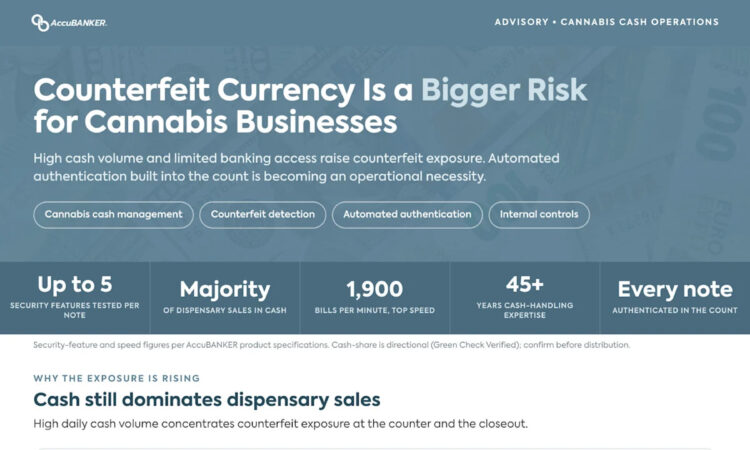

As dispensaries handle high cash volumes with limited banking access, counterfeit exposure is rising, and automated authentication is becoming an operational necessity.
Automatic counterfeit detection for cannabis businesses
MIAMI, FL, July 07, 2026 (GLOBE NEWSWIRE) — Counterfeit currency is an old problem taking on new weight in one of the most cash-intensive corners of retail. Because most licensed cannabis dispensaries still operate in predominantly cash environments with limited access to traditional banking, they handle large volumes of physical currency every day, which raises both the odds of encountering a counterfeit note and the cost of missing one. According to AccuBANKER, a provider of commercial cash-handling solutions with more than 45 years of industry experience, dispensaries that build authentication directly into their counting workflow are better positioned to catch suspect notes before they reach the deposit.
Counterfeit Currency Risk for Cannabis Businesses
Counterfeit detection is the process of verifying that a banknote is genuine by testing physical and machine-readable security features rather than relying on a visual glance. In a high-volume dispensary, the practical question is not whether counterfeits exist, but where in the workflow they are caught, and how consistently.
|
Key Facts
|
Industry Context
Cash remains the dominant payment method for many licensed dispensaries, so operators reconcile substantial amounts of physical currency daily. The U.S. Secret Service, which investigates currency counterfeiting, continues to educate businesses on the security features of genuine notes and the importance of verification at the point of acceptance. In an environment where a rejected deposit or a counterfeit loss falls directly on the operator, the case for consistent authentication is straightforward.
Industry education on this topic has grown accordingly. AccuBANKER’s own resources on cash-handling technology in the cannabis industry and the benefits of automatic counterfeit detection reflect a broader shift toward treating authentication as a routine operational control rather than an occasional spot check.