‘Slow motion currency crisis’: Investing pros worry the Japanese yen is about to rock markets again

-
Wall Street is worried that the yen carry trade could unwind again.
-
The trade involves borrowing yes at low rates and converting to dollars to invest in higher-yielding assets.
-
Prior carry trade unwinds have caused major volatility in global financial markets.
The “yen carry trade” has entered the chat again.
Wall Street pros are getting nervous about the potential for swings in Japan’s financial markets to cause spasms of volatility in the US. It’s something that’s happened before, most recently in late 2024. Even after those recent episodes, though, analysts say the carry trade remains an under-appreciated force in markets.
The yen carry trade involves investors borrowing yen at low interest rates and swapping into dollars to invest in assets that yield more, like US stocks and bonds.
The trade has helped funnel a lot of money into US markets, boosting liquidity and asset prices, but it could be in jeopardy again thanks to a handful of factors that risk disrupting the delicate yen-dollar ecosystem.
Here’s some of what investors are worried about:
Japan could step in to boost the value of its currency. Japan’s yen officially hit a 40-year low against the greenback at the end of June.
The yen traded around 162 to the dollar this week. Relative to the greenback, the currency hasn’t been this cheap since 1986.
Traders are concerned that the government could step in to prop up the currency, a move that would eat into the profits of those who have borrowed in yen to invest in dollar assets. In general, 160 tends to be a critical level at which the yen rebounds, partly due to the Bank of Japan buying more yen to boost its value, Morgan Stanley analysts said.
“Historically, such episodes have often been followed by yen strength,” the bank wrote in a client note.
The BoJ may also raise interest rates. Inflation in Japan is edging up, something that could prompt the country’s central bank to commit to more rate hikes. Lower rates in Japan relative to the rest of the world are the backbone of the yen carry trade and could cause it to “unwind” as investors sell dollar assets to cover higher borrowing costs.
“I believe the eventual peak in interest rates will be higher than most people currently expect,” Tsutomu Watanabe, a former Japanese central banker, told Bloomberg on Wednesday, speculating that rates could eventually rise over 2%.
JPMorgan also flagged risks of “excessive yen depreciation” and “sharp increases in interest rates” in Japan, which would boost the yen’s value.
Deficit concerns are already pushing rates higher. Japanese bond yields have been drifting higher, a sign that investors are anxious about the country’s fiscal health. Japan’s 10-year government bond yield is up 150 basis points in the past year.
“Investors have become immune to warnings that the huge Japanese government debt might ever generate a crisis — mainly because the naysayers have been consistently wrong. But this conjuncture looks a bit different to me,” Albert Edwards, a SocGen strategist and permabear, wrote in a note on Thursday.
Sprawling consequences
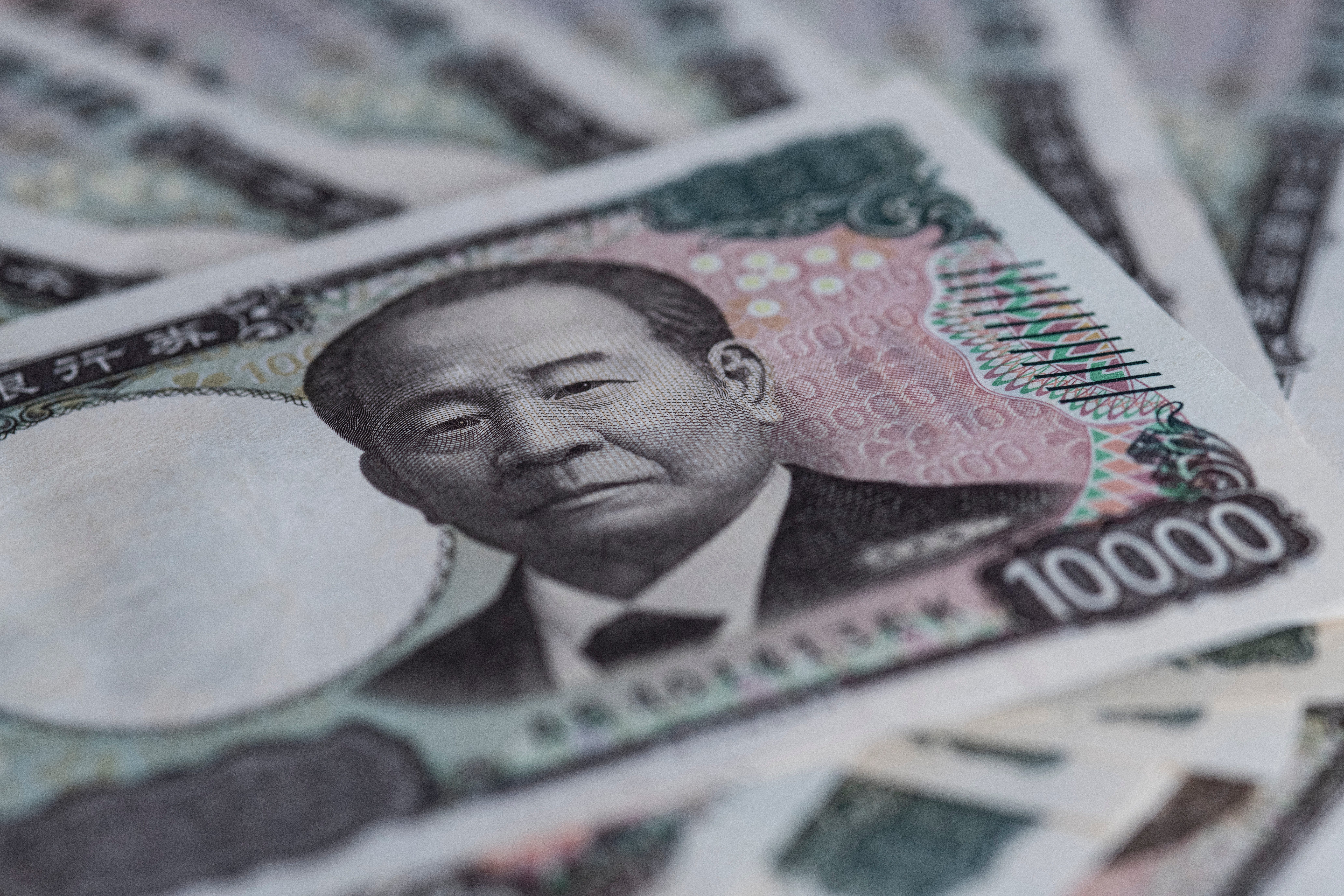
The yen carry trade unwinding risks sprawling consequences in global marketsRICHARD A. BROOKS/AFP via Getty Images
A disruption of the yen carry trade could produce a minor blip in the market or lead to a more dramatic decline, depending on how much the trade unwinds, Wall Street analysts say.
The August 2024 unwind following a surprise rate hike by the Bank of Japan led to a sharp drop in US stocks and the worst day for Japanese stocks since 1987.
Importantly for US investors, SocGen’s Edwards said the yen carry trade unwind could hurt the AI trade. In a note this week, he added that he saw in the yen the beginnings of a “slow-motion currency crisis.”
“Do you really think the US equity market, for example, can sustain a 20x+ forward PE if 10y JGBs continue their upward trajectory and converge to US 4%+ levels? I don’t,” Edwards wrote.
An “unruly unwind of the carry-trade” could create “widespread damage” in markets, David Morrison, a senior market analyst at Trade Nation, wrote in a note.
“Changes in Japanese monetary policy may become increasingly important drivers of US asset prices. Market participants may be underestimating Tokyo’s influence on global liquidity conditions,” Mark Malek, the chief investment officer at Siebert Financial, said on Thursday.
Stocks ran into the yen carry trade earlier this year after Japan’s Finance Minister warned that the government was ready to act “on all fronts” to address speculative volatility in the yen, a sign that the carry trade started to unwind slightly as investors feared a stronger yen could eat into their profits.
If you enjoyed this story, be sure to follow Business Insider on Yahoo.