1 day agoAuthor: Kartikay Chaturvedi
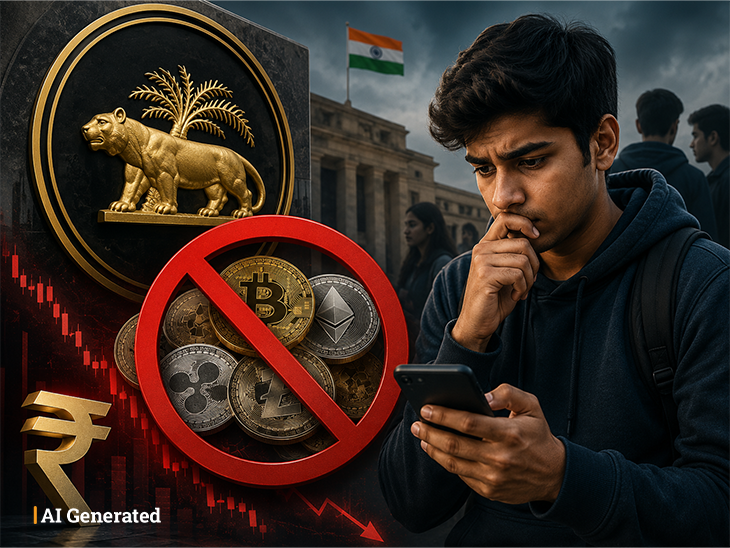
The Reserve Bank of India (RBI) has renewed its push for a cryptocurrency policy that favours a ban, according to a Reuters report based on government documents.
The RBI first warned about the financial, legal and security risks of cryptocurrencies in 2013.
The debate has resurfaced in 2026 at a time when crypto adoption is rising, with Gen Z overtaking millennials as India’s largest group of crypto investors, according to the CoinSwitch Q3 2025 report.
In today’s Explained, we examine the RBI’s case against cryptocurrencies and what a ban could mean for India’s Gen Z investors.
What is cryptocurrency?
A cryptocurrency works like the rupee, dollar or any other currency.
- The only difference is that it is entirely digital.
- Unlike cash, you cannot hold or store it physically.
- It runs on blockchain technology and uses cryptography to secure transactions, which is why it is called a cryptocurrency.
There are two types of cryptocurrency: private and public.

How are cryptocurrencies created?
Cryptocurrencies are created through a process known as mining.
- This is a form of virtual mining in which participants solve highly complex digital puzzles to earn cryptocurrency rewards.
- Solving these puzzles requires specialised algorithms (programming code) as well as substantial computing power.
In theory, anyone can create cryptocurrency. In practice, however, it is an extremely difficult and resource-intensive process.

What is a private cryptocurrency?
A private cryptocurrency is a digital currency whose transaction details are not publicly available.
This means that ordinary users cannot easily track or verify its transactions and related activities.
What is a public cryptocurrency?
In a public cryptocurrency, transaction records are available on a public blockchain.
- As a result, anyone can view its transaction history and verify it.
- This makes such cryptocurrencies relatively more transparent and trustworthy.
- However, it will be important to see how the government defines “private cryptocurrency” in the bill it is considering.
The government could choose to classify all types of cryptocurrencies as private cryptocurrencies.
How big is India’s crypto market?
India has nearly 3 crores 90 lakhs crypto traders.
As of the end of May, they held digital assets worth about ₹20,000 crore (around $2.1 billion), according to estimates by the Income Tax Department, Reuters reported.
What is the RBI’s stand on cryptocurrency?
The Reserve Bank of India (RBI) has repeatedly warned people about the risks of cryptocurrencies.
- According to a Reuters report, the RBI still supports strict restrictions, and even a ban, on cryptocurrencies.
- The RBI wants banks and other financial institutions to stay away from cryptocurrencies and stablecoins.
- It believes that if banks become linked to crypto assets, any problems in the crypto market could affect the country’s financial system.
- At present, Indian banks are not legally banned from dealing with cryptocurrencies. However, most large banks avoid them because of the RBI’s warnings.
- The central bank’s view is that cryptocurrencies should remain outside India’s regulated financial system.
- The RBI has also raised concerns about stablecoins, which are cryptocurrencies linked to assets such as the US dollar or other currencies.
- It fears that foreign currency-backed stablecoins could weaken India’s control over its own monetary system.
- According to the RBI, stablecoins could make crypto profits harder to track and tax. Currently, crypto gains in India are taxed at 30%.
The RBI says:
Even rupee-backed stablecoins could reduce government control over the financial system and create risks during market stress.
Cryptocurrency expert Harshvardhan Roongta says:

The RBI has repeatedly told the Government of India that it does not recognise cryptocurrencies and remains uncomfortable with them.

Can the government completely ban cryptocurrency? A government’s authority is limited to its own country, but the internet has no geographical boundaries.
- It is often difficult to determine which servers people are using or what activities they are carrying out online.
- In addition, cryptocurrencies use encryption and have significant value in international markets.
- For these reasons, a government cannot completely eliminate their use.
- Even if a government imposes a ban, people may still find alternative ways to trade cryptocurrencies.

- Another key feature of cryptocurrencies is that they are not controlled by any government, bank or single individual.
Moreover, many cryptocurrency exchanges are not registered in India.
Even if the Indian government introduces a law regulating cryptocurrencies, it may have only a limited impact on such overseas platforms.
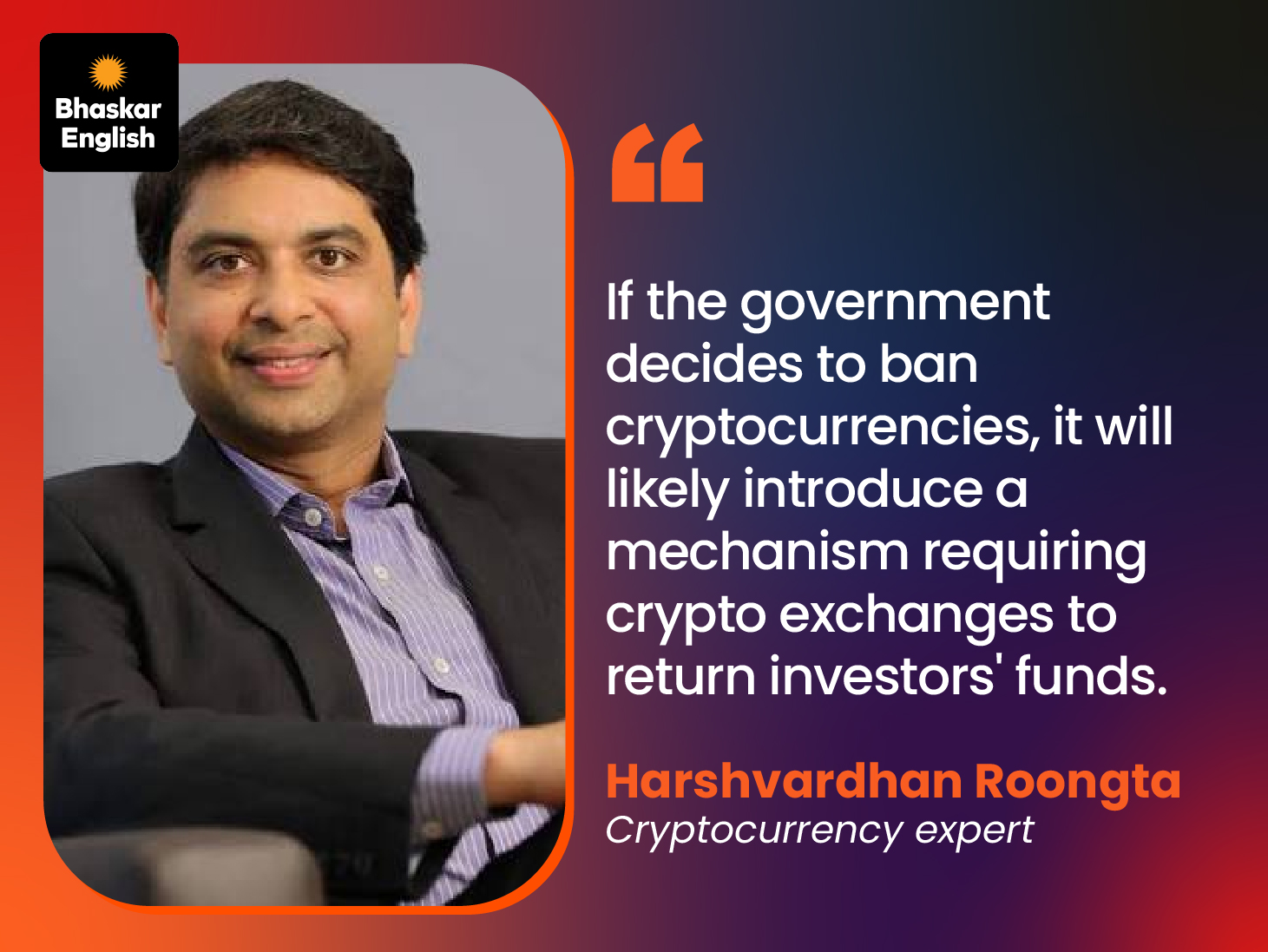
If banned, what will happen to those crypto that Indians have invested in?
Cryptocurrency expert Harshvardhan Roongta says:
‘The fact that many Indians use crypto does not mean it is regulated, officially approved, or beyond the government’s authority to ban’
How did Gen Z overtake Millennials as India’s largest group of crypto investors?
Cryptocurrency is attracting more young Indians than ever before.
- For the first time, Gen Z, people aged 18 to 25, have become the largest group of crypto investors in India, overtaking Millennials.
- According to CoinSwitch, Gen Z now accounts for 37.6% of all crypto investors, while Millennials are close behind at 37.3%. The findings are based on data from more than 2.5 crore users.
- CoinSwitch Vice President Balaji Srihari says this suggests India’s crypto market is maturing.
- He also points out that crypto adoption is no longer limited to metro cities, with investors from Tier-2 and Tier-3 cities joining in large numbers.
- The trend has continued into 2026. According to crypto exchange Pi42, Gen Z’s crypto investments rose 63% year-on-year in the first quarter of 2026.
- What makes this notable is that it happened during a sharp fall in Bitcoin prices. Despite the market downturn, young investors continued to put money into crypto instead of pulling out.
- Pi42 CEO Avinash Shekhar says this shows growing confidence among young traders. The average trade size nearly doubled from $1,051 in 2024 to about $1,960 in 2025.
- But this growth comes at a time when the regulatory environment is becoming tougher.

In July, the RBI again backed a ban on cryptocurrencies, citing risks to financial stability. At the same time, India continues to impose a 30% tax on crypto gains, with limited scope to offset losses against profits.
In which other countries has crypto been banned?
According to CoinGecko, Bitcoin and other cryptocurrencies face restrictions in 18 countries, ranging from outright bans to restrictions on payments and financial institutions.
- Nine countries have imposed a complete ban, Afghanistan, Algeria, Bangladesh, China, Egypt, Kuwait, Nepal, North Macedonia and Tunisia, while another nine have partial restrictions on crypto-related activities.
Graphics Anas Shakir