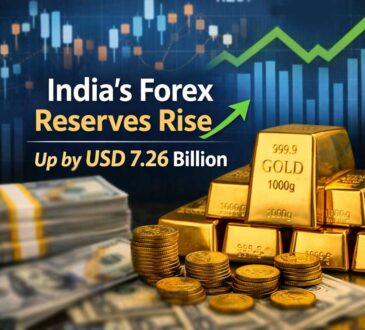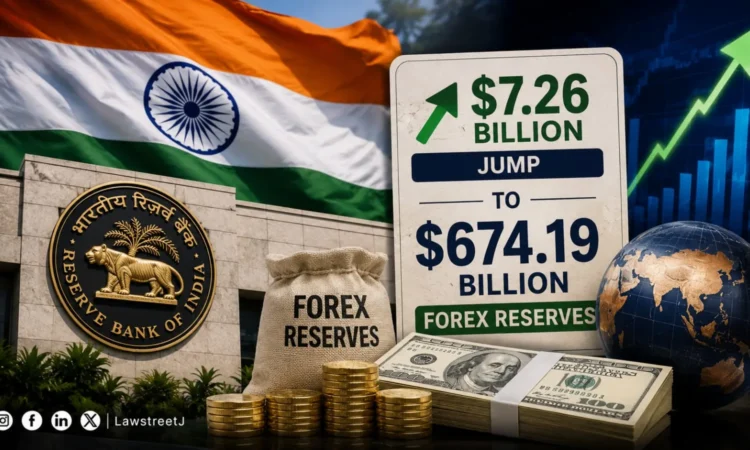
Mumbai | India’s foreign exchange reserves rose by $7.26 billion to $674.193 billion in the week ended July 3, 2026, reversing a decline of $5.65 billion recorded in the previous reporting week, according to data released by the Reserve Bank of India on Friday. The rebound was broad-based, with all four major components of the reserves, foreign currency assets, gold, Special Drawing Rights, and India’s reserve position at the International Monetary Fund, recording gains during the week.
The rise restores a measure of comfort to India’s external financial position after a period of volatility that saw the reserves fall from their all-time high of $728.494 billion, recorded in the week ended February 27, 2026, to a low of $666.93 billion in the week ended June 26, a decline of over $61 billion in just four months. The latest figure of $674.193 billion places India’s reserves approximately $54 billion below that February record.
Component-by-Component Breakdown
- Foreign Currency Assets – the single largest component of India’s forex reserves and the most directly responsive to RBI intervention activity and capital flows, increased by $4.51 billion to $545.58 billion during the week. Foreign currency assets are maintained in major global currencies including the US dollar, euro, pound sterling, and Japanese yen. Expressed in dollar terms, they reflect the impact of appreciation or depreciation of these non-US currencies relative to the dollar, meaning a portion of the week’s gain reflects currency valuation effects rather than purely new acquisitions.
- Gold reserves rose by $2.669 billion to $105.205 billion. The rise in gold reserves reflects both RBI purchases and the impact of rising international gold prices on the valuation of India’s existing gold holdings. Gold has become an increasingly significant component of India’s reserve strategy over the past two years, with the RBI consistently adding to its holdings as part of a deliberate diversification of the reserve portfolio away from pure US dollar exposure. On a year-on-year basis, gold holdings increased by $20.36 billion, the strongest component in terms of annual appreciation, even as total reserves remained lower by $25.54 billion compared to the same period last year.
- Special Drawing Rights – the IMF’s international reserve asset, increased by $65 million to $18.623 billion during the reporting week.
- India’s Reserve Position with the IMF – which reflects the amount India can draw on from the IMF unconditionally under its IMF quota rose by $15 million to $4.79 billion.
The Context: What Drove the Previous Decline and Why the Rebound Matters
The $61 billion decline in India’s forex reserves between late February and late June 2026 was not a single-cause event. It reflected the combined impact of several simultaneous pressures on the Indian economy and currency markets.
The outbreak of the US-Iran war in late February 2026 sent global oil prices sharply higher, increasing India’s import bill significantly and putting downward pressure on the rupee. As the rupee came under selling pressure, the RBI intervened in the foreign exchange market by selling dollars to defend the currency, a process that directly reduced the reserve pool. The RBI has maintained a stated policy of not targeting any specific exchange rate level but intervening to limit excessive volatility, a position that inevitably involves dollar sales when the currency comes under sharp pressure.
The State Bank of India noted in a research report: “RBI foreign currency reserves increased by $4.4 billion during the fortnight, indicating the desire of the RBI to also recoup foreign exchange reserves.” This framing, describing the rebound as reflecting the central bank’s active desire to rebuild reserves rather than purely passive capital flow movements, suggests the RBI has shifted its intervention stance from net selling to net buying in recent weeks.
The reopening of the Strait of Hormuz following the US-Iran preliminary peace agreement in June 2026 contributed to a sharp fall in global oil prices, Brent crude retreated from conflict-driven highs to approximately $72 per barrel. This has directly reduced India’s import costs, reduced the pressure on the rupee, and allowed the RBI to resume dollar purchases. The rupee settled at 95.33 per dollar on Friday, compared with 95.38 in the previous session, essentially flat, reflecting the more stable conditions now prevailing in the currency market.
Additionally, banks have registered a gradual increase in the flow of overseas funds after the rollout of the RBI’s revised Foreign Currency Non-Resident, Bank deposit scheme, known as FCNR-B. The revised scheme, which offers higher interest rates to encourage NRI deposits, is expected to bring in additional dollar flows over the coming weeks and provide further support to the reserve position.
Where India Stands: Global Context and the Record Gap
India’s forex reserves of $674.19 billion place it among the top five countries globally in terms of reserve holdings, trailing China, Japan, Switzerland, and Russia. The size of the reserve pool provides India with a substantial buffer against external shocks, covering approximately eleven months of imports at current run rates and providing significant capacity to defend the rupee in the event of renewed global volatility.
However, the gap between the current level and the February all-time high of $728.49 billion, now standing at approximately $54 billion, is a figure that RBI policymakers and financial markets are watching closely. Rebuilding that buffer depends on the continuation of three favourable conditions: relatively stable oil prices, continued foreign capital inflows into Indian equity and debt markets, and a supportive global dollar environment. All three conditions are currently in place but remain subject to the same geopolitical and macroeconomic risks that drove the February-to-June decline.
Compared with the end of March 2026, total foreign exchange reserves were lower by $16.92 billion, with foreign currency assets declining by $6.71 billion and gold reserves down by $10.19 billion over the same period. On a year-on-year basis, total reserves were lower by $25.54 billion, though gold holdings increased by $20.36 billion during the same period, a divergence that reflects the RBI’s deliberate strategy of increasing gold’s share of the overall reserve portfolio as a hedge against dollar-denominated asset risks.
The July 3 data represents a single week’s snapshot in what is a dynamic and continuously evolving position. With the RBI’s revised FCNR-B scheme expected to generate additional inflows in the coming weeks and global oil prices remaining relatively contained, the trajectory of India’s reserves in the near term is cautiously positive, though the $54 billion gap to the February record makes clear that the full restoration of peak reserve levels remains a work in progress.