In mid-June, Indonesian Finance Minister Purbaya Yudhi Sadewa spent two days in Beijing and flew home with more than pleasantries.
China’s finance ministry and the People’s Bank of China pledged to fast-track approval of Indonesia’s debut panda bond, a renminbi-denominated issue targeting around US$1 billion. The Asian Infrastructure Investment Bank (AIIB) added a commitment of $17 billion for development projects through 2029, along with plans to open an office in Jakarta.
For a government looking to fund its budget without leaning so heavily on the dollar, it was a productive trip. Six decades ago, Indonesian delegations made similar journeys, but the destination then was Tokyo, not Beijing.
That earlier relationship was never an accident of geography. Historical research on Japan’s aid program, most recently by Yukiko Kuramoto of Rikkyo University, shows that Tokyo’s official development assistance rested on five deliberate principles.
The fifth was stated plainly: the long-term aim of an Asian economic bloc. In pursuit of it, Japan lent exclusively in yen, reasoning that the wide circulation of its currency across Asia would underwrite its leadership of the region.
Indonesia sat at the center of that design. Between 1965 and 1990, it was the largest recipient of Japanese aid, absorbing some $74 billion, with nearly half of the loan money channeled into power plants, telecommunications and transport.
Thousands of Indonesian officials were trained in Japan. The Asian Development Bank (ADB) gave the arrangement an institutional home; its presidency has been held by a Japanese national since the bank’s founding, though Tokyo took care never to advertise the fact.
Whether all this would harden into a genuine currency bloc remained an open question. In 2009, International Monetary Fund (IMF) economist Kazuko Shirono posed it directly in a working paper titled “Yen Bloc or Yuan Bloc.”
Her trade-based estimates pointed to an uncomfortable conclusion for Tokyo: a common currency arrangement anchored to the yuan would yield larger welfare gains for East Asia, since China had already displaced Japan as the hub of regional commerce. It was a bold call for its time. The years since have proved it right.
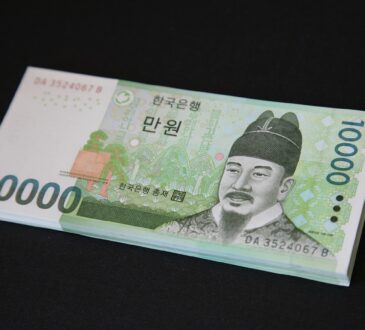
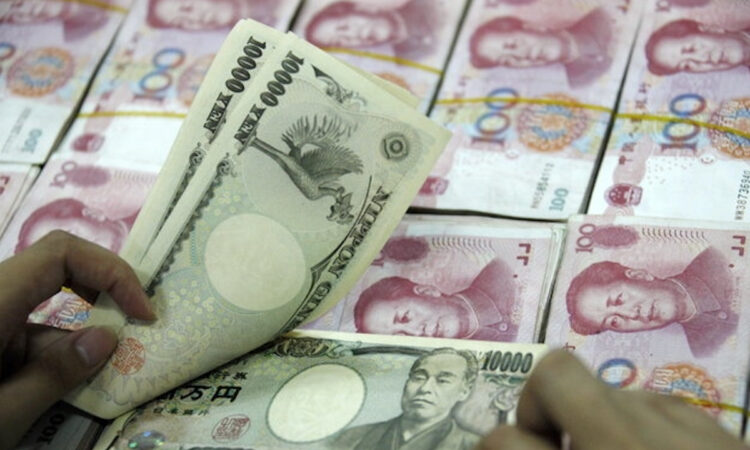
Consider where the three currencies stand today. The yen has slid past 162 per dollar, its weakest level since 1986, and Japan’s real effective exchange rate has fallen to its lowest level in more than 50 years. The finance ministry is believed to have spent some 5.5 trillion yen (US$34 billion) defending the currency in late April, and traders suspect it has returned to the market since.
The pressure is structural rather than speculative. With the US Federal Reserve holding rates at 3.50% to 3.75% against the Bank of Japan’s 1%, the carry trade keeps paying, and yen sellers keep coming back.
China’s yuan tells the opposite story. It has been among the steadier currencies in Asia through the turbulence of the past year, and its share of global reserve holdings continues to inch upward, with regional trade increasingly settled in it. Indonesia’s rupiah sits between the two, soft against the dollar at around 17,900 yet markedly stronger against the yen.
That last detail carries more weight than it appears. Indonesia’s legacy yen debts, including long-term repayment obligations on the Jakarta MRT, have become lighter to service. The new borrowing Jakarta contemplates, meanwhile, is expected to price at a coupon of just 2.3% to 2.5%, far below what dollar issuance would cost.
The mechanics of the panda bond also deserve a closer look. Under the local currency transaction framework agreed between the two central banks, Chinese investors pay in yuan while Indonesia’s government receives rupiah, with no dollar leg in between.
Twenty-one institutional investors, among them the China Investment Corporation and the Export-Import Bank of China, have signaled interest. Demand ran so far ahead of the paperwork that the issuance slipped to late July at the investors’ own request.
The echoes of the 1970s are hard to miss. Then, a rising Asian power lent its own currency to Jakarta, embedded its advisers in Indonesia’s planning apparatus and built a multilateral bank to anchor the region. Another power is now walking the same path, with the AIIB stepping into the role the ADB once played.
Yet three qualifications should temper any talk of an immediate changing of the guard.
First, the dollar remains the hub around which everything else turns. The yen is not falling against the yuan so much as both are being measured against a dollar propped up by high American rates. Whatever yuan-centered arrangement emerges in Asia will grow inside the dollar system, not in place of it.
Second, Jakarta is not choosing sides. Purbaya has framed the panda bond as diversification, invoking a principle of non-alignment and stressing that Indonesia remains open to capital from the United States, Europe and Singapore alike. A country that spent decades borrowing in yen understands the risks of leaning on any single currency, whichever flag it flies.
Third, Japan’s legacy has not evaporated. As Kuramoto observes, the ideas carried by decades of yen loans became embedded in Indonesian state institutions, from long-term planning to the technocratic corps that still runs economic policy. What has weakened is not the relationship – it is the currency at its center.
And that is the real lesson of this moment. Currency blocs are not built by ambition alone; they are built by stability. Japan’s postwar planners grasped this well, which is why they matched their lending with institutions designed to last.
The yen anchored Asian borrowing for as long as it was a currency worth holding. At 162 to the dollar, with intervention now a recurring line item, that condition no longer holds, and no amount of diplomacy can substitute for it.
Shirono ended her 2009 paper with the question still open. Seventeen years on, the market is answering it one bond issue at a time. For Tokyo, the window has not closed; a stabilized yen and a credible policy path could yet restore its pull.
But monetary anchors are chosen, not inherited. Asia, ever practical, is quietly choosing again.
Irvan Maulana is a Jakarta-based independent policy analyst.