
It’s one thing to set eyes on a photo of a historic coin; it’s another to hold a 2,000-year-old Roman silver denarius in your hand while analyzing its portrait of Augustus, Rome’s first emperor. You might think ancient forms of writing look cool, but run your finger along the wedge-shaped impressions of an ancient Sumerian cuneiform tablet and you’ll gain a whole new level of understanding.
In Wesleyan Library’s Unique Collections, material signatures of history abound. They offer students and researchers alike direct access to objects that illuminate lives lived and connections made across geographic and ideologic boundaries. Among the most intriguing are ones left behind by trade and commerce.
Three of the unique collections at Wesleyan—the Archaeology & Anthropology Collections, the Special Collections & Archives, and the Dietrich American Foundation Collection—feature currency in its diverse forms, a sampling of which is highlighted here. They raise countless questions: How is value measured by a society, and in what contexts can it change? How has globalization influenced currency, not just in its monetary value but in its physical qualities as well? How are accounting records both transactional facts and human stories? What cultural ideas are embedded in a given type of currency, be it a cow, a knife, a lump of bronze, or a dollar bill? While those questions are ripe for exploration and interpretation, one thing is certain: Money talks.
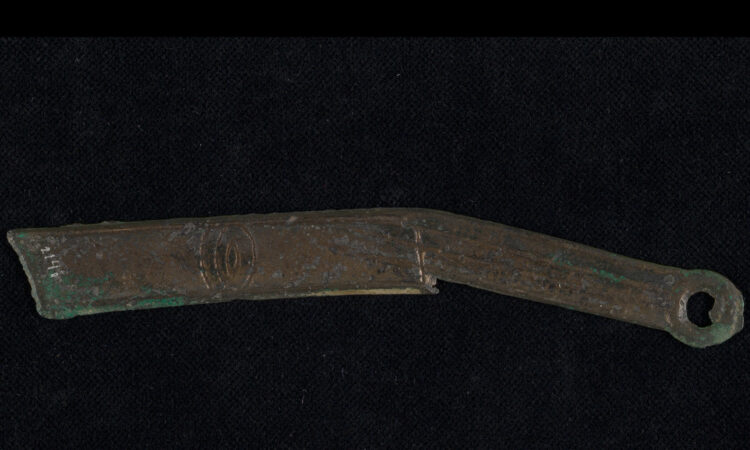
Knife Money
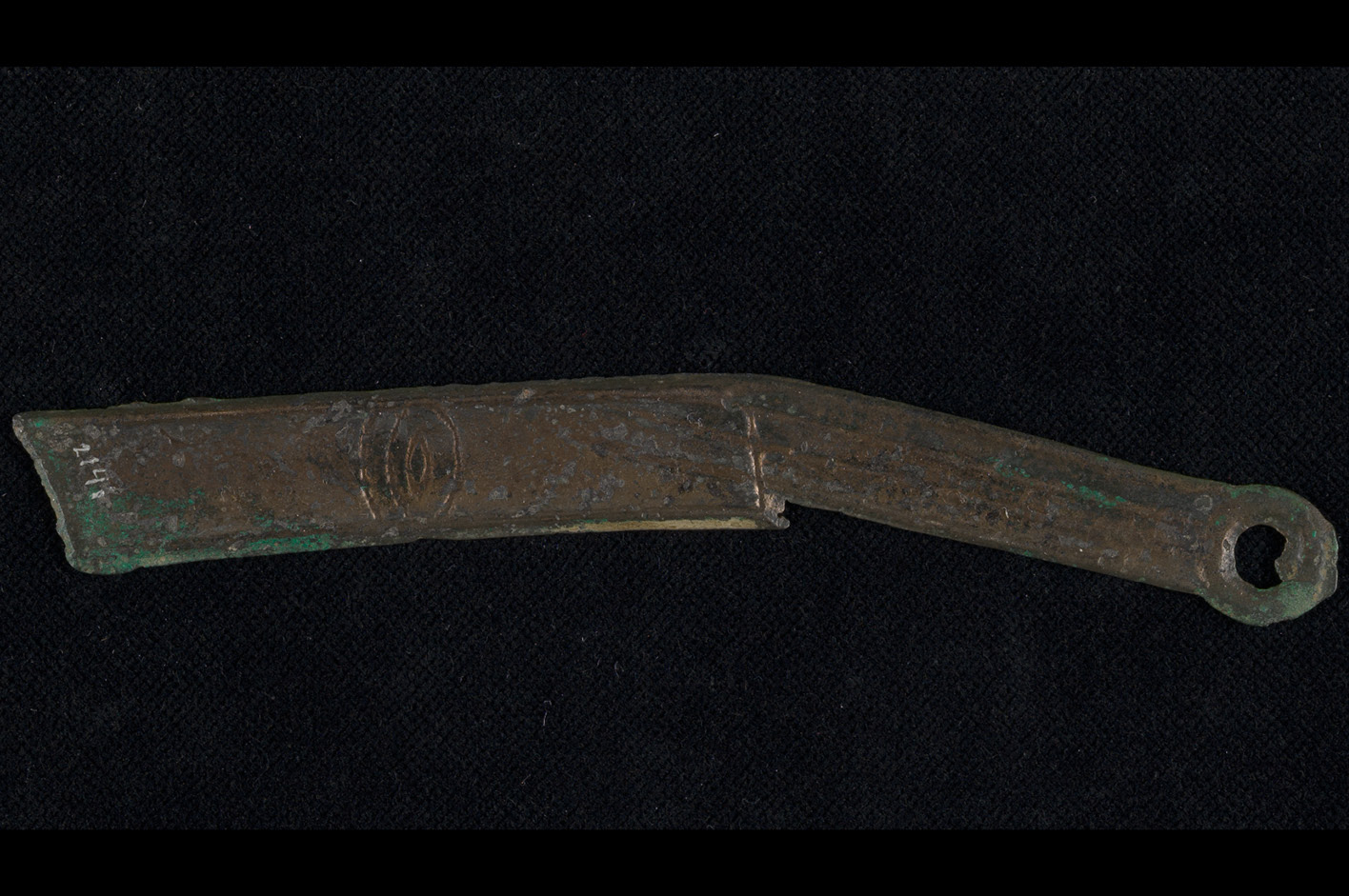
Knife money, considered the first form of coinage in China, originated during the Zhou dynasty and circulated between 600 and 221 BC. Cast in bronze and made in the likeness of objects that had inherent value—like knives and spades—they were lightweight, portable, and symbolically significant. Actual knives and spades were important bartering items in China, for both their utility in agriculture and metal content (bronze). Knife money marks the evolution of these tools into stylized, representative versions of themselves. A major difference is that they were marked by an authority (the state) to denote their status as currency. Pictured here is a Ming knife, featuring a straight tip and an inscription that has been interpreted as either “ming” or “yi.“ (Yi is the name of an ancient city where knife money was minted.) Round coins wouldn’t become standard currency in China until 221 BC.
Cuneiform Tablet
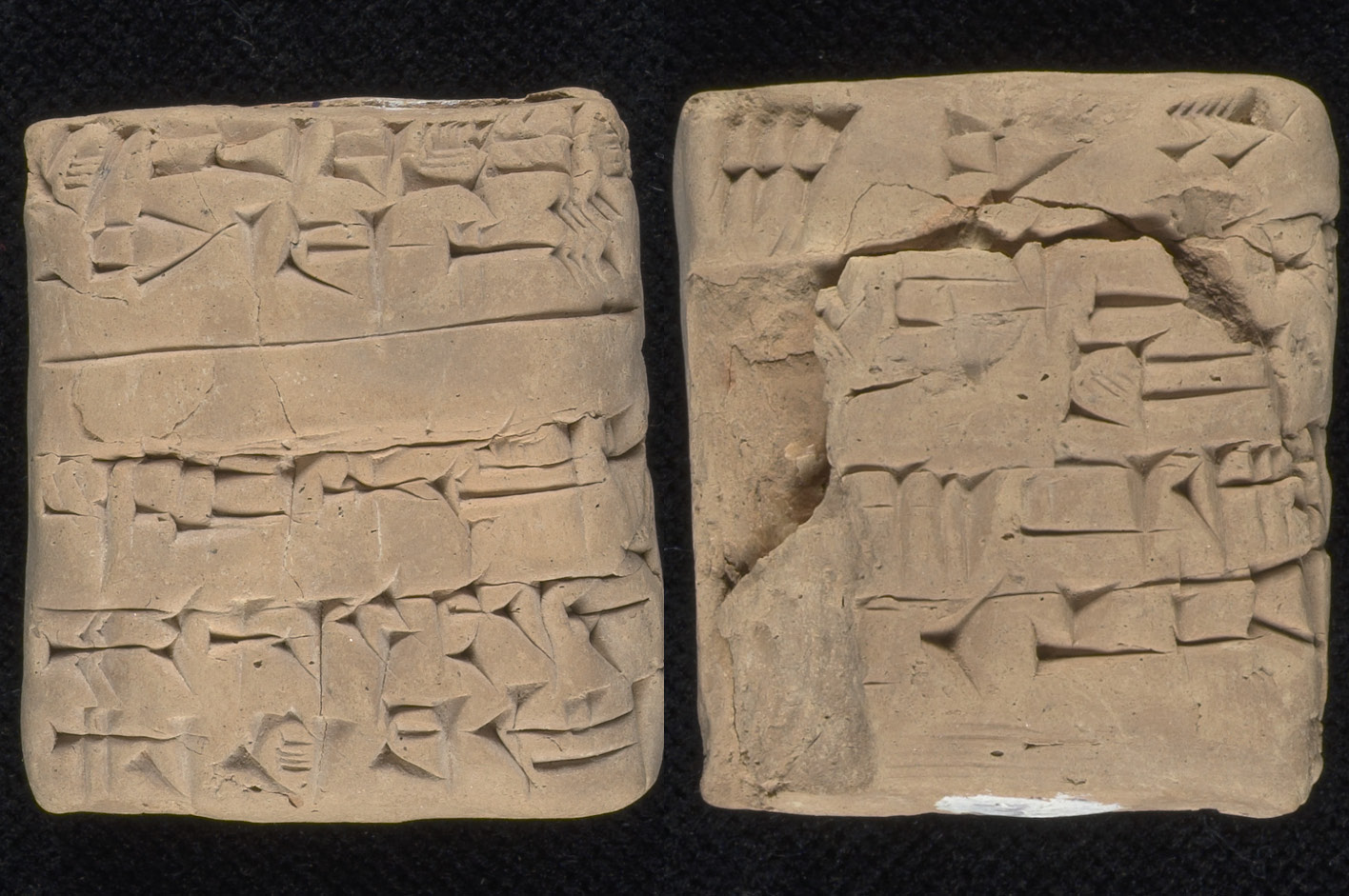
Invented in Mesopotamia (modern Iraq) nearly 5,000 years ago, cuneiform tablets were used to track receipt and distribution of agricultural goods, cattle, and other commodities. Using a writing system that was developed precisely for this purpose, the ancient accountants of Sumer inscribed wet clay with a wedge-shaped reed stylus, documenting the details (locational info, people involved, dates) of the myriad transactions that ran an empire. This tablet originated in the city of Drehem (Third Dynasty of Ur, ca. 2100–2000 BC) and reads, “Disbursement of seven fatted oxen.” Drehem was an administrative hub of the Sumer empire, which included the distribution of livestock; today, it is an archaeological site that has yielded thousands of similar tablets.
Cowrie Shells
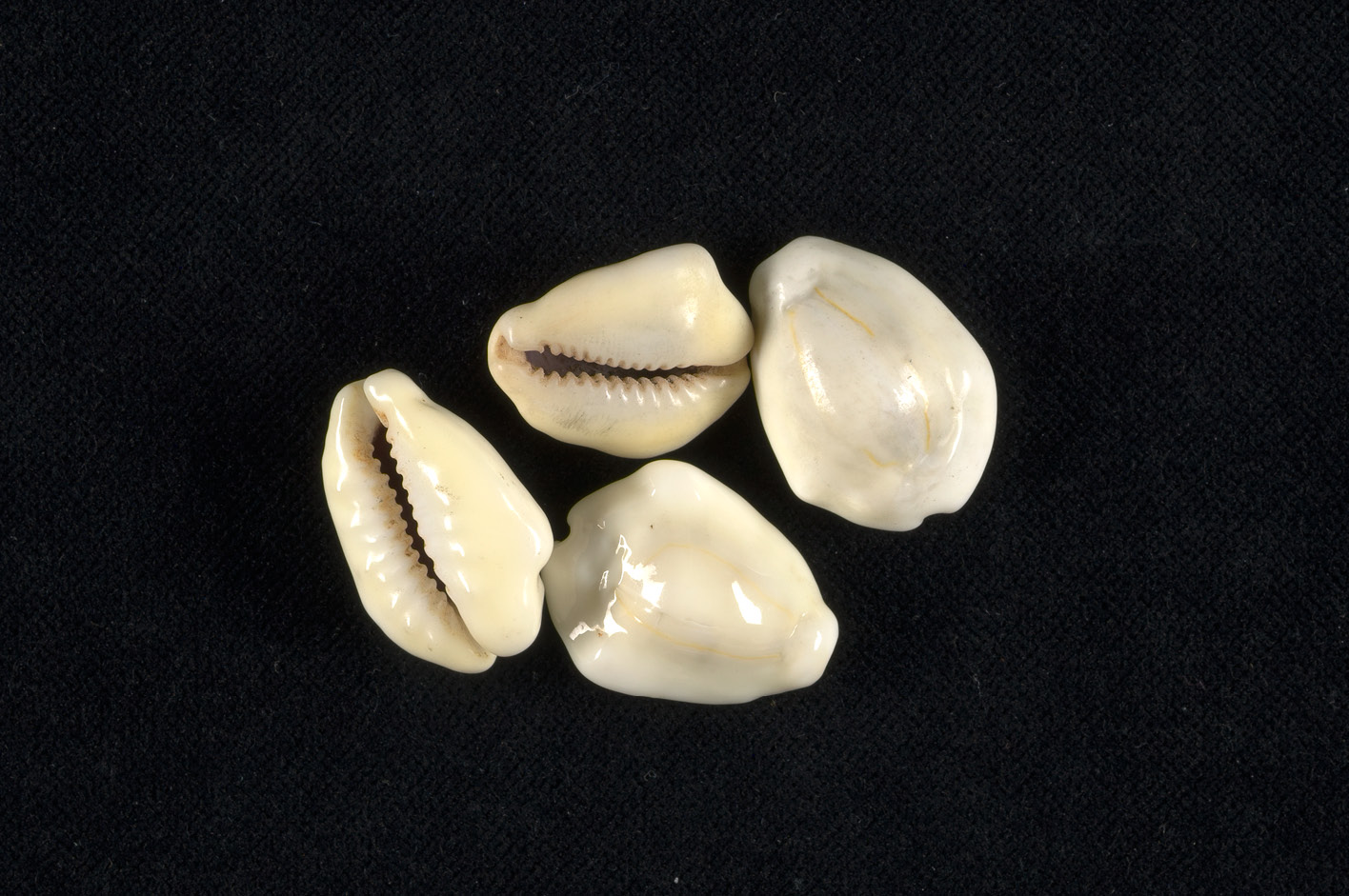
These little mollusks began making global commerce possible as early as the fourth century. To scale up its economy, India—and, later, China and Africa—needed a more practical approach to transregional exchange than hauling cattle around to trade. The solution lay in the form of the money cowrie (Cypraea moneta), a tiny sea snail found in the shallow and highly controlled waters of the Maldives. Cowries were ideal for standardizing currency: They are all the same size and weight; they look valuable (they retain their porcelain-like shine, unlike most other kinds of shell); and they were impossible to counterfeit. By the 14th century, cowries were the standard currency in West Africa. They remained the primary medium of exchange between Europe and West Africa into the 19th century.
Colonial Delawarean Currency
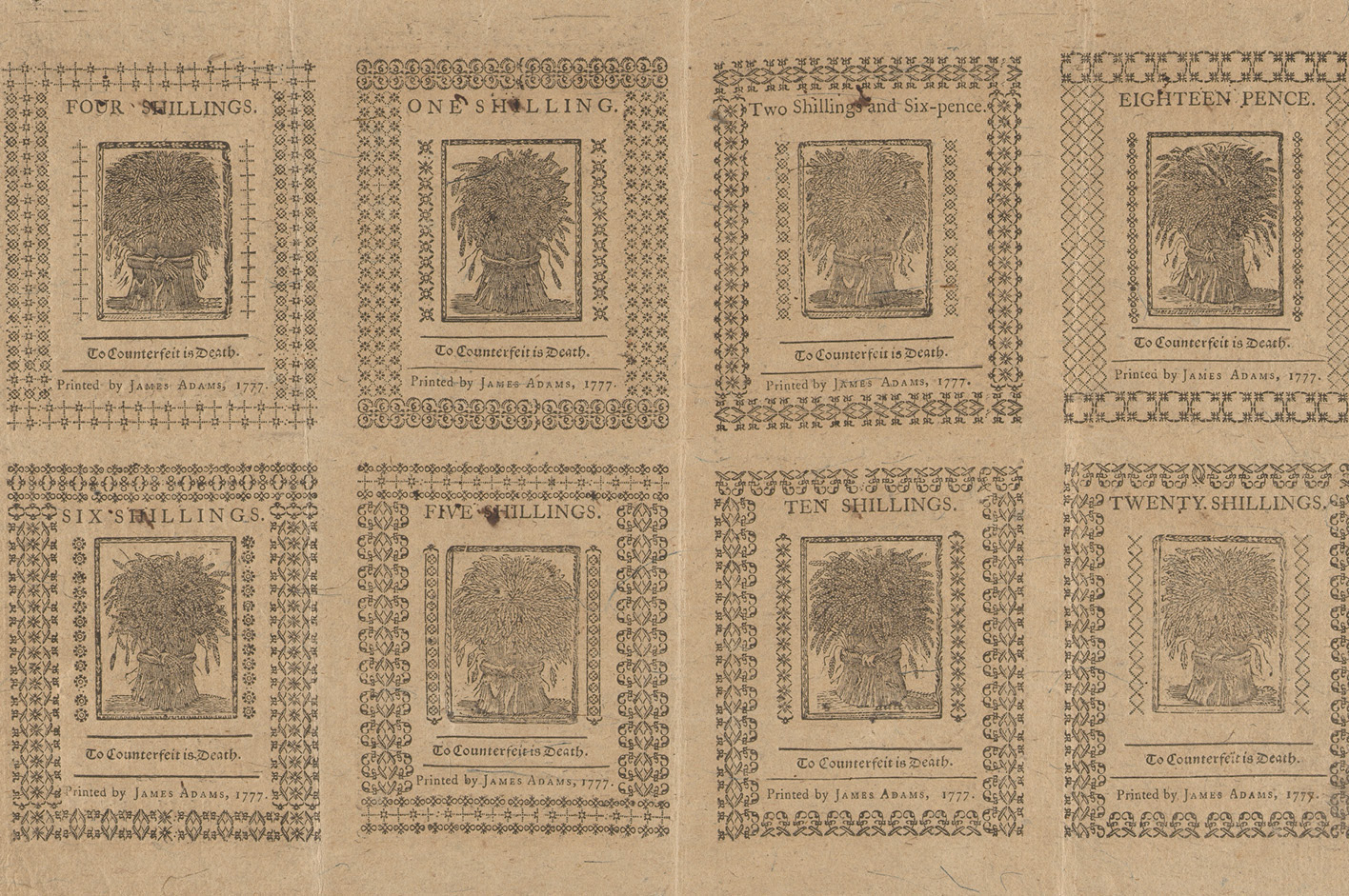
While England prohibited the American colonies from minting coins, they were allowed to print and circulate paper money. The Delaware notes pictured here were printed by the colony’s first printer, James Adams, and issued on May 1, 1777. Ranging from one to 20 shillings, the currency features various print techniques, including woodcuts, type, and ornaments, as well as handwriting. Despite this work, they remained uncut and therefore never circulated. Indigo blue threads and muscovite crystals (part of the mica family) were incorporated into the paper and thought to have been developed by Benjamin Franklin to deter forgeries, with the latter possibly helping with durability. The paper money states, “To Counterfeit is Death,” serving as another visual reminder that forgery was prohibited and that punishment could be as harsh as execution.
Marbled Promissory Notes
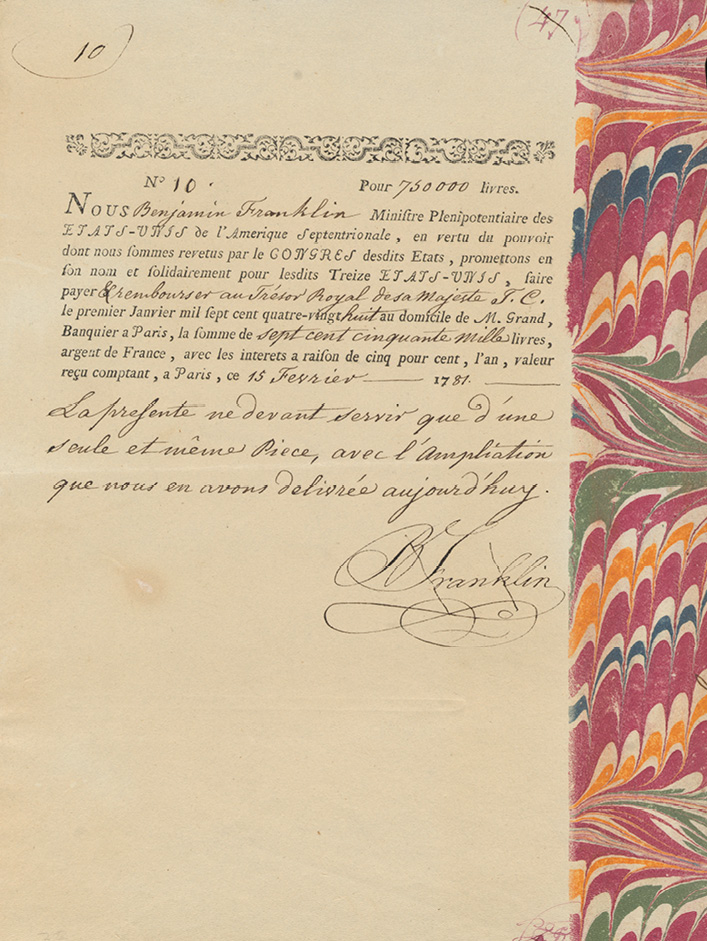
Benjamin Franklin tried to prevent forgeries with other means, including marbling documents side by side and cutting irregularly, both of which created a unique fit that would be difficult to duplicate. Likely printed on his press at Passy, a suburb of Paris, when he served as an ambassador to France, this document indicates that the French government was loaning 750,000 livres to the United States on February 15, 1787. Franklin was able to broker 21 loans—this was the tenth and among the six largest—all of which share the same techniques and processes. He would keep the right side, while the French government received the left side. Based on the marbling, this note belonged to the French government.
Engraved Loan Certificates
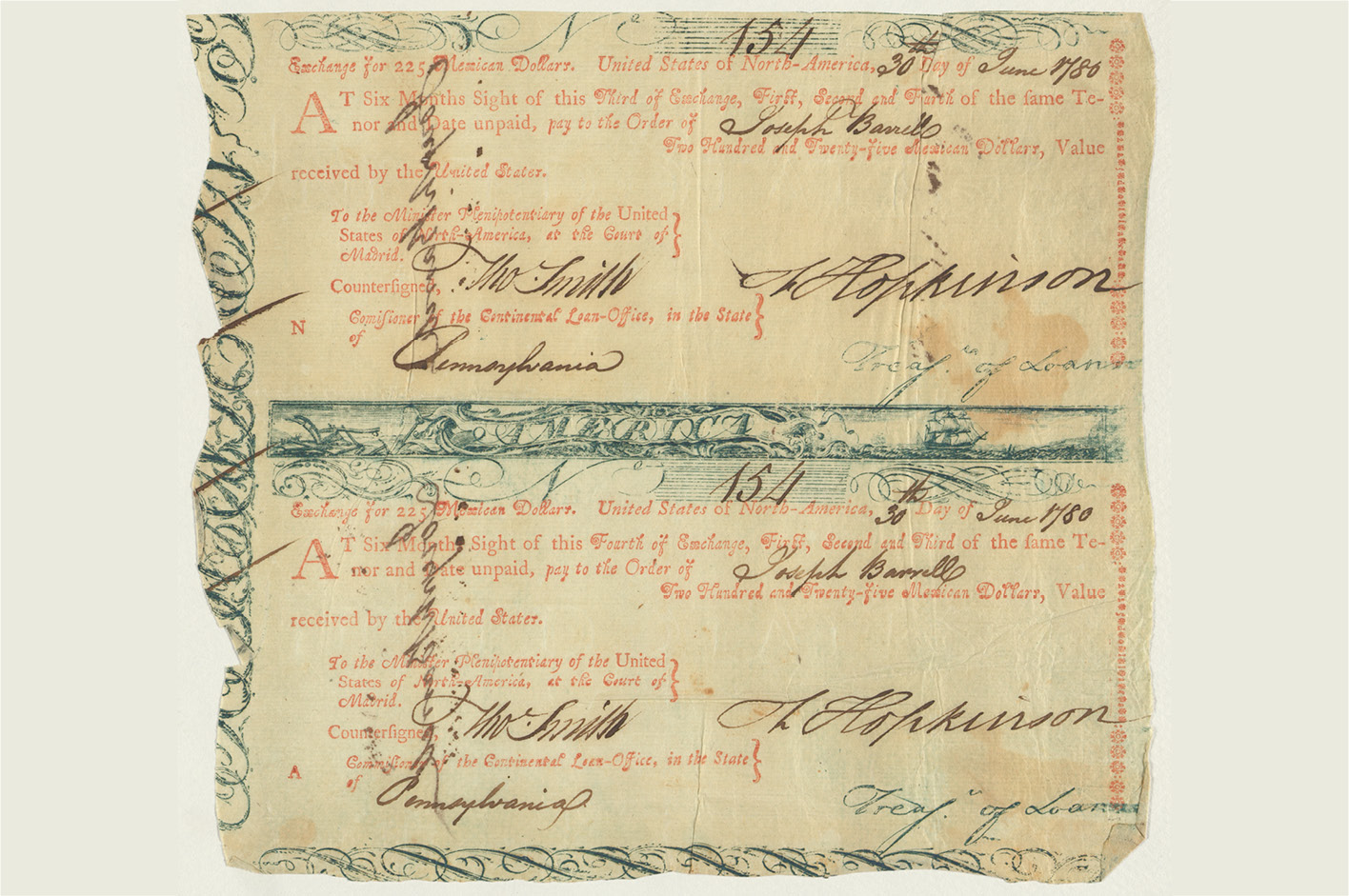
While British currency was frequently used within the American colonies, trade meant employing Mexican and Spanish currency as well. These two loan certificates from Pennsylvania required Joseph Barrell, a Boston-based fishing and shipping merchant, to repay “the Minister Plenipotentiary of the United States of North-America, at the Court of Madrid” 225 Mexican dollars within six months as of June 30, 1780. The documents were then countersigned in Philadelphia by Thomas Smith, the “Commissioner of the Continental Loan-Office in the State of Pennsylvania,” and Francis Hopkinson, its treasurer. The loan certificates feature irregularly cut edges, engraved decorative borders, and handmade slashes to try to dissuade forgeries, demonstrating money’s ability to transcend the utilitarian and become an object of historical significance and beauty.
Innovation, risk, vision, opportunity, even sea snails—the history of money has it all. It tells us not only how economies worked, but the circumstances that necessitated them, the ideas that built them, the failures that preceded them, and the connections that sustained them.
Wendi Field Murray is the Archaeology Collections Manager and Adjunct Assistant Professor, Archaeology
Danica Ramsey-Brimberg is the Dietrich American Foundation Collection Fellow


