
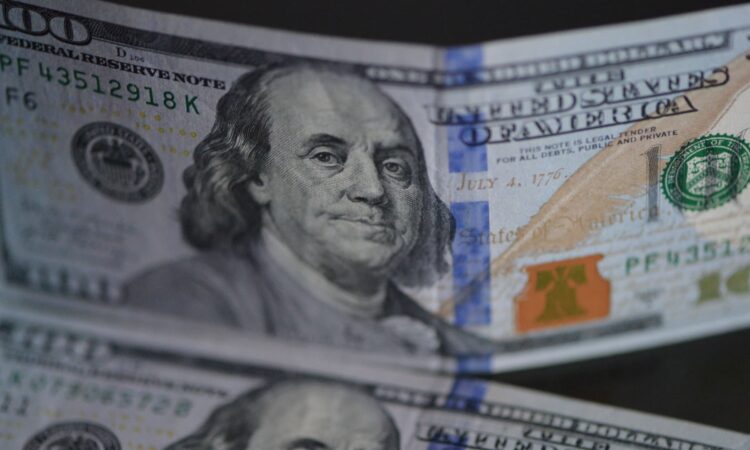
The U.S. dollar hovered near a one-week high on Tuesday, with markets torn between conflicting Middle East signals, as hostilities in the region stoked renewed fears over energy supplies while hopes for a ceasefire offered some relief.
VCG | Visual China Group | Getty Images
The U.S. dollar hovered near a one-week high on Tuesday, with markets torn between conflicting Middle East signals, as hostilities in the region stoked renewed fears over energy supplies while hopes for a ceasefire offered some relief.
Against the yen, the dollar was largely flat at 162.50 yen. The euro was also little changed at $1.1415, while the British pound held firm at $1.3434 after Britain’s new Prime Minister Andy Burnham vowed to stick to fiscal rules.
The U.S. dollar index, which measures the currency against a basket of six peers, was steady at 100.96, near its highest level since July 15.
Markets remained hostage to Middle East tensions, with oil prices experiencing sharp swings near six-week highs. Yemen’s Iran-aligned Houthis declared a naval blockade on Saudi Arabia, raising the threat to global energy supplies, while hopes of de-escalation were still alive after Tehran received a 10-day ceasefire proposal from mediators.
“There is the hope for easing in a little bit of tensions and we’ll hit a pause button at some stage. It’s all still very volatile,” Rodrigo Catril, senior currency strategist at National Australia Bank, said in a podcast.
“We have to wait and see how it develops. We need to see whether this escalates.”
Inflation risks loom large
U.S. Treasury yields crept back up as traders weighed whether a renewed jump in oil prices, driven by the widening war with Iran, would eventually feed through to consumer prices.
The benchmark 10-year Treasury yield remained elevated, trading at 4.5937%, while yields on 30-year Treasuries were also firmly above the 5% mark.
The New Zealand dollar was 0.4% stronger at $0.5860, hitting its highest level since early June, after strong inflation data reinforced expectations of further rate hikes. The Australian dollar was a touch stronger at $0.7001.
Meanwhile, a European Central Bank survey showed on Monday that euro zone firms expect selling prices to rise more moderately. The ECB is expected to keep rates unchanged this week but high oil prices are fueling bets for another hike in the 2.25% deposit rate in September.
Elsewhere, the Canadian dollar steadied after dropping to a one-month low, after the United States imposed a new tariff of 50% on a wide range of Canadian products in response to what it called Ottawa’s “discriminatory treatment”.


