A suggested property tax shake up in the UK would see stamp duty abolished in favour of an alternative form of property tax, raising eyebrows as to whether Australia’s eight different jurisdictions could ever pull off something similar.
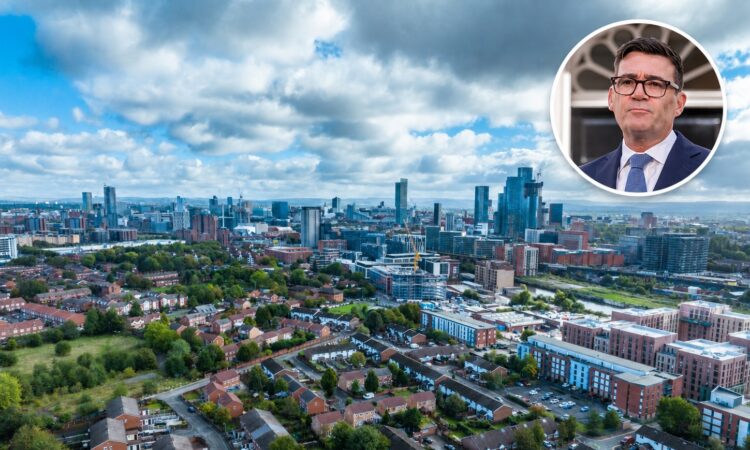
The actual relevance of the tax – as controversial in the UK as it is in Australia – has been a particular topic of interest in recent years for new prime minister, Andy Burnham.
New United Kingdom prime minister, Andy Burnham has hit the ground running with his property reform agenda. Picture: Getty
Mr Burnham launched a campaign to return to parliament earlier this year while in his previous role as mayor of England’s third largest county, Manchester. Changing how property and land are taxed was central in this – replacing stamp duty with a land value tax based on the value rather than the buildings on it.
Since Mr Burnham’s successful ascension to the top job in the Labour Party this week, property owners and taxpayers across the UK have been waiting to hear how the new prime minister will tackle his nation’s severe housing and cost of living issues.
Mr Burnham was appointed unchallenged to the role after former PM Keir Starmer bowed to pressure to step down in June, following extensive policy backlash since the Labour Party’s landslide election victory just two years ago.
Despite an extensive career in London, Mr Burnham is one of just a small handful of prime ministers to hail from the north of England, an area shaped by enduring regional inequalities and distinct economic challenges.
Housing and property are among the most acute concerns in the north of England and across the country more broadly, with Office for National Statistics data showing an average-priced home in England costs about 13 times the annual income of households in the bottom 20% of earners.
Australian Bureau of Statistics data tells us around 40% of Aussie households have moved home within the previous five years, with around 12% having moved in the previous 12 months. Comparatively, a ‘stay put’ culture remains inherent in the UK, with stamp duty a large contributor to its sticky property market.
While stamp duty rules vary in Australia depending on state or territory, all of England and Northern Ireland follow one system, while slightly different rules apply in Scotland and again in Wales.
The amount of stamp duty paid in England and Northern Ireland* depends on when the property was bought and its purchase price, with tax paid on increasing portions of the price.
| Property or lease premium or transfer value | Stamp duty rate |
| Up to £125,000 | 0% |
| The next £125,000 | 2% |
| The next £675,000 | 5% |
| The next £575,000 | 10% |
| The remaining amount above £1.5 million | 12% |
The average price of a home in the UK is just under £300,000 ($575,000) Trading Economics shows – around 35% cheaper than the median price of a home in Australia.
For an existing UK homeowner, moving to a property of this value would therefore trigger a £5000 ($9590) tax bill.
First home buyers in the UK currently have an exemption on the first £300,000 of a home’s value, while existing homeowners still benefit from the more generous tiered structure of varying thresholds.
In comparison, the stamp duty when purchasing a $575,000 home in Australia would range from around $11,000 in the Australian Capital Territory to as much as $29,500 in Victoria (excluding fees and first-home buyer or new home concessions).
Stamp duty varies significantly across Australia. Picture: Getty
While this paints a basic picture of Australian buyers being better off when it comes to moving home, home prices in the UK remain more elevated relative to incomes, while homeowners in the UK also face higher value-added tax and hidden costs linked to older housing stock and colder weather considerations.
However, when compared against other Organisation for Economic Co-operation and Development (OECD) countries such as the UK, REA Group executive manager of economics Angus Moore warns the Australian market is particularly reliant on stamp duty.
“While stamp duty revenues are very volatile from year to year, Australia has ranked among the top three most reliant nations in the OECD for four decades,” he said.
Analysis from Money.com.au and Primara Research shows state governments collected a record $34.4 billion in stamp duty last financial year, up from $18.8 billion in 2018-19.
Australian states’ appetite for abolishing stamp duty remains low, collecting more than $34 billion in the tax in 2025. Picture: Getty
Stamp duty continues to attract criticism as housing supply issues bite and property prices increases push buyers into higher tax brackets.
“Stamp duty is a particularly inefficient tax because it discourages people from moving home,” Mr Moore said. “It adds 10s, or even 100s of thousands of dollars to the cost.”
Alternatives to stamp duty: Will Australia follow?
So, what would removing stamp duty look like? Under prime minister Burnham in the UK, alternatives include an annual property tax or a land value tax.
The first would see a homeowners pay a recurring annual tax based on property value, an option likely unattractive for Australians thanks to stronger overall market growth.
REA Group executive manager of economics Angus Moore says Australia’s states are some of the most reliant jurisdictions on stamp duty in the world. Picture: Supplied
Median home prices in Australia are 5.8% higher than in June 2025, while HM Land Registry figures show the UK’s total market (comprising England, Northern Ireland, Scotland and Wales) saw 0.7% growth between June 2025 and May 2026.
According to UK policy think tank Tax Policy Associates (TPA), the combination of stamp duty land tax, council tax, and business rates also puts the UK as having the largest property tax of any OECD country, as a portion of gross domestic product. Australia, in comparison, comes in at seventh.
Under a flat 1.28% land value tax however, TPA estimates around 69% of homes in the UK would pay less than council tax. With wealth disparity an enduring problem, this option would see bills fall most in the economically challenged north east of England, and rise most in comparatively prosperous London.
In Australia however, land taxes have proved controversial in Australian in recent years, notably in Victoria where the government introduced additional land tax for investors.
Land tax in Victoria is a controversial issue. Picture: Getty
This amounts to around $1,300 a year for a property worth $650,000, while the state has also imposed taxes on vacant land and property.
Property values in Melbourne have struggled in recent years; it is currently the only capital city where the median home price is lower than 12 months ago, PropTrack’s Home Price Index shows. Once Australia’s second-most expensive city, a median home price of $839,000 means only Hobart and Darwin remain more affordable.
Despite market volatility in the post-Covid years, some parts of the nation are dipping their toe in when it comes to long-held calls to abolish stamp duty, though benefits are mostly for first-home buyers and favour those buying or building new.
New South Wales, under the former Perrottet government, briefly gave first home buyers a choice between land tax – $400 plus 0.3% of land value, up to the property value of $1.5 million – or stamp duty. The incoming Minns Government scrapped it less than three months later in March 2023.
Land tax or stamp duty was once an option in NSW. Picture: Getty
The Northern Territory is the only state or territory without some form of land tax – though lower tax free thresholds and aggressive extra surcharges have pinched the top end more in the years since Covid.
While many concessions exist to reduce the amount of stamp duty owed in all states and territories, a bigger gap exists between median property prices and thresholds, while options to paying nothing at all are even slimmer.
The Australian Capital Territory has entirely removed stamp duty as of this month for first-home buyers, becoming the first jurisdiction to push through major reform. Pensioners are also included in a bid to encourage downsizing among older Australians.
It’s a move that comes as part of the ACT’s long-time transition away from stamp duty reliance and onto a broad-based land tax system.
The ACT has entirely removed stamp duty for first-home buyers. Picture: Getty
Queensland also offers a concession that reduces stamp duty to zero for first-home buyers who purchase or build a new home, while Victoria and Tasmania currently allow first-home buyers to skip out on stamp duty for homes of all types valued up to $600,000 and $750,000 respectively.
First-home buyers building or buying a new home at any price point do not currently have to pay stamp duty in South Australia, while in Western Australia, paying no stamp duty at all is possible if you qualify for a specific exemption or concession. This includes being an eligible first home buyer under the price threshold, buying certain eligible new and off-the-plan properties, transferring property between spouses, or qualifying under special categories.
Options are more flexible in the NT, where buyers of any kind can access a full stamp duty exemption by purchasing a house and package, among other concessions and discounts.
With Australia and the UK sharing in the current experience of both severe housing shortages and cost of living crises, rethinking how buyers and investors are both incentivised and penalised remains a contentious and important debate.
“Reforming stamp duty would be beneficial,” Mr Moore said. “It would remove an important barrier to moving homes, and allow people to make the move more easily.
“That would allow better use of the houses we already have, rather than people staying in homes that are too big or too small for too long.
“It would also allow people to move closer to work, or to move in search of better job prospects.”