South Africa’s rand comes in as the world’s worst-performing currency owing to a surprising decision
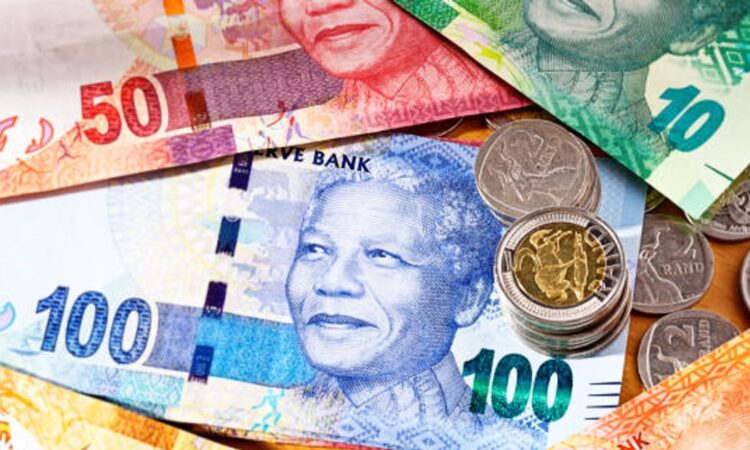
During Thursday’s trading session, the South African currency fell by up to 2.5% versus the US dollar before finishing 2.2% down at 16.76 per dollar, making it the world’s worst-performing major currency of the day.
Meanwhile, South Africa’s benchmark 10-year government bond rates rose 16 basis points to 8.96% as markets responded to the decision.
The central bank’s Monetary Policy Committee opted to keep the benchmark policy rate at 7%, against most analysts’ predictions of a 25-basis-point hike.
Four committee members backed keeping interest rates constant, while two advocated for a raise, per Bloomberg, which surveyed 20 economists, only 3 of whom expected a hold, with the rest predicting a 25-basis-point increase.
SARB Governor Lesetja Kganyago stated that the decision reflected the need to sustain an economy experiencing slow development while maintaining efforts to bring inflation closer to the bank’s long-term 3% target.
“The inflation outlook has improved slightly since our last meeting, but inflation is still too high, while growth is weak,” Kganyago said. “We are setting policy to achieve 3% inflation over time, ensuring the current supply shock does not de-anchor inflation expectations.”
Although inflationary pressures have lessened marginally, the central bank warned that price rises are still beyond the objective.
Officials also reduced their inflation estimates, with consumer inflation expected to average 4% in 2026, down from an earlier estimate of 4.4%.
The currency drop was a “pronounced and immediate reaction to the unexpected hold,” said Razia Khan, head of Africa research at Standard Chartered Plc.
The bank stated that recent inflation has been mostly driven by increasing gasoline costs rather than broad-based rises in commodities, although it cautioned that service inflation remained a problem.
In June, South African inflation accelerated at its most rapid pace in two years, reaching 5% and further diverging from the central bank’s 3% target.
The inflation rate is projected to remain at approximately 4% until early next year, and it is now anticipated to average 4% throughout 2026, representing a decrease from the previous forecast of 4.4%.
“We will take every decision meeting by meeting, depending on the data, the outlook, and the balance of risks to the outlook,” Kganyago said.
The decision comes as central banks around the world assess the economic effects of geopolitical tensions, notably the turmoil in the Middle East, which has contributed to rising energy prices.
While policymakers maintained interest rates constant for the time being, they signaled that additional tightening was possible if inflation remained persistently above target or if rising gasoline costs spilled over into food and core inflation.
The central bank also raised its economic growth prediction for 2026 to 1.4% from 1.2%, but cautioned that activity may weaken in the second and third quarters as local and global uncertainties persist.
Rand’s prior growth
In contrast to the rand’s current performance, three months ago, the South African currency, alongside the Nigerian naira were classified as two of Africa’s fastest-growing currencies.
Both currencies were ranked among the global currencies posting strong gains against the U.S. dollar over the past year.
At the time, the rand topped Africa’s performance, ranking third with a 16.4% increase against the dollar.
The Nigerian naira placed seventh, with a significant 13.5% rise, putting both currencies among the top worldwide performers.
Business Insider Africa previously reported that the rand entered 2026 at its highest level since 2022, boosted by good internal fundamentals such as continued economic reforms and rising commodity prices.
The government’s efforts to promote development in Africa’s most industrialised economy, where expansion has averaged less than 1% over the last decade, are beginning to bear fruit.