
Stock Market

Bank of America sends sharp August stock market warning


Investors were counting on the summer rally to carry into August, buoyed by resilient earnings, cooling inflation, and hope of a turnaround in tech stocks.

Bank of America is warning that the calendar might be turning against them.

The bank’s latest seasonality analysis, shared with me, points to a historically difficult stretch for stocks, which runs counter to the market’s notion that robust earnings results could keep risk appetite intact.

The prospect pushes investors, who might need to effectively rotate toward defensive assets just as optimism remains elevated.

The stock market has held up seemingly well, but history suggests the next three months could potentially test how durable that confidence is.

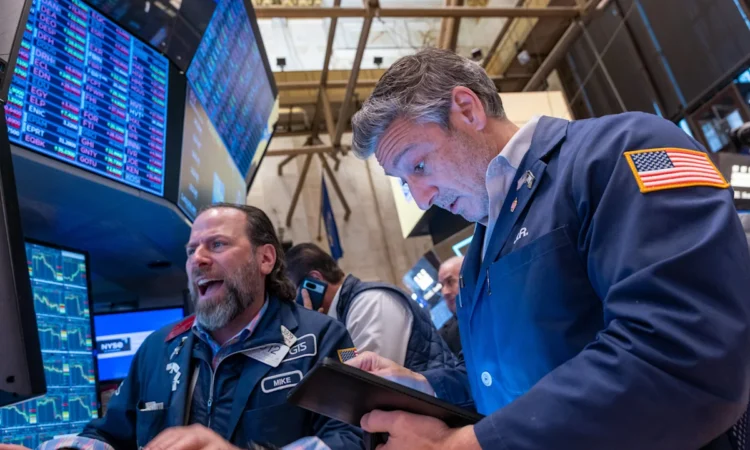
Bank of America says seasonal weakness could pressure U.S. stocks throughout AugustSpencer Platt/Getty Images

Why Bank of America is worried about August for stock market investors

Bank of America technical analyst Paul Ciana just made a huge call on the stock market, based on seasonality, and the historical pattern is unusually weak.

More Wall Street:

Since 1928, August through October has been the S&P 500‘s worst rolling three-month period. The index has risen only 55% of the time, generating an average return of negative 0.02%, suffering an average maximum drawdown of 7.35%.

Looking at those numbers, a nearly flat average might sound harmless, but the drawdown data suggests investors often endured meaningful volatility before recovering. 

For a market that’s carrying elevated tech valuations and a heavy concentration of a handful of mega-cap stocks, a 7% pullback might prove a lot more disruptive than the average return.

Ciana’s analysis backs up Bank of America’s defensive view on the stock market, which it has held since late May.

He isn’t saying stocks should fall simply because August is approaching. Instead, the seasonal pattern suggests the market might be more vulnerable than usual.

Stocks are still trading at lofty valuations, and many investors are crowded into the same tech and AI names. In that sort of market, weak earnings, geopolitical tensions, or a more aggressive Fed could trigger a sharper pullback.

Here’s a quick list of AI stocks trading at incredibly steep valuations:

  • Tesla (TSLA): 174.1x forward P/E vs. 15.9x five-year average, 994% premium.

  • Arm Holdings (ARM): 124.4x vs. 24.2x, 415% premium.

  • Palantir (PLTR): 83.3x vs. 23.6x, 253% premium.

  • Advanced Micro Devices (AMD): 70.1x vs. 23.6x, 197% premium.

  • Meta Platforms (META): 18.8x vs. 12.6x, 49% premium.
    Source: Seeking Alpha valuation data, including non-GAAP forward P/E and five-year averages.

Ciana also feels that the late-summer weakness often creates better opportunities later in the year. Historically, the S&P 500 gained an average of 3.54% from November through January.

Where does BofA see the best protection?

Ciana’s preferred seasonal trades underscore a classic defensive mix, which includes the U.S. Dollar, gold, and government bonds.

The Dollar has historically performed well in August, particularly against sterling, the Australian dollar, and the South African rand. 

Since 2000, the dollar has jumped against the British pound 65% of the time and against the Australian dollar 69% of the time. Against the rand, it has appreciated in 73% of August periods, with an average gain of 2.2%.

Those moves will likely become more likely if investors reduce risk. A stronger dollar reflects demand for liquidity and safety, but it can also pressure U.S. multinationals by reducing the value of overseas sales.

Ciana also points to dropping long-term bond yields. The 30-year Treasury yield dropped in roughly three-quarters of August observations during the second year of the presidential cycle, dropping by an average of 18 basis points. That means investors have historically moved into longer-duration government debt as stock volatility jumped.

Moreover, Gold offers another hedge. Since 1992, it has gained during the August-to-October period 61% of the time, returning an average of 2.52%. Gold could potentially benefit from lower yields, geopolitical risk, or concerns over policy credibility, although a sharply stronger dollar could limit some of that upside.

On top of that, energy is the notable exception to the defensive pattern. 

The Bloomberg Energy Index averaged a 2.42% August gain, while crude prices have typically strengthened late in the month.

Big Tech earnings could reset the market

We’re moving into a big week for Big Tech, with around one-third of index companies due to report, including Microsoft and Meta on Wednesday, followed by Amazon and Apple on Thursday.

Those reports will test earnings momentum and the economics of the AI buildout. It’s important to note that investors are becoming a lot less willing to automatically reward AI spending. 

Related: Morgan Stanley resets Microsoft stock forecast ahead of earnings

We saw that with Alphabet and Tesla, as they were heavily punished after their results.

According to Reuters, Tesla lost more than 14% of its value and Alphabet nearly 7% by Thursday’s close, with investors firmly in ‘show-me’ mode amid rising AI CapEx and uncertainty about its ability to convert into meaningful returns.

Nevertheless, the backdrop is strong. 

FactSet entered the season expecting Q2 S&P 500 earnings to rise 23.3% year over year, up from 18.8% at the end of March. At the same time, 57% of companies issuing guidance gave positive outlooks. 

Nonetheless, the challenge for Big Tech could be a lot more than simply beating on top-and-bottom-line estimates. Investors are looking for a lot more evidence that cloud growth, advertising gains, and AI products are converting infrastructure spending into robust free cash flow.

For some color, according to a Reuters analysis of LSEG consensus estimates, combined 2026 capex forecasts for Microsoft, Alphabet, Amazon, Meta, and Oracle jumped from nearly $485 billion in January to $730 billion in July.

By 2027, their capex is forecasted to rise $534 billion from 2025 levels, compared with a $340 billion increase in operating cash flow.

That is essentially $1.57 of additional investment for every $1 of incremental cash generation. 

What does the Fed meeting mean for stocks?

The Federal Reserve’s July 28–29 meeting could be huge for the stock market.

For perspective, according to CNBC, markets are pricing a 38% chance of a 25-basis-point hike, up from 12.8% a week earlier, as the 10-year Treasury yield touched 4.7%

That shift has effectively tightened financial conditions before the Fed makes a move.

The valuation issue is acute for the tech side. For perspective, at the S&P 500’s 20.1-times forward earnings multiple, the index offers an implied earnings yield of roughly 5%. That yields a gap of just 0.3 percentage points relative to Treasuries, lowering the compensation investors receive for owning stocks. 

Expensive AI stocks are remarkably sensitive because more of their valuation depends on profits expected years ahead.

That said, a hold might not be automatically bullish. 

Hawkish language, oil-driven inflation, or resistance to future cuts could keep yields elevated. At the same time, Thursday’s GDP and PCE releases will test whether the Fed faces strong growth, sticky inflation, or both.

Related: Morgan Stanley says SpaceX investors miss the bigger story

This story was originally published by TheStreet on Jul 27, 2026, where it first appeared in the Investing section. Add TheStreet as a Preferred Source by clicking here.


Source link

Leave a Response