
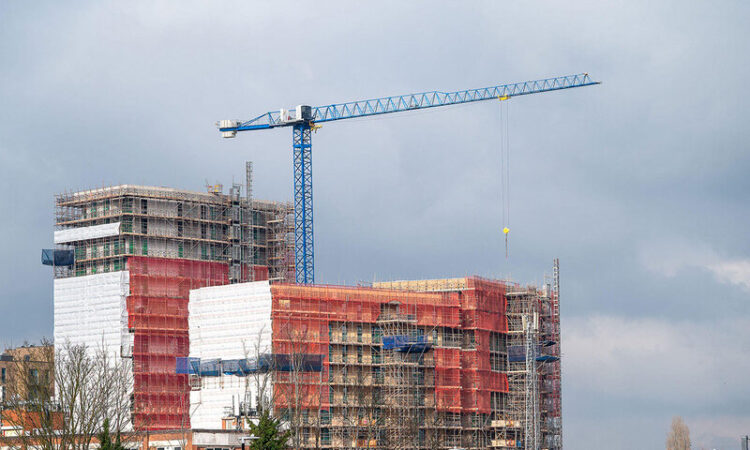
Starts on site for new build-to-rent (BTR) homes across the UK have fallen by 79% in the year to June, according to new research.
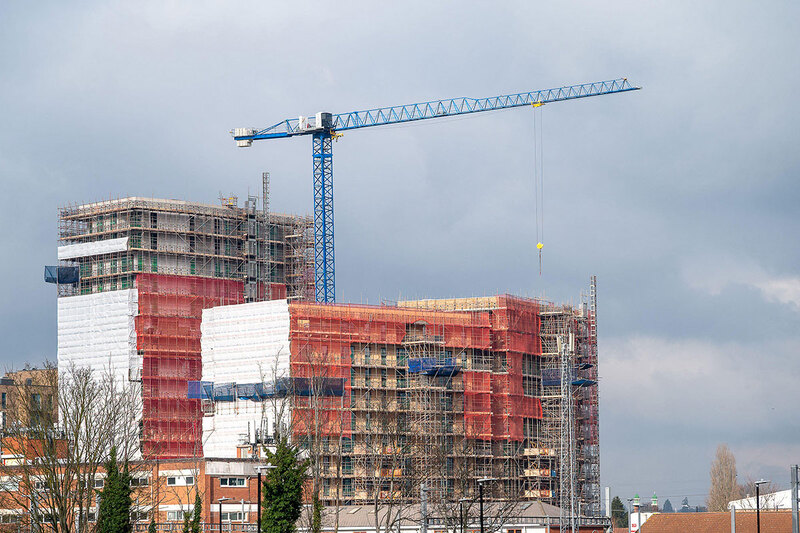
There was an 84% drop outside London to 2,176, down from 13,893 (picture: Alamy)
Sharelines

 Starts on site for new build-to-rent homes across the UK have fallen by 79% in the year to June, according to new research #UKhousing
Research from Real Estate:UK prepared by Savills found that the impact was felt most acutely outside London, with an 84% drop to 2,176, down from 13,893.
The drop marks one of the biggest falls in BTR development starts.
On schemes currently under construction, the number of homes across the UK fell by 21% in Q2 of 2026 compared to the previous year.
London experienced a more substantial drop at 27%, compared to regions outside the capital at 19%.
This is continuing the trend where completions exceed new starts on site and schemes coming through the planning system, despite an uplift in the number of schemes being approved, Real Estate:UK said. For the 10th consecutive quarter, annual completions have exceeded starts.
The property trade body also said that the drop in the number of starts on site reflects the broader viability challenges that the BTR sector is increasingly facing, and is contributing to the observed flight of investment to established BTR properties instead of new developments.
Viability challenges have also been compounded by wider political and policy uncertainty in recent weeks on issues such as potential rent freezes and wider changes to property taxation, including land value tax.
A survey of investors on behalf of Real Estate:UK, undertaken prior to housing secretary Angela Rayner ruling out rent controls, found that 100% of respondents would have reduced BTR investment and avoided mayoral areas where rent controls would be introduced.
Real Estate:UK argued that the government needs to avoid creating future additional uncertainty, or making abrupt and unwelcome shifts in policy, to prevent viability pressures worsening and investment in new schemes being chilled.
BTR accounts for almost one in 10 new homes, or 8%.
Danny Pinder, director of Real Estate:UK, said: “The Q2 2026 delivery figures have shown one of the sharpest declines in the number of new starts on site yet, and undoubtedly reflect the impact the viability crisis is having on the development of BTR schemes across the UK.
“That the sharpest decline in starts is within the regions is yet further evidence of the fact that, in most parts of the country, it is now unviable to bring forward new schemes despite strong underlying tenant demand.
“In addition to viability, we’ve also had increased regulatory uncertainty, through speculation around rent controls and other potential property taxation changes continuing to impact on investment considerations.”
Jacqui Daly, director of Savills Residential Research, said: “BTR has become an increasingly important source of housing supply, with the potential to unlock new development by enabling house builders to open sites with investors underwriting delivery.
“As demand for rental homes continues to grow, it is important that the sector can continue bringing forward new schemes across the UK.”
Last month, the living sector reacted positively as recently reinstated housing secretary Angela Rayner ruled out private rent controls in England “at the moment”.
A report also found last month that the number of suburban BTR homes in the UK has tripled to 26,000 since 2020.
According to Savills, UK BTR deals hit a record £2.2bn in the second quarter of 2026, driven by two large acquisitions by US investors.
Are you subscribed to Inside Housing Living?
Inside Housing Living brings you exclusive analysis and big deals from the wider residential market, including build-to-rent, student living, later living, for-profit registered providers and more. Not subscribed yet?


